

B2B prospecting is more challenging than ever in 2026. Sales reps need accurate data, better timing, and more personalized outreach, but too much time still gets lost to manual research instead of actual selling. That is why the best B2B sales prospecting tools for 2026 are becoming essential for modern sales teams.
Today’s B2B sales prospecting tools help teams find the right prospects, verify data, uncover buying signals, automate research, and streamline outreach. As artificial intelligence (AI) becomes a bigger part of the sales process, the most valuable sales prospecting tools are helping reps work faster and prioritize the opportunities most likely to convert.
In this guide, we will review 17 of the top sales prospecting tools in 2026, including Salesgenie®, ZoomInfo, and LinkedIn Sales Navigator, so you can find the right prospecting software for your team.
See how Salesgenie helps teams find better-fit prospects faster.
Key B2B Sales Prospecting Statistics:
- Sales reps spend only 28% of their week selling.
- Nine in 10 sales teams use AI agents today or expect to within two years.
- Sales reps who use AI tools to handle administrative tasks save two hours a day.
Top B2B Sales Prospecting Tools at a Glance
If you’re short on time, here are the best B2B sales prospecting tools in 2026:
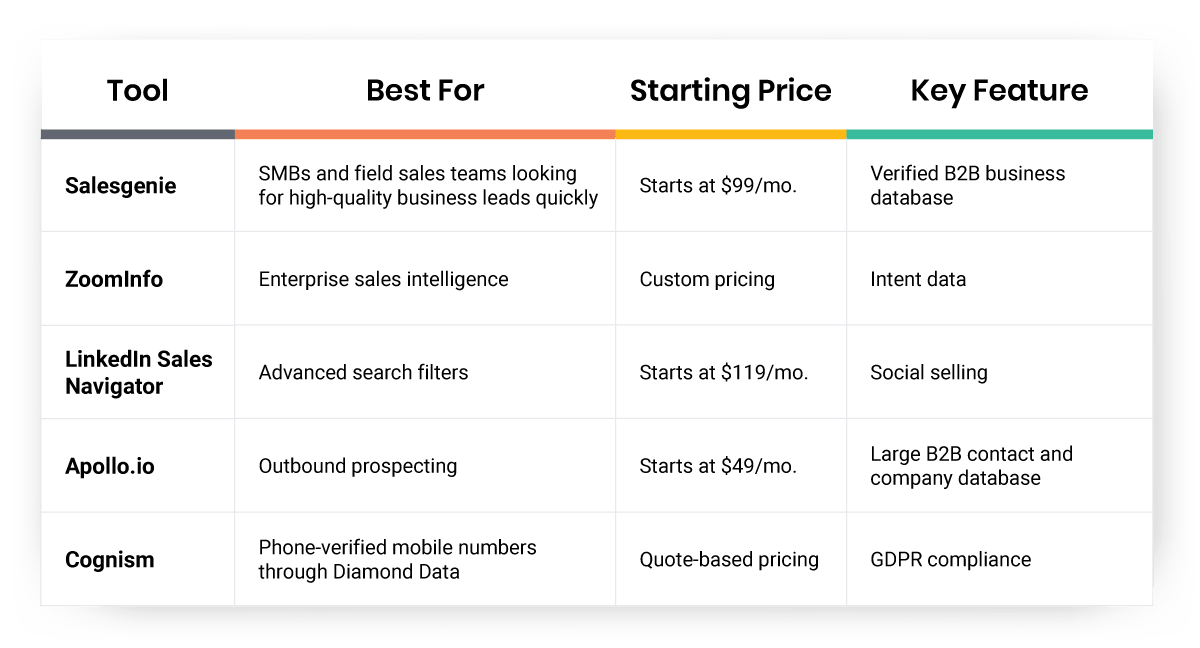
- Salesgenie: Best for SMB prospecting and business lead databases
- ZoomInfo: Best for enterprise sales intelligence
- LinkedIn Sales Navigator: Best for social selling
- Apollo.io: Best for outbound prospecting automation
- Cognism: Best for GDPR-compliant prospecting data
- Seamless.AI: Best AI-powered prospect discovery
- UpLead: Best for verified contact data
What Are B2B Sales Prospecting Tools?
Prospecting tools help sales teams identify and engage potential buyers faster by automating contact discovery, data enrichment, and outreach workflows. They can also help teams:
- Identify target companies
- Find decision makers
- Gather verified contact data
- Prioritize prospects
- Automate outreach
While each prospecting tool offers unique features, some typical capabilities you can expect include:
- B2B contact database
- Firmographic filters
- Intent signals
- Customer relationship management (CRM) integrations
- Email outreach automation
Why Sales Prospecting Tools Are Critical in 2026
For sales prospecting, teams are no longer relying on static lists and manual research alone. The best sales prospecting tools now help reps find better-fit accounts faster, prioritize outreach using buying signals, and automate time-consuming tasks. That matters even more as AI adoption accelerates, as Salesforce reports that nine in 10 sales teams already use AI agents or expect to within two years.
Several trends are shaping why B2B sales prospecting tools are so critical right now:
- AI-driven prospect discovery: Helps reps identify likely buyers faster
- Intent-data-based selling: Makes it easier to focus on accounts showing real interest
- Lead automation: Reduces the time spent on lead research and prep work
- Multichannel outreach: Supports more consistent engagement across email, phone, and social
- Data accuracy and compliance: Places emphasis on data quality and compliance
Key Insight
The best tools help sales teams identify high-intent prospects and automate repetitive tasks so reps spend more time selling.
Benefits of Using Sales Prospecting Tools
Sales prospecting tools have become essential because they solve some of the biggest challenges sales teams face every day, from finding the right prospects to reaching them with accurate data and relevant messaging. Instead of relying on manual research and disconnected workflows, your team can use these platforms to work more efficiently, improve targeting, and build a stronger pipeline.
Below are some of the biggest benefits the best sales prospecting tools can offer in 2026.
- Faster prospect discovery: Help reps identify ideal leads more quickly by using filters, firmographic data, buyer signals, and search tools.
- Access to verified contact data: Give teams more reliable email addresses, phone numbers, and company details, which reduces wasted outreach.
- Improved sales productivity: Automate time-consuming research tasks so reps can spend more time selling and less time gathering information.
- Better targeting and segmentation: Make it easier to build focused prospect lists based on industry, company size, job title, location, buying intent, and other criteria.
- Stronger sales pipeline generation: Support more consistent prospecting activity, which helps teams fill the pipeline with qualified opportunities.
- More personalized outreach: Provide deeper prospect insights that help reps tailor messaging to each contact, account, or audience segment.
- Integration with sales technology stacks: Connect with CRMs, email platforms, and sales engagement tools to keep workflows organized and efficient.
- Scalability for growing sales teams: Give expanding teams a repeatable way to find, qualify, and engage prospects without relying entirely on manual effort.
Pro Tip
When comparing B2B sales prospecting tools, look for platforms that improve both data quality and workflow efficiency. The best value usually comes from tools that save time across multiple parts of the prospecting process.
How We Evaluated the Best Sales Prospecting Tools
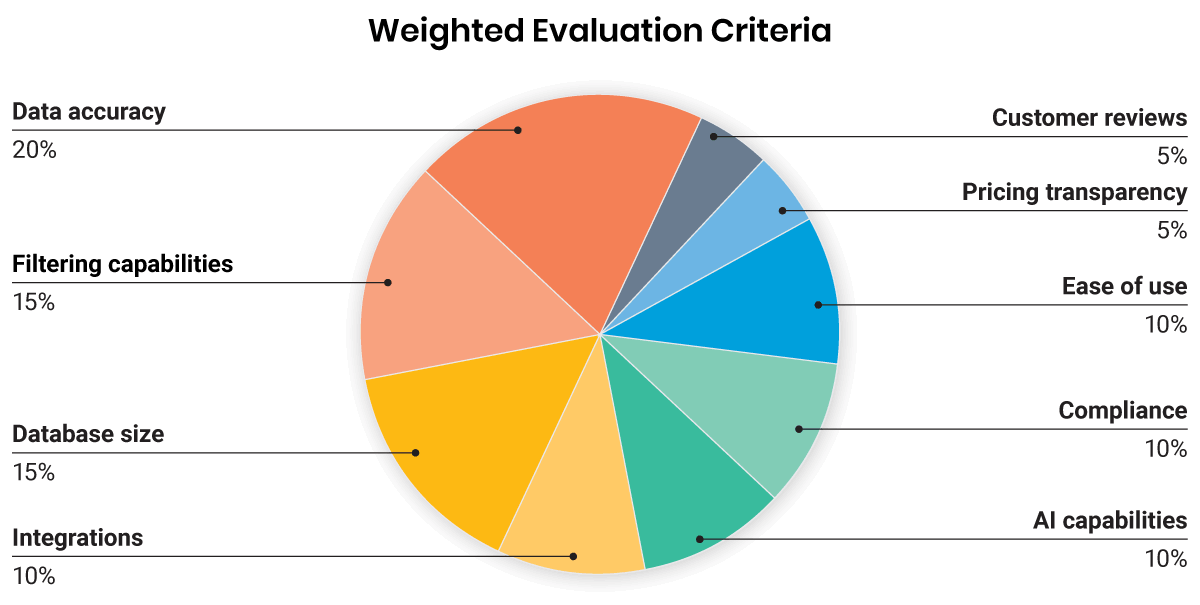
To identify the best sales prospecting tools in 2026, we looked at the features and factors that matter most to modern sales teams. Our goal was to evaluate how well each platform supports accurate targeting, efficient workflows, compliance, and day-to-day usability.
We assessed each tool based on the criteria below:
- Database size: Depth and breadth of company and contact records
- Data accuracy: Reliability, freshness, and verification of data
- Filtering capabilities: Ability to segment prospects by job title, industry, location, company size, intent, and more
- AI capabilities: AI-powered prospect discovery, prioritization, recommendations, or workflow support
- Integrations: Compatibility with CRM and sales engagement platforms
- Compliance: Support for GDPR, CCPA, and responsible data practices
- Ease of use: How intuitive the platform is for daily sales use
- Pricing transparency: How clearly pricing and package details are communicated
- Customer reviews: Overall user satisfaction and market feedback
To keep the comparison consistent, we scored each platform across these categories using a five-point scale.
Quick Comparison of the Best B2B Prospecting Tools
17 Best B2B Sales Prospecting Tools in 2026
1. Salesgenie
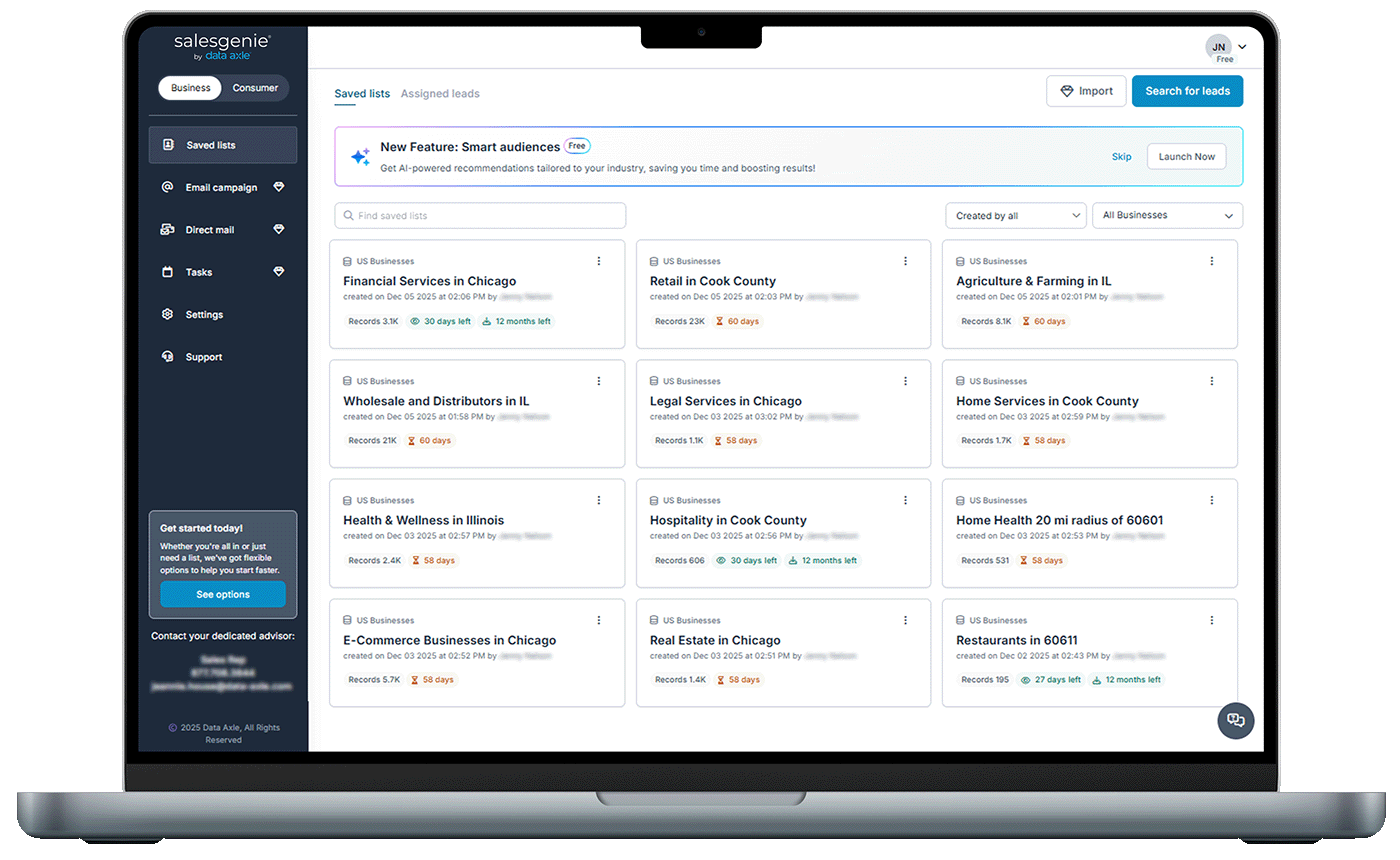
Salesgenie is a B2B sales intelligence and prospecting platform that helps sales teams identify potential customers using verified business and consumer data.
Key Features:
- Extensive B2B business database
- Advanced search filters
- Contact details for decision makers
- Territory prospecting
- CRM integrations
Pros:
- Strong SMB lead database
- Easy segmentation
- Intuitive UI
Cons:
- Pricing depends on plan and features
- Some capabilities are limited to higher-tier packages
- Teams should compare plans based on usage and workflow needs
Best For: SMBs and field sales teams looking for high-quality business leads quickly
Why Sales Teams Use It:
- To help them build targeted lead lists fast
- To keep prospecting workflows simple
- To make segmentation and list building easier
Pricing:
- Basic: $99/mo.
- Pro: $149/mo.
- Team: $299/mo.
2. ZoomInfo
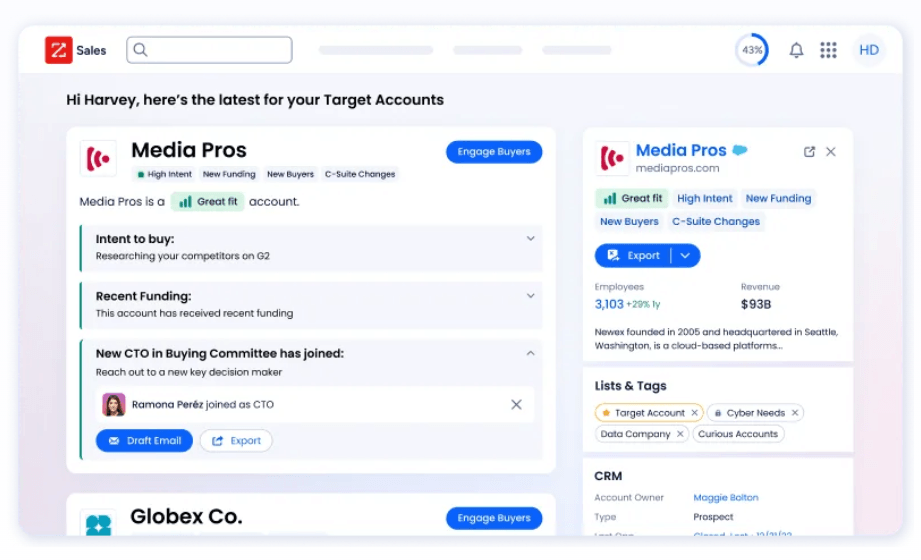
ZoomInfo is a go-to-market platform that enables B2B companies to identify, engage, and convert their ideal customers using business contact data, intent insights, and sales automation tools.
Key Features:
- Intent data
- Large contact and company database
- Technographic and firmographic data
- Workflow and CRM integrations
- AI-powered GTM and sales workflows
Pros:
- Combines intent and prospect data
- Connects across the sales tech stack
- Supports prospecting and workflow automation
Cons:
- Pricing is custom
- Package scope varies by product selection
- Teams may need sales help choosing the right setup
Best For: Enterprise sales intelligence
Why Sales Teams Use It:
- To reach ready-to-buy prospects
- To discover ideal buyers
- To unify data-driven technologies across sales and marketing
Pricing: Custom pricing
3. LinkedIn Sales Navigator
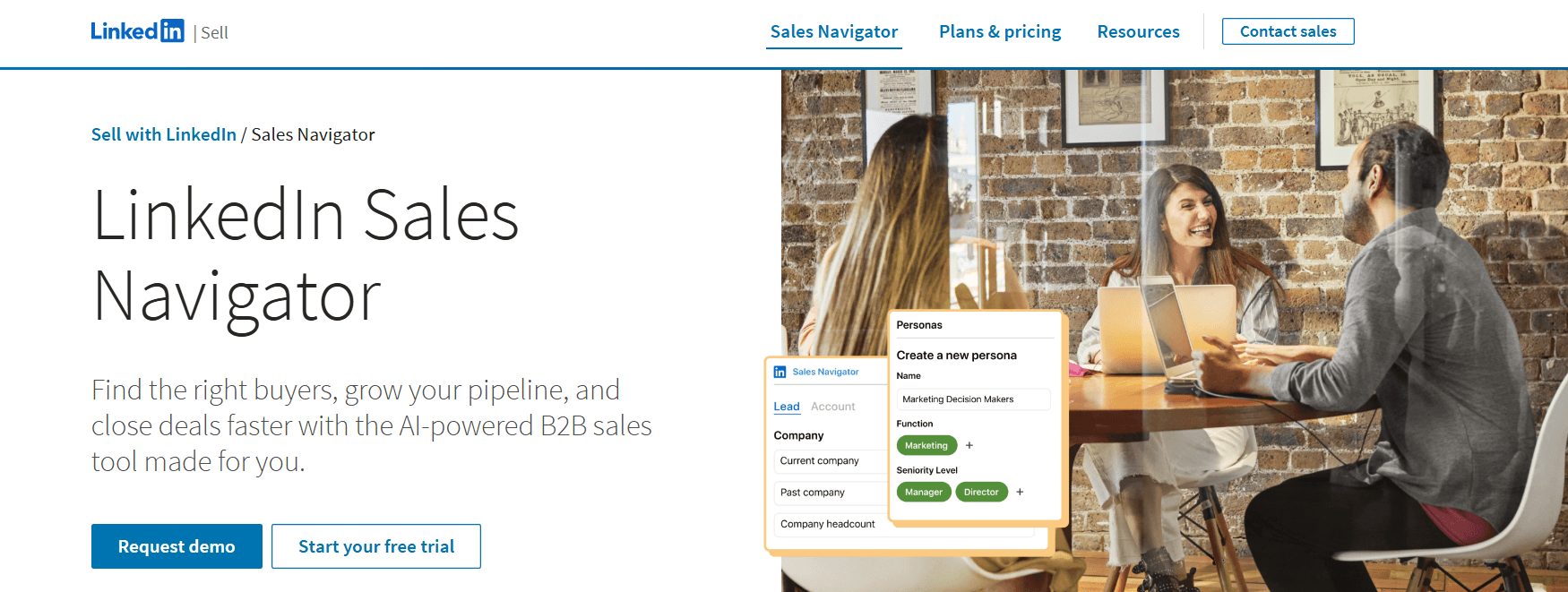
LinkedIn Sales Navigator is a B2B sales platform for individual sellers and teams, with advanced features to find the right buyers and close bigger deals faster.
Key Features:
- Advanced search filters
- AI-driven insights
- Seamless CRM integration
- Direct outreach capabilities
- Real-time lead alerts
Pros:
- Finds the right buyers faster
- Supports warmer, relationship-led outreach
- Reduces manual work with AI and CRM integrations
Cons:
- Some features are limited to higher-tier plans
- Advanced Plus uses custom pricing
- Teams should compare plans by feature level
Best For: Social selling
Why Sales Teams Use It:
- To uncover high-quality leads faster
- To engage buyers at the right moment
- To streamline workflows with CRM integrations and AI-powered insights
Pricing:
- Core: $119/mo.
- Advanced: $159.99/mo.
- Advanced Plus: Custom pricing
4. Apollo.io
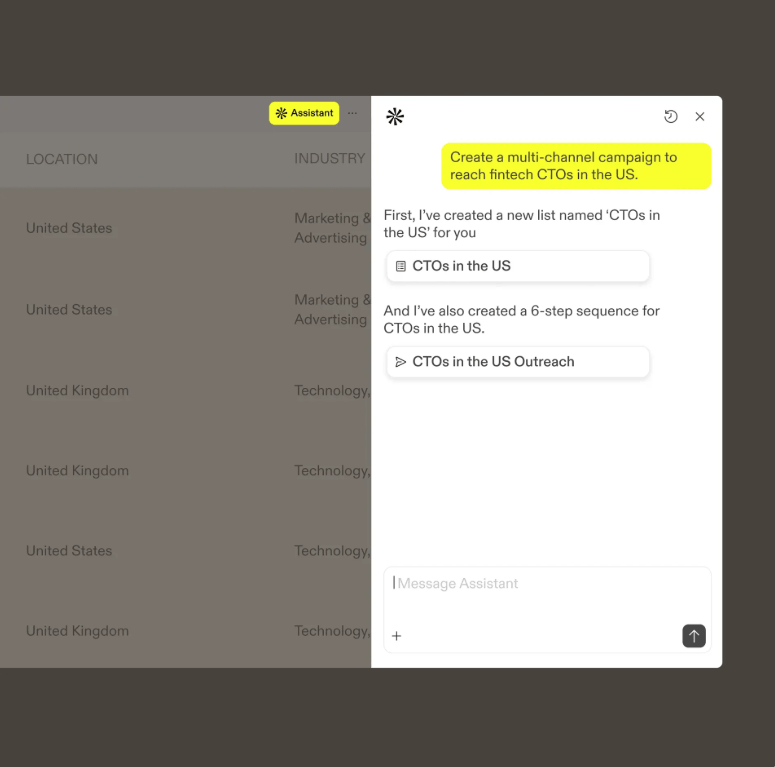
Apollo.io is an AI-powered sales intelligence and engagement platform built to help sales teams find prospects, enrich contact data, automate outreach, and manage pipeline in one place.
Key Features:
- Large B2B contact and company database
- AI-powered prospecting
- Contact and company enrichment
- Outreach automation
- CRM and workflow integrations
Pros:
- Combines prospecting, enrichment, and outreach
- Supports AI-powered prospecting workflows
- Connects with CRM and go-to-market tools
Cons:
- Feature access varies by plan
- Pricing depends on plan and billing term
- Advanced tools are available on higher tiers
Best For: Outbound prospecting
Why Sales Teams Use It:
- To find qualified leads faster
- To automate multichannel outreach
- To build pipeline faster from a single workflow
Pricing:
- Free tier
- Basic: $49/mo.
- Professional: $79/mo.
- Organization: $119/mo.
5. Cognism
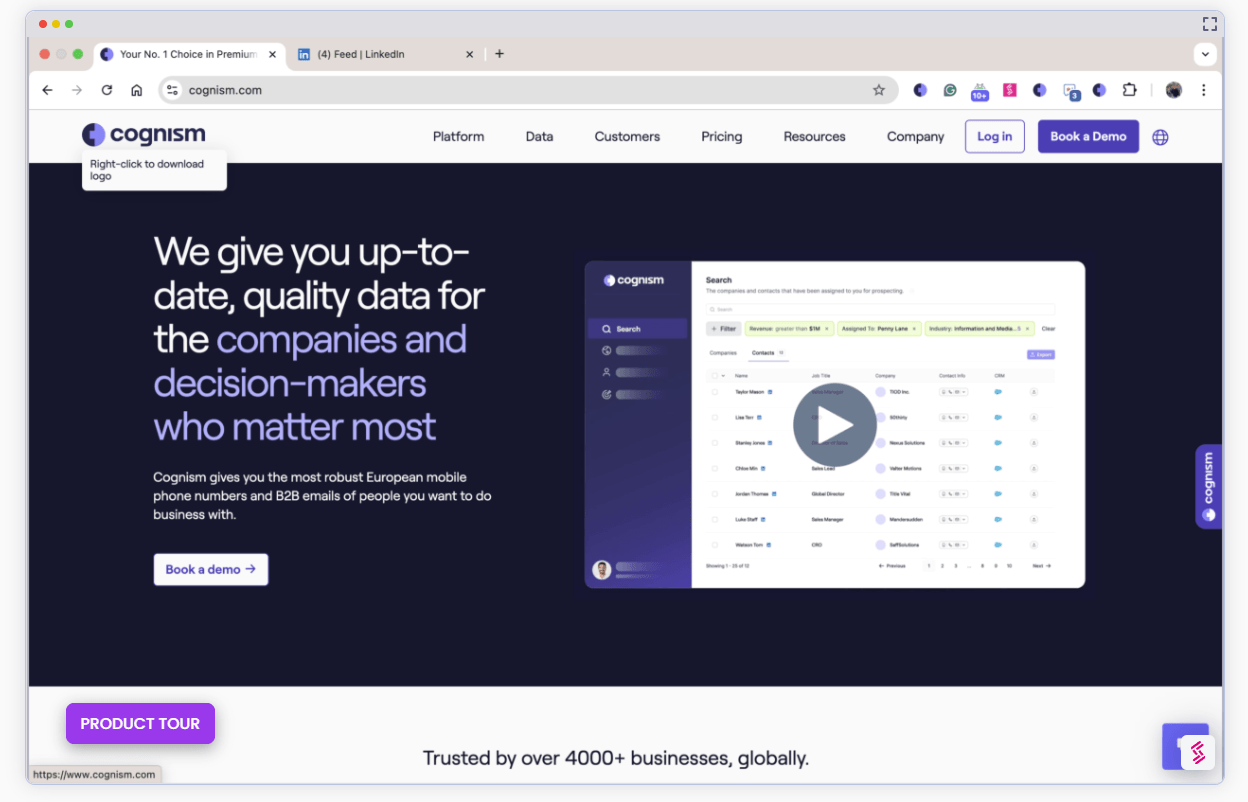
Cognism is a B2B sales intelligence platform focused on helping revenue teams find accurate prospect data, identify in-market buyers, and prospect with compliance in mind.
Key Features:
- Phone-verified mobile numbers through Diamond Data
- Business emails and company intelligence
- Intent signals
- Technographic and market signals
- CRM and sales tool integrations
Pros:
- Supports accurate, compliant prospecting
- Provides phone-verified mobile data
- Uses intent and market signals to guide outreach
Cons:
- Pricing is quote-based
- Some features are add-ons
- Package details vary by team needs
Best For: GDPR-compliant data
Why Sales Teams Use It:
- To access reliable, up-to-date contact and company data
- To improve connect rates with verified mobile numbers
- To prospect more intelligently using buying and market signals
Pricing: Quote-based pricing
6. Seamless.AI
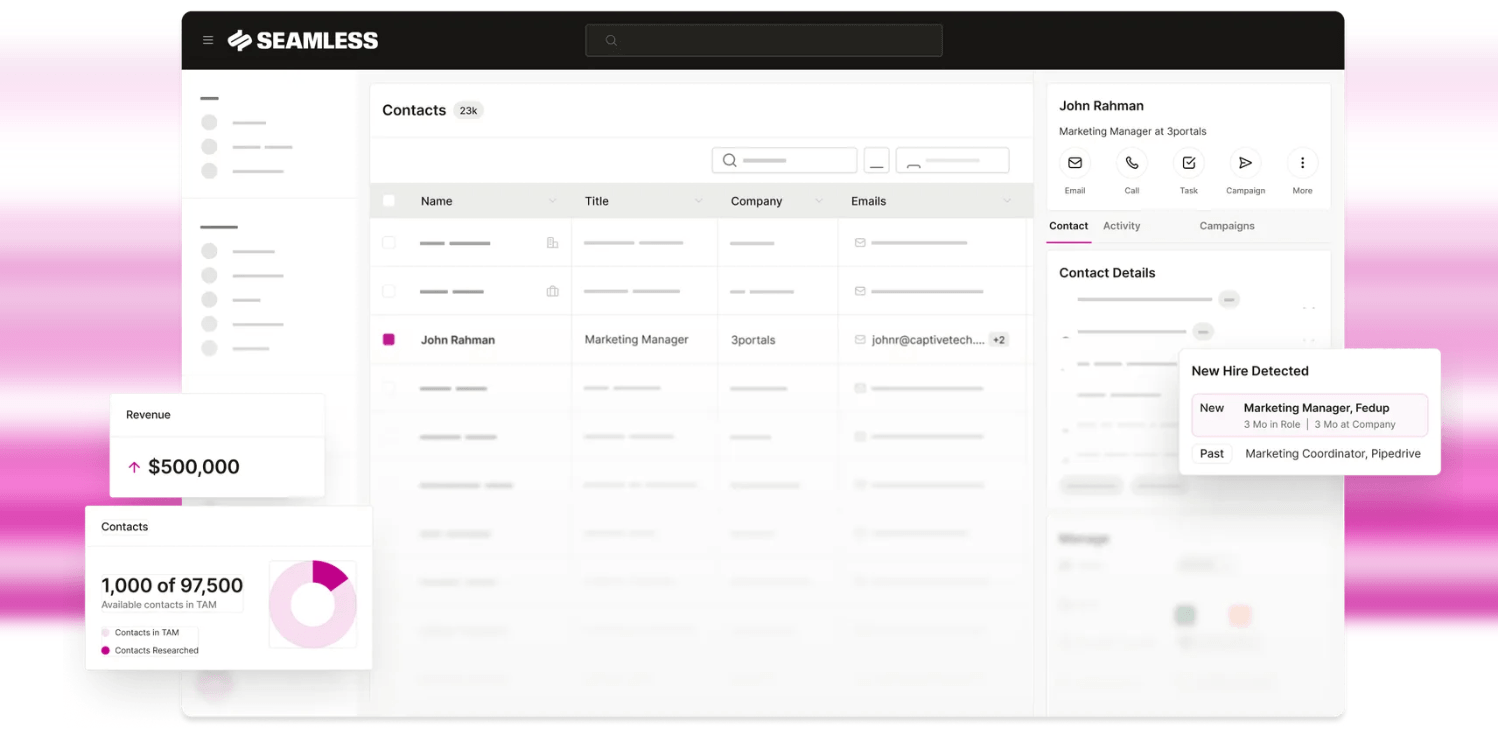
Seamless.AI is a sales prospecting platform designed to help teams find business contacts, build targeted lead lists, and speed up outreach with AI-powered search and real-time data discovery.
Key Features:
- AI-powered contact search
- Real-time contact discovery
- Direct dials, emails, and company data
- Org charts and company search
- CRM and sales workflow integrations
Pros:
- Finds and verifies contact data in real time
- Combines prospecting and outreach in one workflow
- Speeds up pipeline building with AI-driven search
Cons:
- Pricing is customized by team needs
- Plans vary by credits and features
- Advanced teams may need to compare options closely
Best For: AI-driven prospect discovery
Why Sales Teams Use It:
- To shorten the time it takes to find prospects
- To uncover direct contact information
- To move from research to outreach more quickly
Pricing: Free tier, then custom pricing
7. UpLead
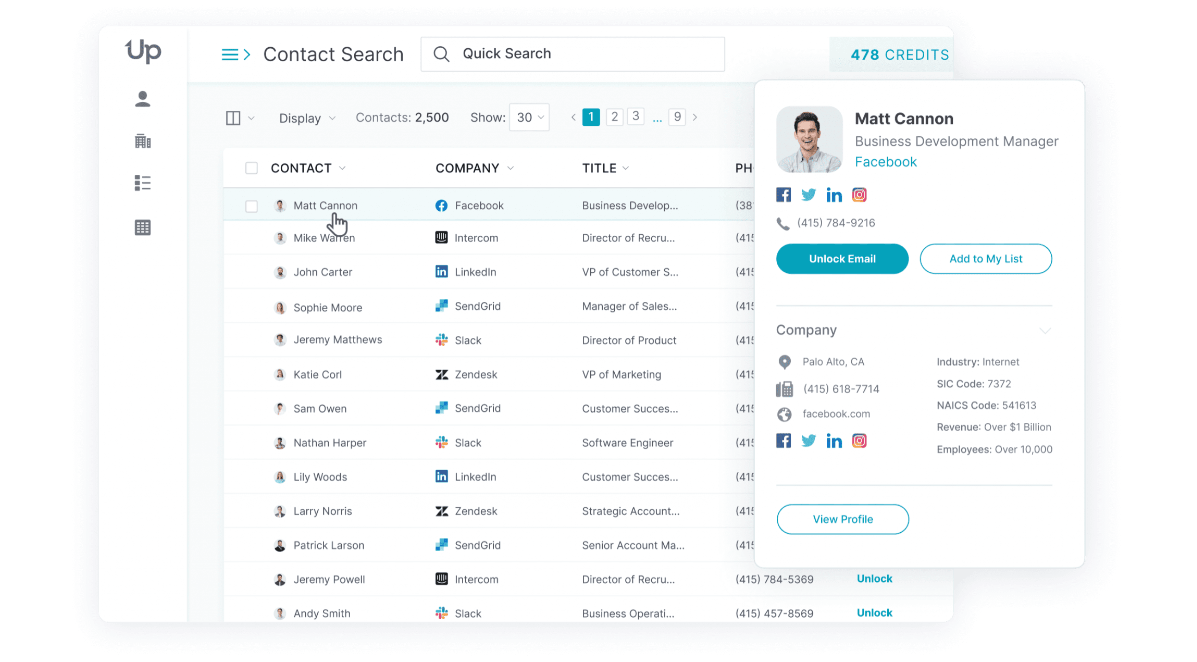
UpLead is a B2B prospecting platform built for teams that want accurate contact data, targeted list building, and real-time verification.
Key Features:
- Real-time verified B2B emails
- Mobile numbers and direct dials
- Intent data
- 50+ search filters
- Technographic data
Pros:
- Improves contact data reliability
- Makes list building more confident
- Reduces time spent double-checking emails
Cons:
- Features vary by plan and credits
- Team tools are stronger on higher tiers
- Plans should be compared by usage needs
Best For: Verified B2B emails
Why Sales Teams Use It:
- To find the right contacts faster
- To verify data in real time
- To build more reliable outreach lists
Pricing:
- Free tier
- Essentials: $99/mo.
- Plus: $199/mo.
- Professional: Custom pricing
8. LeadIQ
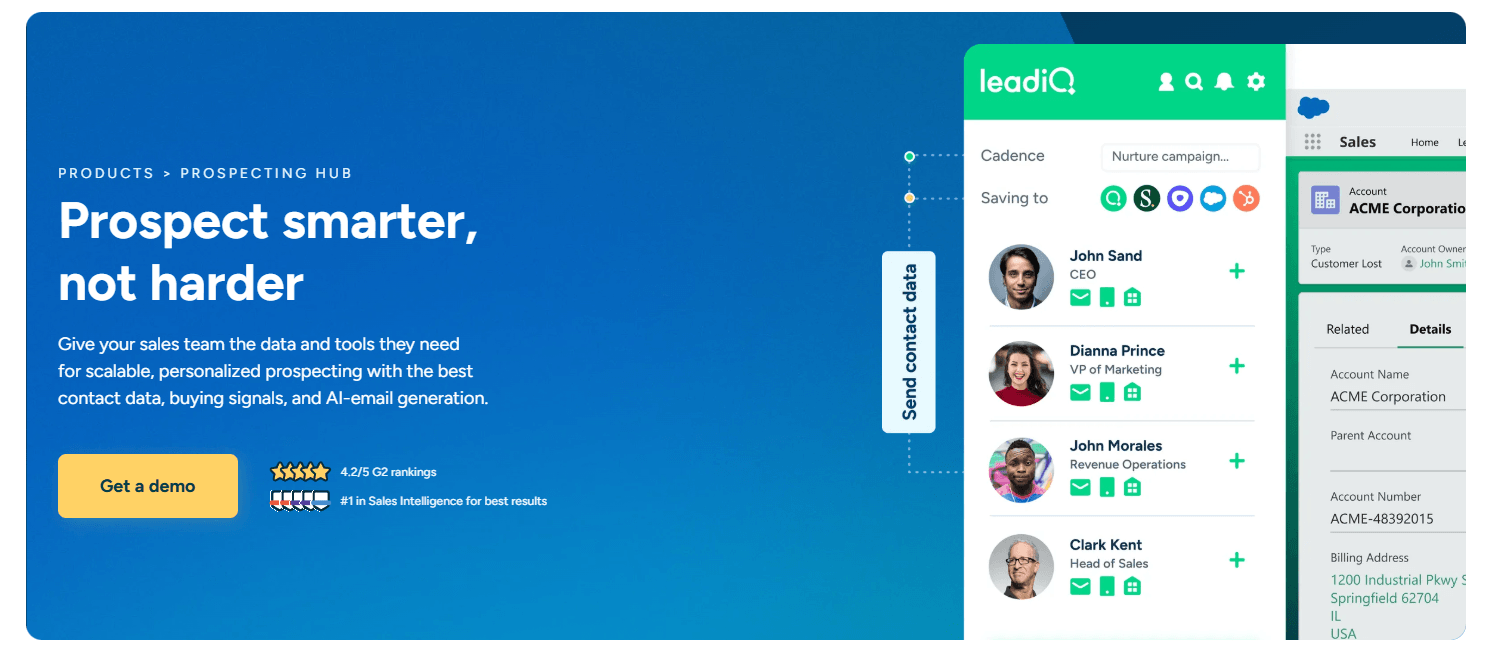
LeadIQ is a B2B prospecting platform built to help sales teams find contact data, capture leads faster, and personalize outbound outreach.
Key Features:
- Contact and company data
- Buying signal tracking
- Chrome extension
- AI-powered message writing
- CRM and sales engagement integrations
Pros:
- Captures prospects without switching tools
- Makes cold outreach easier to personalize
- Fits into existing CRM and sales workflows
Cons:
- Pricing varies by plan and credits
- Some features depend on integrations
- Plans should be compared by data and automation needs
Best For: LinkedIn-based prospecting
Why Sales Teams Use It:
- To speed up prospecting
- To reduce manual data entry
- To create more personalized outreach
Pricing:
- Free tier
- Pro: $15/mo.
- Enterprise: Custom pricing
9. Hunter.io
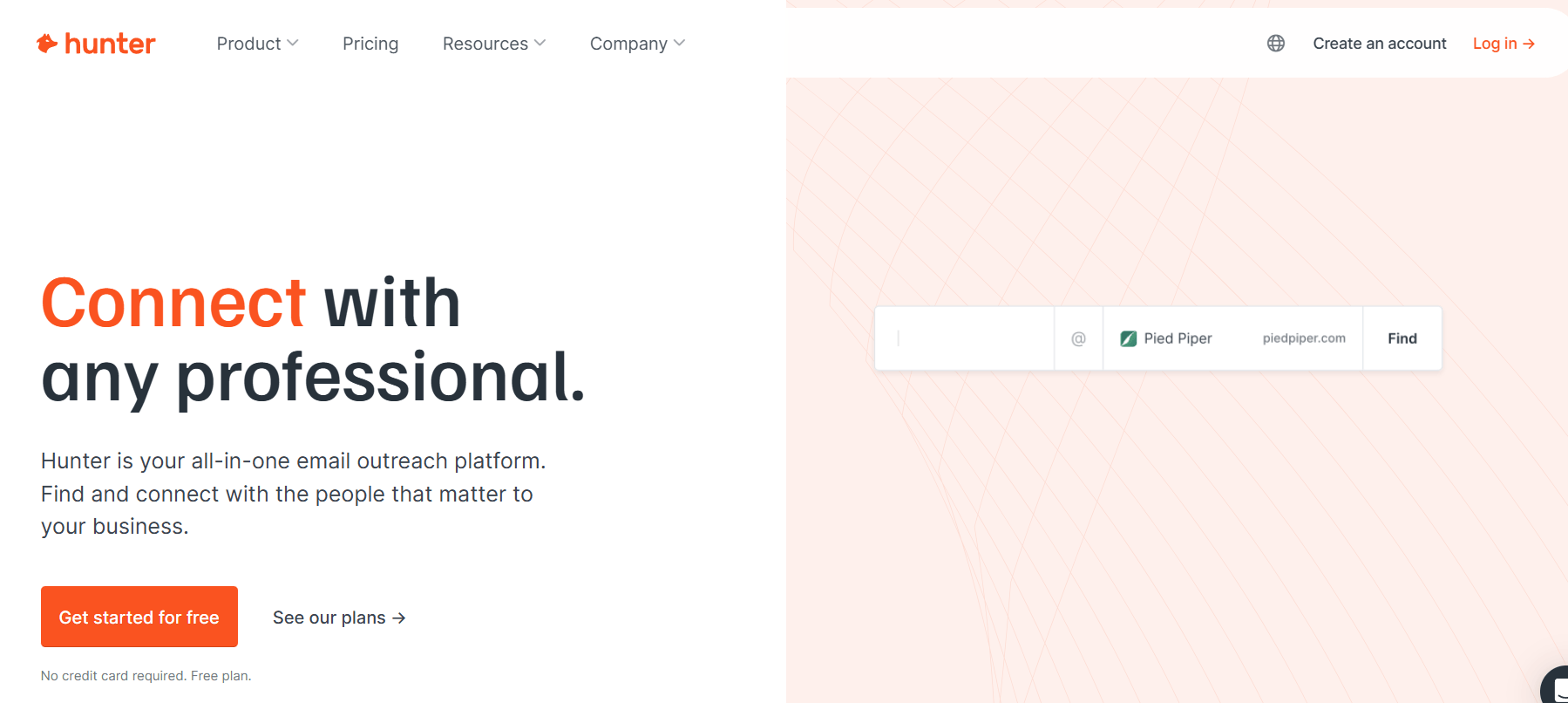
Hunter.io is a prospecting tool built to help sales teams find professional email addresses, verify them, and run outreach from one platform.
Key Features:
- Domain search
- Email finder
- Email verifier
- Bulk email tasks
- Email sequences
Pros:
- Finds professional email addresses quickly
- Verifies emails before outreach
- Combines discovery, verification, and outreach
Cons:
- More email-focused than full sales intelligence platforms
- Plans vary by credits and outreach needs
- Larger teams may need a custom setup
Best For: Email discovery
Why Sales Teams Use It:
- To find work email addresses
- To verify emails before sending
- To manage outreach more efficiently
Pricing:
- Free tier
- Starter: $34/mo.
- Growth: $104/mo.
- Scale: $209/mo.
- Enterprise: Custom pricing
10. RocketReach
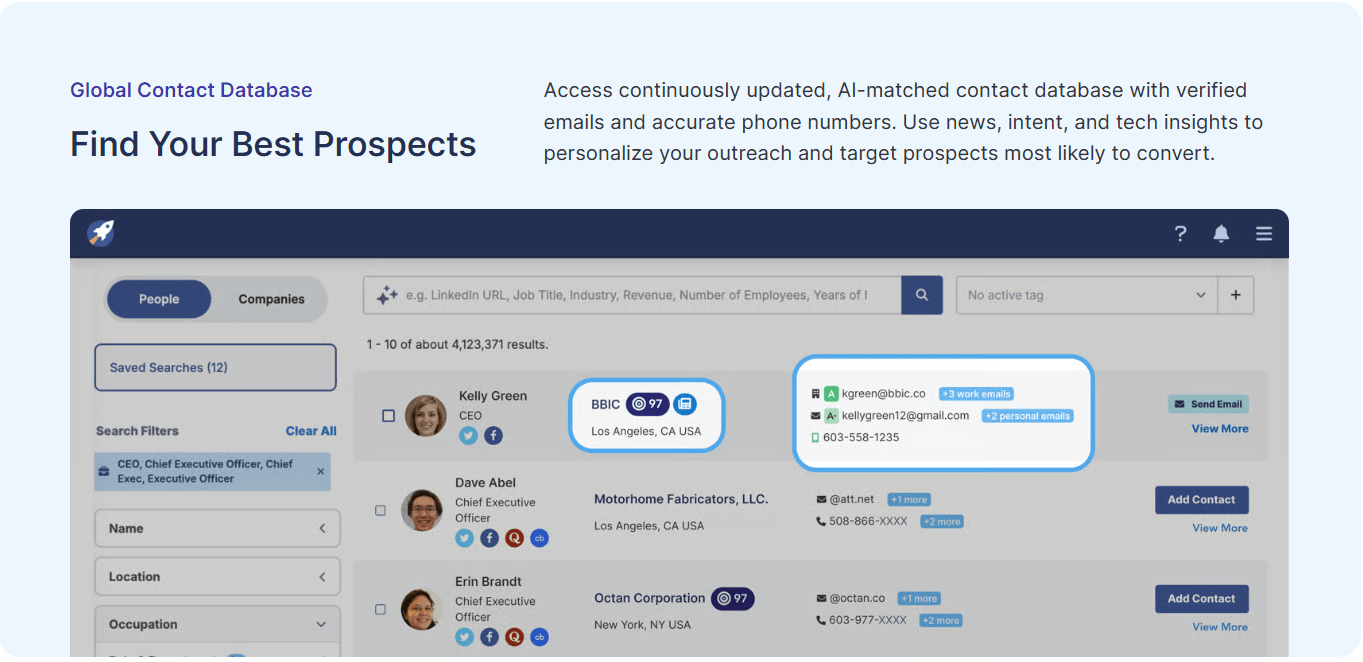
RocketReach is a B2B prospecting tool built to help sales teams find professional contact information, enrich lead data, and move from research to outreach more quickly.
Key Features:
- Professional email lookup
- Phone number discovery
- Browser extension prospecting
- Company connections from websites
- Contact enrichment workflows
Pros:
- Finds contact details without leaving the page
- Speeds up prospecting across websites and social platforms
- Supports faster lead research and outreach
Cons:
- Features may vary by plan
- Teams may need to confirm integration details
- Pricing and package scope should be verified directly
Best For: Contact enrichment
Why Sales Teams Use It:
- To uncover business contact details faster
- To keep prospecting moving without adding extra steps to the workflow
- To help teams prospect directly from online profiles and company pages
Pricing:
- Essentials: $33/mo.
- Pro: $75/mo.
- Ultimate: $142/mo.
11. Dealfront/Leadfeeder
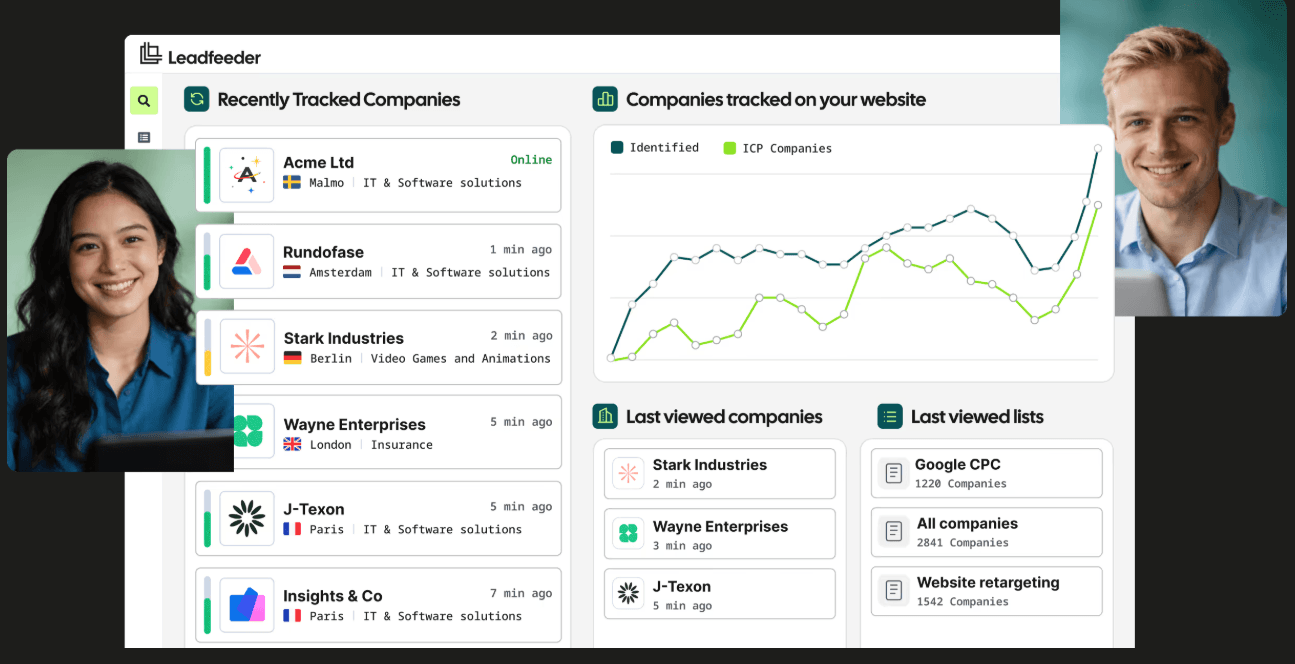
Dealfront/Leadfeeder is a go-to-market platform built to help sales and marketing teams identify high-intent accounts, uncover website visitors, and turn buying signals into pipeline.
Key Features:
- Website visitor identification
- Prospect list creation from a global database
- Buying intent signals
- ICP insights and segmentation
- CRM and sales tool integrations
Pros:
- Turns website traffic into sales opportunities
- Helps prioritize high-intent accounts
- Connects prospecting with CRM and sales workflows
Cons:
- Product packaging may vary
- Pricing depends on plan and product mix
- Teams should compare visitor intelligence with broader prospecting needs
Best For: Website visitor intelligence
Why Sales Teams Use It:
- To identify companies visiting their website
- To spot buying intent earlier
- To prioritize outreach based on real account activity
Pricing:
- Lite: free
- Website Visitor Identification: $99/mo.
- Platform: $399/mo.
12. Clearbit/Breeze Intelligence
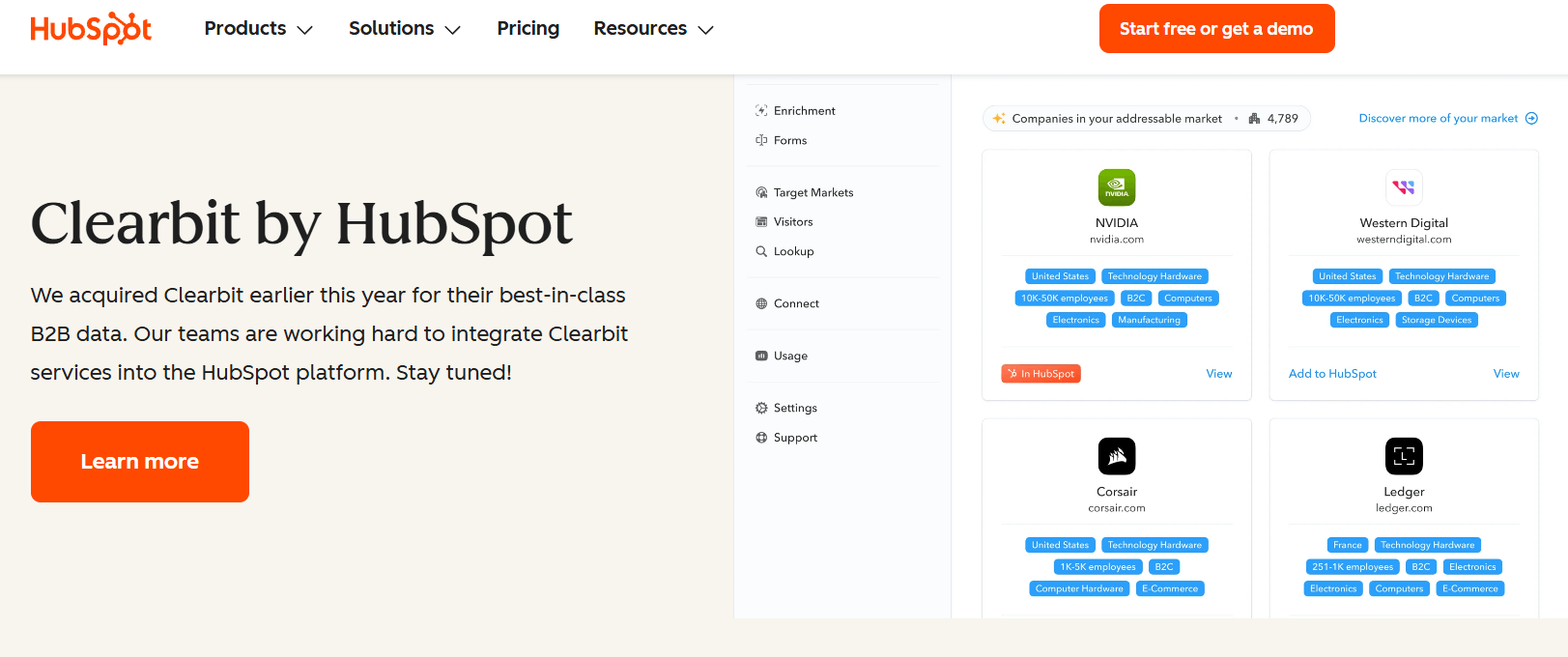
Clearbit/Breeze Intelligence is HubSpot’s data enrichment and buyer intent solution, built on Clearbit technology. It helps sales and marketing teams enrich contact and company records, identify website visitors, and use buying signals to prioritize outreach inside HubSpot.
Key Features:
- Contact and company enrichment
- Buyer intent data
- Website visitor identification
- Form shortening
- HubSpot-native workflows
Pros:
- Keeps CRM records more complete
- Adds context on buyer interest and website activity
- Fits naturally into HubSpot workflows
Cons:
- Pricing is credit-based
- Features depend on your HubSpot tier
- Teams may need to monitor credit usage as they scale
Best For: Built-in enrichment and buyer intent data
Why Sales Teams Use It:
- To fill in missing CRM data
- To spot higher-intent accounts
- To give reps more context before outreach
Pricing: Custom pricing
13. Snov.io
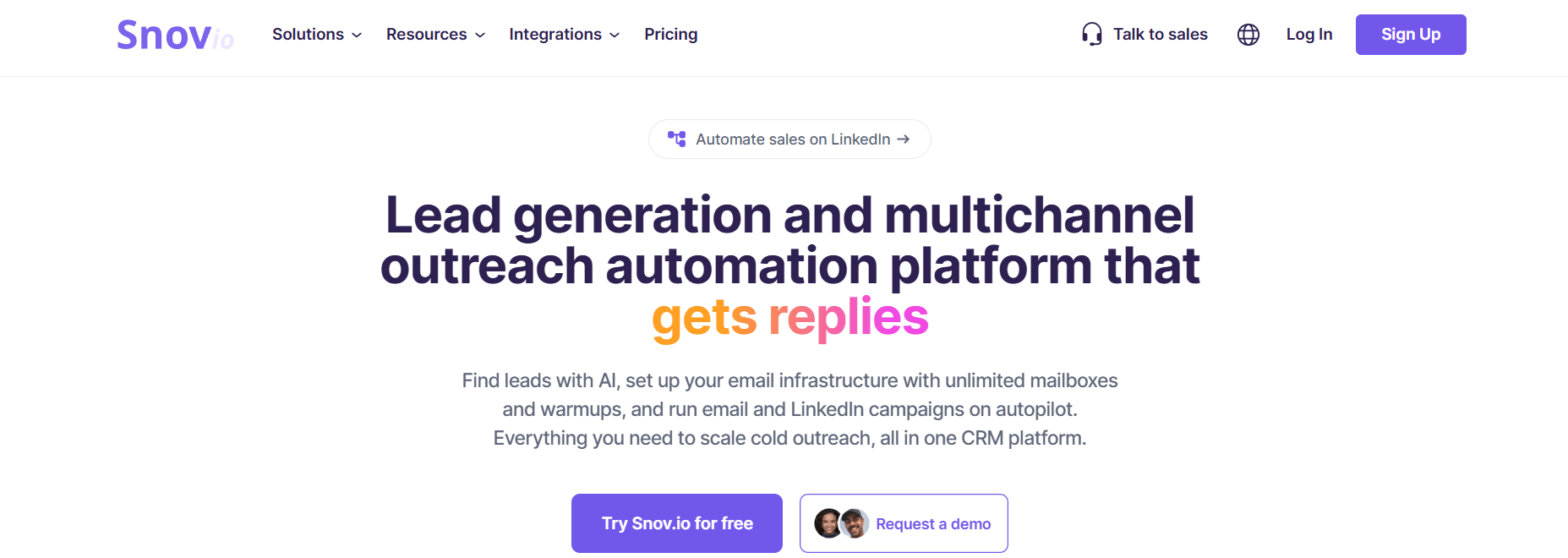
Snov.io is an outreach automation and lead generation platform that helps sales teams find prospects, verify emails, automate campaigns, and manage outreach from one place.
Key Features:
- Email finder
- Email verification
- Automated drip campaigns
- LinkedIn prospecting automation
- Built-in sales CRM
Pros:
- Combines prospecting, verification, and outreach
- Helps teams find and verify emails before campaigns
- Supports automated cold outreach
Cons:
- Features depend on plan and credit limits
- Some integrations and advanced tools require higher plans
- Teams should compare usage limits as outreach grows
Best For: Prospecting and outreach
Why Sales Teams Use It:
- To find leads more quickly
- To verify contact data
- To automate follow-up
Pricing:
- Starter: $39/mo.
- Pro: $99/mo.
- Custom Ultra: Custom pricing
14. Clay
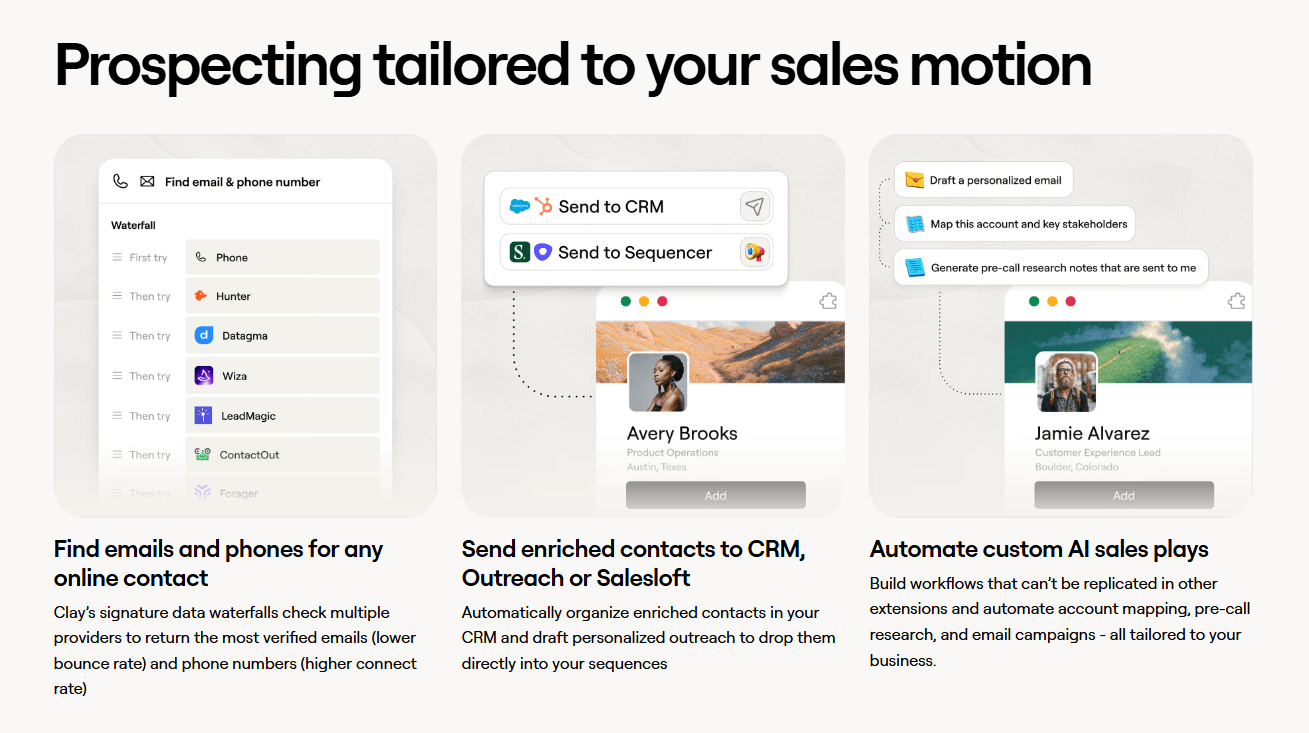
Clay is a go-to-market platform that helps sales teams enrich lead data, automate research, and build more personalized prospecting workflows.
Key Features:
- Multi-source data enrichment
- AI research agents
- CRM enrichment and maintenance
- Intent-based outbound workflows
- Workflow automation
Pros:
- Combines enrichment and workflow automation
- Helps personalize outreach with AI and richer data
- Supports flexible prospecting workflows
Cons:
- Pricing is credit-based
- Plan capacity varies by usage
- Teams may need to estimate usage before choosing a plan
Best For: Building automated outbound workflows
Why Sales Teams Use It:
- To centralize data enrichment
- To automate prospect research
- To create more personalized outbound campaigns
Pricing:
- Free tier
- Launch: $167/mo.
- Growth: $446/mo.
- Custom: Custom pricing
15. Lusha
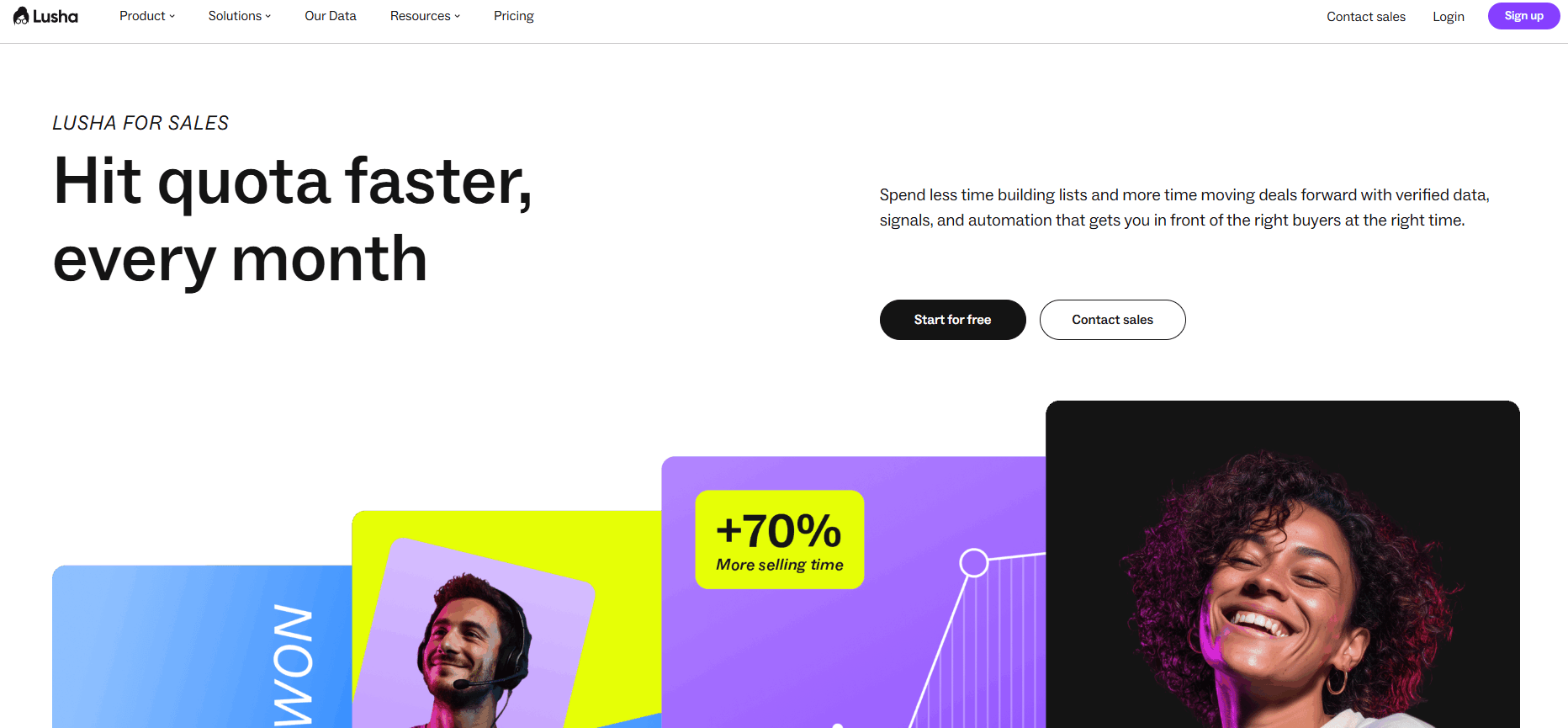
Lusha is a B2B prospecting platform that helps sales teams find verified contact and company data, track buying signals, and keep prospecting workflows moving faster.
Key Features:
- Verified contact and company data
- Buying signals
- Chrome extension for LinkedIn and websites
- Data enrichment workflows
- CRM and sales tool integrations
Pros:
- Helps teams reach decision makers faster
- Makes LinkedIn and browser-based prospecting easier
- Supports cleaner data and more efficient outreach
Cons:
- Pricing and credits vary by plan
- Teams should compare plans by usage
- Some features depend on integrations and setup
Best For: Fast contact discovery
Why Sales Teams Use It:
- To find contact details faster
- To enrich records
- To prioritize outreach with real-time signals
Pricing:
- Free tier
- Starter: $49.90/mo.
- Pro: $69.90/mo.
- Premium: $399.90/mo.
- Scale: Custom pricing
16. Crunchbase
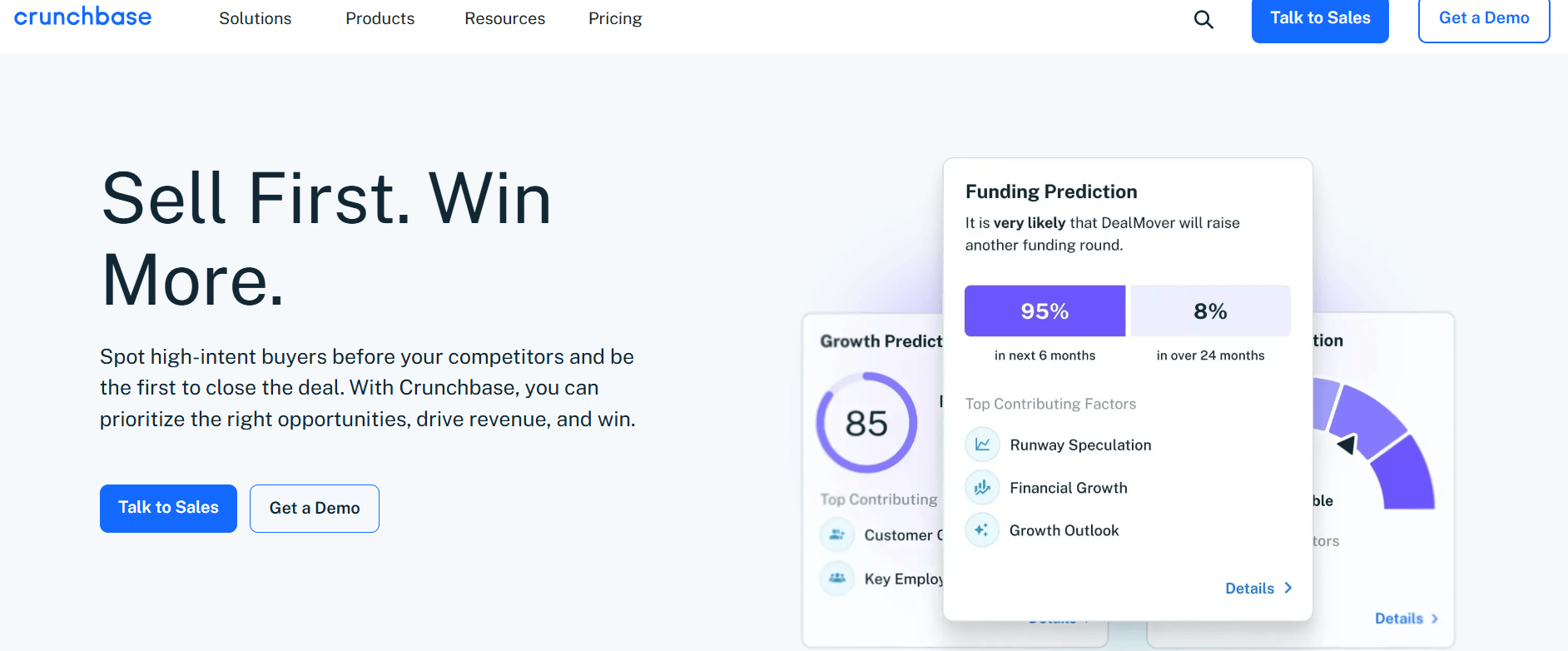
Crunchbase is a prospecting and market intelligence platform that helps sales teams identify promising companies, monitor growth signals, and prioritize outreach with private company data and AI-powered insights.
Key Features:
- Company search and filtering
- AI-powered search and insights
- Funding and growth signals
- Saved lists and activity tracking
- Data export capabilities
Pros:
- Helps teams identify high-potential companies earlier
- Adds context through funding and growth signals
- Supports smarter targeting with AI-powered insights
Cons:
- More company-focused than contact-data-first tools
- Feature depth varies by plan
- Larger exports and workflows may require a higher-tier plan
Best For: Company-level prospecting
Why Sales Teams Use It:
- To spot promising accounts
- To track company activity
- To time outreach around funding, growth, and other business signals
Pricing:
- Pro: $99/mo.
- Business: $199/mo.
- API: Custom pricing
17. Lemlist
Lemlist is a sales engagement and prospecting platform built to help teams find leads, enrich contact data, and run multichannel outbound campaigns from one place. Its platform combines a large lead database, AI-powered personalization, LinkedIn and email automation, calling, and deliverability tools to support more efficient prospecting workflows.
Key Features:
- Large database
- AI-powered personalization
- Multichannel outreach across email, LinkedIn, phone, and WhatsApp
- Built-in email warm-up and deliverability tools through Lemwarm tool
- CRM integrations and Chrome extension
Pros:
- Combines lead discovery, enrichment, and outreach in one platform
- Supports multichannel prospecting from a single workflow
- Includes built-in deliverability features to help improve email performance
Cons:
- Advanced multichannel capabilities require higher-tier plans
- Some features, such as WhatsApp automation and calling numbers, are add-ons
- Teams may need to compare plan structure, sender limits, and credit usage before choosing a package
Best For: Multichannel outbound prospecting
Why Sales Teams Use It:
- To find verified leads and launch outreach from one platform
- To automate outreach across email, LinkedIn, and phone
- To improve deliverability while scaling outbound campaigns
Pricing:
- 14-day free trial
- Email Pro: $79/mo.
- Multichannel Expert: $109/mo.
- Enterprise: Custom pricing
How Modern Sales Teams Use Prospecting Tools
Modern sales teams use prospecting tools to make the sales process more targeted, efficient, and scalable. Instead of relying on manual research alone, you can use these platforms to identify the right accounts, find the right contacts, and support more personalized outreach.
Here’s a step-by-step approach to effectively use a B2B prospecting tool:
Step 1: Define your ideal customer profile (ICP)
Start by identifying the company traits that best match your target market, such as industry, company size, location, and revenue.
Use our ICP worksheet for help identifying your target customer.
Step 2: Build a targeted prospect list
Use your preferred B2B sales prospecting tools to create segmented lists based on the filters that matter most to your sales strategy.
Step 3: Identify decision makers
Find the right contacts within each account, including decision makers and other key stakeholders involved in the buying process.
Step 4: Enrich contact data
Confirm email addresses, phone numbers, and company details so reps can prospect with more confidence and less wasted effort.
Step 5: Prioritize the best opportunities
Use firmographic data, intent signals, and account insights to focus on the prospects most likely to engage.
Step 6: Launch personalized outreach
Use the information gathered to send more relevant emails, make better calls, and tailor messaging to each prospect or account.
Step 7: Sync with your sales tech stack
Connect prospecting data with your CRM and sales engagement tools to keep workflows organized and outreach consistent.
Pro Tip
For the best results, use prospecting tools as part of a connected workflow. When prospect data, outreach activity, and CRM records stay aligned, teams can prospect more efficiently and follow up with better timing.
How to Choose the Right Sales Prospecting Tool
The right prospecting platform depends on how your team sells, who you sell to, and what kind of workflow you need to support. Typically, the best choice comes from evaluating tools against the factors that will have the biggest impact on daily sales execution.
Consider these factors when choosing a sales prospecting tool:
- Budget: Start with what your team can realistically invest. Some tools offer simple monthly pricing, while others use custom quotes, credit-based models, or tiered packages.
- SMB vs. enterprise: Smaller teams often need simplicity, ease of use, and fast time to value, while enterprise teams may need deeper databases, advanced reporting, stronger admin controls, and broader integrations.
- Sales motion: Consider how your reps work. Some tools are better for high-volume outbound prospecting, while others are better for account-based selling, relationship-driven outreach, or enrichment workflows.
- Outbound vs. inbound: Outbound-focused teams may need list building, direct dials, and sequencing support, while inbound-focused teams may benefit more from enrichment, intent signals, and website visitor identification.
- Territory vs. global sales: If your team sells by region or rep territory, look for strong geographic filters and territory management. If you sell internationally, coverage and compliance matter even more.
- Data accuracy: Even the best workflow will break down if the data is unreliable. Look for tools that prioritize verified contact data and regular updates.
- CRM integrations: A prospecting tool should fit into the rest of your sales stack. Strong CRM integrations help reduce manual entry, improve visibility, and keep teams aligned.
Common Mistakes When Using Sales Prospecting Tools
Even the best sales prospecting tools will fall short if teams use them without a clear strategy. To get better results, your team needs more than access to data; it needs the right targeting, accurate information, and a workflow that supports timely, relevant outreach.
Some of the most common mistakes include:
- Buying tools before defining an ICP: If your team has not clearly defined its ICP, even the best platform can produce unfocused prospect lists and wasted outreach.
- Relying only on automation: Automation can save time, but it should not replace thoughtful targeting, personalization, and human follow-up.
- Using outdated contact data: Prospecting is much more effective when reps work from current, verified data instead of old lists or incomplete records.
- Ignoring intent signals: Teams that overlook buyer activity and interest signals may miss chances to prioritize warmer, more qualified opportunities.
- Not integrating with CRM: When prospecting tools are disconnected from your CRM, workflows become less efficient and important context can get lost.
AI and the Future of Sales Prospecting Tools
AI is pushing sales prospecting tools beyond basic contact lookup. In 2026, the most useful platforms help teams uncover stronger leads, spot buying signals earlier, automate research, and personalize outreach more effectively.
- AI-driven lead discovery: AI helps sales teams identify better-fit prospects faster by analyzing firmographic, behavioral, and account-level data.
- Predictive lead scoring: Prospecting platforms can use AI to rank leads based on how likely they are to engage or convert, helping reps focus their time more effectively.
- Intent data integration: Modern tools increasingly combine intent signals with contact and company data so teams can prioritize accounts that are already showing buying interest.
- Automated research agents: AI can now handle parts of the research process by summarizing accounts, surfacing useful insights, and reducing manual prep work.
- Hyper-personalized outreach: AI makes it easier to tailor outreach by role, industry, company details, and buyer behavior, helping sales teams personalize at scale.
Types of Sales Prospecting Tools
Not all prospecting platforms serve the same purpose. Some are built to help sales teams find contact data, while others focus on social selling, email discovery, buyer intent, or AI-powered research. Sales prospecting tools fall into a few main categories, and each one supports a different part of the prospecting process.
Contact database tools
Contact database tools give sales teams access to company and contact data, making it easier to build targeted lists and identify decision makers.
- Salesgenie
- ZoomInfo
- UpLead
Need targeted business leads? Explore Salesgenie’s business leads database.
Social selling tools
Social selling tools help reps build relationships, track account activity, and engage prospects through professional networks.
- LinkedIn Sales Navigator
Email discovery tools
Email discovery tools are designed to help teams find and verify business email addresses for outreach.
- Hunter
- RocketReach
Intent data platforms
Intent data platforms help sales teams spot buying signals and prioritize accounts that are more likely to be in-market.
- Dealfront/Leadfeeder
- ZoomInfo
AI prospecting tools
AI prospecting tools support faster lead discovery, research, enrichment, and workflow automation.
- Seamless.AI
- Clay
Pro Tip
If your team uses multiple prospecting tools, make sure each one fills a specific gap in the workflow instead of overlapping too heavily with the others.
Best Prospecting Tools by Use Case
The best prospecting platform depends on how your team sells, how much complexity you need, and which workflows matter most. Some tools are better for SMB list building, some are built for enterprise intelligence, and others stand out for AI or LinkedIn-based prospecting.
Best prospecting tools for small businesses
- Salesgenie: A strong fit for SMBs that want practical list building, territory prospecting, and verified business leads without unnecessary complexity.
- Apollo.io: A good option for smaller teams that want prospecting, enrichment, and outreach in one platform.
- UpLead: Best for teams that want verified B2B emails and simple, targeted list building.
Best tools for enterprise sales
- ZoomInfo: A strong choice for enterprise teams that need large-scale data, intent signals, and broad sales tech stack support.
- Cognism: Well suited for teams that prioritize compliant prospecting, phone-verified data, and global sales coverage.
- Dealfront/Leadfeeder: A good option for enterprise teams that want website visitor intelligence, buying signals, and account-based prospecting support.
Best AI prospecting tools
- Seamless.AI: Built around AI-powered search and real-time lead discovery to help teams build pipeline faster.
- Clay: Ideal for teams using AI, enrichment, and automation to build more customized prospecting workflows.
- Apollo.io: A strong fit for teams that want AI-powered prospecting combined with outreach and workflow automation.
Best LinkedIn prospecting tools
- LinkedIn Sales Navigator: The go-to choice for relationship-led selling, advanced buyer search, and account insights inside LinkedIn.
- LeadIQ: A smart option for teams that prospect heavily on LinkedIn and want faster lead capture.
- Evaboot: Useful for teams that want to export, clean, and enrich LinkedIn Sales Navigator lead lists more efficiently.
Best Practices for B2B Sales Prospecting in 2026
Prospecting in 2026 works best when sales teams pair good data with good judgment, using the right signals, tools, and messaging to reach the right buyers at the right time.
Following a few core best practices can make the difference between more activity and better results.
- Build an ICP before prospecting: Prospecting works better when sales teams know exactly which industries, company sizes, roles, and pain points they want to target.
- Use intent data: Intent signals can help teams focus on accounts that are already showing interest, making outreach more timely and relevant.
- Personalize outreach: Better prospect data should lead to better messaging. Tailoring outreach by role, company, or need can improve engagement.
- Combine multiple prospecting tools: One platform may be great for contact data, while another is better for LinkedIn prospecting, email discovery, or buyer intent.
- Automate but humanize outreach: Automation can improve efficiency, but the best results usually come when teams combine it with thoughtful messaging and real human follow-up.

Download Our Sales Prospecting Tool Checklist
To help you figure out which tool is best for your team, we’ve created a downloadable prospecting tool checklist to help you compare tools and decide which features matter most.
Final Thoughts
Prospecting is still the foundation of pipeline growth, and the right tools can make that process faster, smarter, and easier to scale. By reducing manual research and helping teams find better-fit prospects, modern platforms help give you more time to focus on outreach and relationship building.
Ultimately, the best choice comes down to fit. Evaluate sales prospecting tools based on your team’s size, sales motion, workflow needs, and required level of data, automation, and integrations.
Salesgenie can help your team find verified B2B prospects faster and build a consistent sales pipeline. Try us today.
FAQs
The best B2B sales prospecting tool depends on your team’s size, sales motion, and data needs. Salesgenie, ZoomInfo, LinkedIn Sales Navigator, Apollo.io, and Cognism are all strong options for different use cases.
Sales reps use a mix of contact database tools, LinkedIn prospecting tools, email discovery platforms, intent data tools, and CRM-connected sales engagement platforms. Common examples include Salesgenie, ZoomInfo, LinkedIn Sales Navigator, Apollo.io, Hunter, and LeadIQ.
AI sales prospecting tools use AI to help teams find leads, prioritize accounts, automate research, and personalize outreach. Examples include Seamless.AI, Clay, and AI-powered features within platforms like Apollo.io and ZoomInfo.
B2B leads are typically found by defining an ideal customer profile, building targeted prospect lists, identifying decision makers, and verifying contact data before outreach. Many sales teams use prospecting tools, intent data, LinkedIn, and CRM insights to make that process faster and more accurate.
Lead generation focuses on attracting potential buyers to your business, often through marketing channels like content, ads, or forms. Prospecting is the process of identifying, researching, and reaching out to potential buyers directly.