
Big brands can outspend you, but they can’t out-serve you. While household names pour millions into splashy campaigns and loyalty programs, the real competitive edge for small businesses is customer retention—meaning keeping the buyers you’ve already earned. Here’s the good news: You don’t need enterprise budgets or bloated toolsets to reduce churn. What you need is focus, speed, and a commitment to out-serving your best customers at every turn.
In this blog, you’ll get an opinionated, priority-first plan for reducing customer churn with small business retention strategies, quick-win customer loyalty ideas, and retention marketing tactics that deliver results. Get ready to turn your hard-won customers into loyal regulars.
What Fix Reduces Churn Fastest?
If you want to make a real dent in your churn rate, start with activation and onboarding. This is the critical moment for your customers, and it’s where churn often begins.
When a new customer signs up for your product or service, they’re excited and hopeful. They believe you can solve their problem or make their life better. But if they don’t reach that “aha” moment quickly, they’ll lose interest.
So, how do you get them there faster?
- Start by clarifying exactly what that first moment of success looks like for your customers. Is it when they receive their first order? Book their first appointment? Use a key feature for the first time?
- Once you know what that milestone is, you can build your onboarding around getting them there as quickly and smoothly as possible.
- Create a series of welcome emails with quick tips and tutorials, set up automated reminders to nudge them to complete key steps, or have a real human reach out to check in and offer help.
Pro Tip
Don’t just guess at what first value looks like for your customers. Define it in one clear, measurable sentence, and then instrument a signal that proves it happened, like a delivered order, a used feature, or a completed appointment. That way, you’ll know exactly how well your onboarding is working and where you need to improve.
How Do You Prevent Silent Churn?
Customers rarely announce when they’re about to churn. They don’t send a breakup text or leave a goodbye voicemail. Instead, they slip away quietly, and by the time you realize they’re gone, it’s often too late to win them back.
Even if your customers aren’t saying anything, their behavior is sending loud signals about their likelihood to churn. You just need to know where to look. Watch for signs of disengagement, like:
- Inactivity that stretches beyond your typical repeat purchase window
- Declining open rates or increasing unsubscribes from your emails and texts
- Failed payments or frequently paused subscriptions
- Negative feedback in surveys or an uptick in support tickets
Each of these behaviors on their own may not be a huge red flag. But when you start to see them in combination, it’s a clear warning sign that a customer is at risk of churning.
Can Personalization Scale Without Big Budgets?
When you hear “personalization,” it’s easy to imagine teams of data scientists and complex machine learning models. And if you’re a big brand with enterprise-level budgets, that might be your reality.
But you don’t need fancy algorithms or perfect data to bring more relevance to your customer communications. With a simple micro-segmentation strategy, even small teams can send targeted messages that feel personal, without breaking the bank.
Here’s the approach:
- Group customers into small segments based on meaningful attributes, like lifecycle stage; product interest or purchase history; and service experience or support interactions
- Craft tailored messages and offers for each micro-segment, focusing your effort where it matters most. Start with three core segments: new, at-risk, and loyal.
- Use email and SMS templates with dynamic fields to pull in customer details like first name, last product purchased, or join date.
Pro Tip
Start with three segments only (new, at-risk, loyal) and one specific offer or message per segment; expand when each shows lift.
Which Offers Keep Loyalty Profitable?
Not all loyalty incentives are created equal. Some drive repeat purchases without destroying your margins. Others look generous on paper but quietly erode profitability with every redemption.
Here are the types of loyalty-building offers that will help you retain customers:
Use frequent communications without training customers to wait for discounts. Think early access to new products, exclusive content, or VIP service perks that cost you little but feel valuable to the customer. These types of rewards build emotional connection and habit without conditioning customers to only buy on sale.
Use targeted offers to move specific inventory, re-engage lapsed customers, or reward your most valuable segments.
Track the long-term impact of each offer type. Ask yourself: Does this incentive increase lifetime value, or does it just shift purchase timing? Does it attract the customers you want to retain, or does it draw bargain hunters who churn the moment the deal ends?
Pro Tip
Test one non-discount reward (like early access or bonus content) against a traditional discount offer and measure repeat rate and margin impact over 90 days.
How Do You Calculate Retention Rate?
You can’t improve what you don’t measure. If you’re serious about reducing churn, you need to track your customer retention rate and understand what the number actually means.
The basic formula is simple:
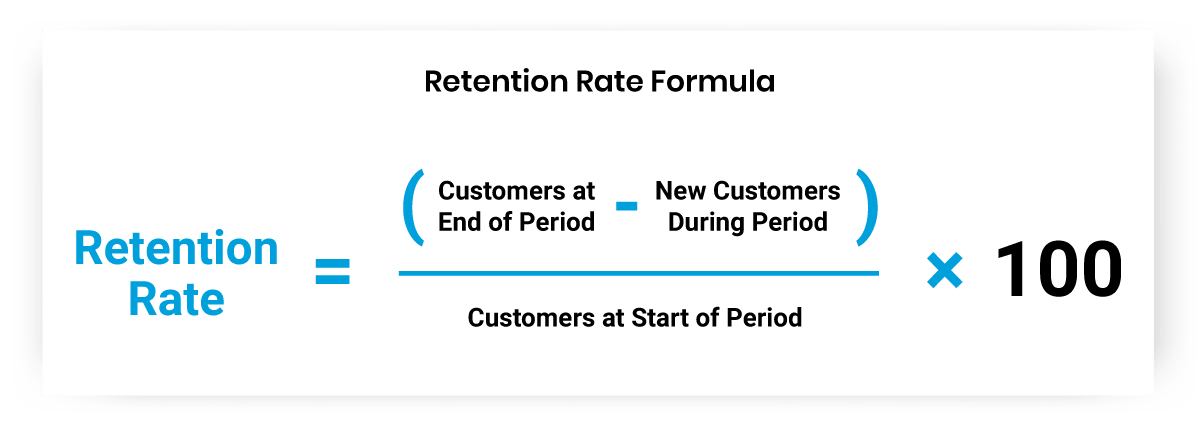
This tells you what percentage of your existing customers stayed with you over a given time frame. But the devil is in the details.
To choose a time window, pick one that aligns with your typical repeat purchase cycle, and stick with it so you can track trends over time.
To determine your customers at the start of that window, you can look at two different numbers:
- Aggregate retention: gives you a single number across your entire customer base
- Cohort retention: broken down by the month or quarter customers first purchased.
Pro Tip
Track three metrics together—retention rate, repeat purchase rate, and average time between purchases—to get a complete picture of customer loyalty and spot problems early.
Where Should You Ask for Feedback?
Asking for feedback is important. Asking for it at the wrong time is a waste. At worst, it annoys customers and accelerates churn.
The best moments to request feedback are:
- Right after a customer reaches a key milestone or experiences a win with your product
- After a support interaction, while the experience is still fresh
- When a customer shows signs of disengagement, as a way to open dialogue and prevent churn
Avoid asking for feedback too early in the customer journey, before they’ve had a chance to form an opinion. And don’t bombard active, happy customers with constant survey requests. You’ll train them to ignore you.
When you do ask, keep surveys short and focused. Ask one or two specific questions that will give you actionable insight, not a 20-question essay that no one will complete. And always close the loop: let customers know you heard them and share what you’re doing in response.
What to Deprioritize Right Now
Retention doesn’t mean doing everything. It means doing the right things well and saying no to the rest.
Here’s what to deprioritize:

Complex loyalty programs with points, tiers, and redemption rules that confuse customers and drain resources.

Broad, untargeted email blasts that treat all customers the same.

Vanity metrics like social media followers or email list size that don’t correlate with repeat purchases.

Chasing every piece of feedback or feature request without a clear ROI.
Focus your time and budget on the tactics that directly reduce churn and increase repeat purchase rates. Everything else is a distraction.
Make Retention Wins Repeatable Without Bloat
When it comes to customer retention, your goal is to create a simple, repeatable system that your team can execute consistently without burning out.
Here’s how you can make that happen:
- Start by documenting your core retention workflows: onboarding sequences, at-risk customer outreach, win-back campaigns, and feedback loops. Use templates, automation, and checklists to make these workflows easy to execute and hard to skip.
- Establish a regular cadence for reviewing retention metrics and making adjustments. Monthly is usually enough. Look at your retention rate, repeat purchase rate, and churn signals. Identify one or two areas to improve, make a change, and measure the impact.
- Resist the urge to add complexity. The best retention systems are the ones that run smoothly in the background, freeing your team to focus on high-touch interactions with your most valuable customers.
Pro Tip
Create a one-page retention playbook that lists your key workflows, metrics, and monthly review process—then train every team member on it so retention becomes a shared responsibility, not a single person’s job.
Conclusion
Big brands might have deeper pockets and larger teams, but when it comes to customer retention, those advantages can quickly turn into liabilities. Enterprises often get so caught up in complex loyalty programs, big-budget ad campaigns, and shiny new technologies that they lose sight of what actually keeps customers coming back. As an SMB, that’s your opportunity to outmaneuver the big players. By ruthlessly prioritizing speed, customer proximity, and consistent execution of the fundamentals, you can drive meaningful improvements in retention without getting bogged down in bureaucracy or budget debates.
With a tool like Salesgenie®, you can quickly build segmented lists of your customers using verified contact data and firmographic insights, ensuring your retention messages reach the right people at the right time.
Try Salesgenie today and turn retention priorities into repeatable wins.
FAQs
Focus on activation and onboarding first—this is where most churn happens. Get customers to their “aha” moment as quickly as possible by defining what first success looks like and building your onboarding process around achieving that milestone. When customers see value immediately, they’re much more likely to stick around.
Monitor behavioral signals like inactivity beyond normal purchase windows, declining email engagement, failed payments, or increased support tickets. When you see these warning signs in combination, reach out proactively with targeted solutions before the customer silently leaves.
Yes, through micro-segmentation based on meaningful attributes like lifecycle stage, purchase history, or service experience. Start with just three core segments (new, at-risk, loyal) and create one specific message or offer for each, using email templates with dynamic fields to add personal touches.
Small businesses can leverage agility, customer intimacy, and the ability to make quick changes without bureaucracy. While big brands get bogged down in complex systems and budget debates, SMBs can focus on speed, customer proximity, and consistent execution of retention fundamentals.
Concentrate on three key areas: plugging early leaks in your onboarding flow, proactively reaching out to at-risk customers, and personalizing communications at scale. These fundamentals, when executed consistently, can drive meaningful retention improvements without requiring enterprise-level resources.