

Most marketing teams treat inbound and outbound as an either/or choice. They pour resources into content and SEO, starving sales in the process. Or they burn budget on cold outreach, alienating prospects with generic spam. In a recent report, 96% of marketers noticed that personalized experiences led to sales, meaning the smartest teams combine inbound and outbound motions to create a strategy that powers measurable pipeline.
Continue reading to learn how to time inbound and outbound efforts so they work together, not at odds. You’ll discover when each approach works best, how to avoid common pitfalls, and what metrics prove your strategy is working. By the end, you’ll have a clear path without choosing sides.
Learn more: Transform Your Marketing with Data-Driven Precision
Stop Choosing; Combine Inbound and Outbound Marketing
Inbound excels at generating intent. Your content teaches, persuades, and earns permission. But converting that intent into sales conversations? That’s where targeted outbound shines, if the timing and fit are right.
Example
Consider a marketing automation company that invested heavily in thought leadership and organic search. Traffic grew significantly, but sales struggled to prioritize leads. Deal cycles stretched as reps chased poor-fit accounts.
Then they shifted their approach. They used inbound as an intent engine, tracking which accounts consumed sales enablement content. Then they launched targeted outbound sequences to those ideal customer profile (ICP) leads, connecting sales-ready messaging to observed research behavior. Meetings increased and deal cycles shortened.
The difference? They used inbound to spot intent and outbound to convert it faster. No clunky lead scoring or rigid qualification frameworks. Just the right conversation at the right time.
Pro Tip
Treat inbound as your signal engine and outbound as your precision instrument. Only point it where the signal is strong and the fit is tight.
Next up, we discuss what factors you need to consider to help you make a decision.
What Actually Changes Your Inbound–Outbound Decision?
The optimal blend of inbound and outbound marketing depends on your unique context. A few key factors tend to drive the decision:
- Buyer Stage: Early-stage buyers need more education, while late-stage prospects want vendor comparisons and proof points.
- Intent Strength: Repeat visits, pricing page views, and sales content downloads all suggest higher purchase intent.
- Average Contract Value (ACV): Larger deals often require multiple touches across a buying group. Smaller deals may close faster with targeted outbound.
- Data Quality: Poor data sinks outbound campaigns before they start.
- Team Capacity: Misalignment between marketing’s lead generation and sales’ follow-up capacity creates dropped balls and missed quotas.
Use this quick checklist to assess your approach:
- Buyer Stage: Are accounts early awareness or late-stage evaluation?
- Intent Signals: Are you seeing repeat visits, pricing page views, or sales content downloads?
- ICP Fit: Can you reliably identify and verify the right accounts and contacts?
- Deal Size: Do you need velocity (low ACV) or depth (high ACV)?
- Channel Saturation: Are your prospects fatigued by outreach in your space?
Pro Tip
Align your inbound and outbound teams on what a qualified account looks like. Use intent data to prioritize outreach and personalize messaging.
In the following section, we cover steps you can take to confidently combine both channels.
Stage-by-Stage Channel Mix That Works
Your inbound–outbound mix should evolve as your business matures. Here’s how to think about channel allocation across growth stages:
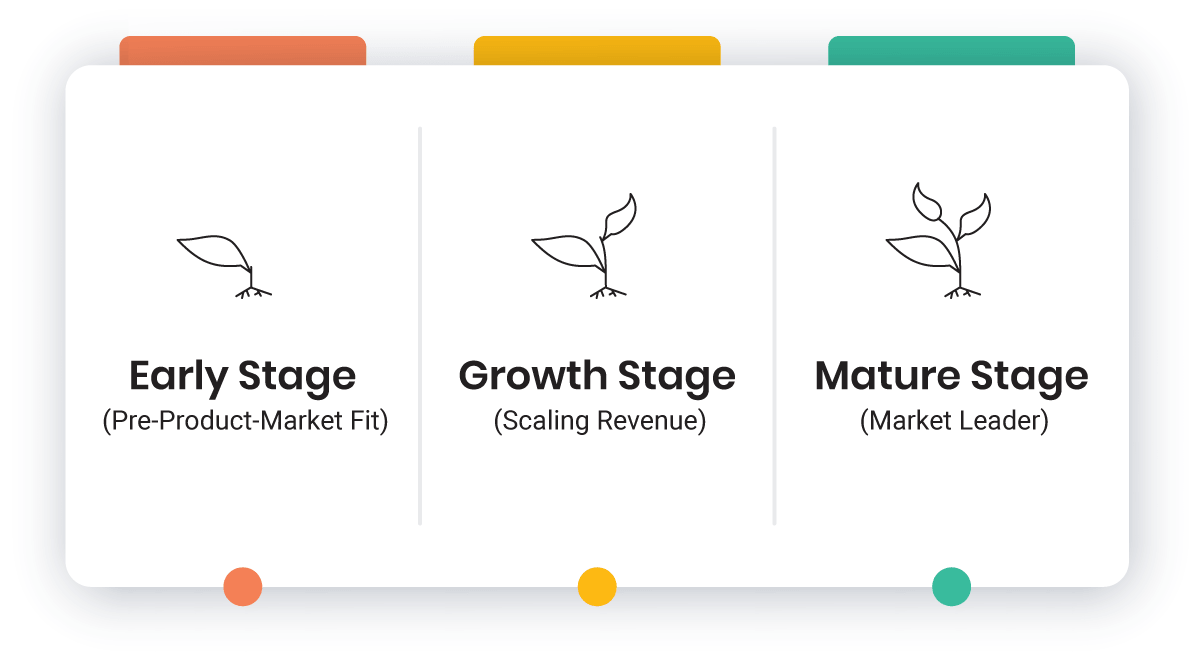
Early Stage (Pre-Product-Market Fit): Outbound-heavy to validate messaging and ICP assumptions. Use inbound to test content themes and build retargeting lists. Focus on learning, not scale.
Growth Stage (Scaling Revenue): Balanced approach with inbound generating qualified pipeline and outbound accelerating high-intent accounts. Invest in content that supports both motions, like case studies, comparison pages, and ROI calculators.
Mature Stage (Market Leader): Inbound-dominant with selective outbound for strategic accounts and new market expansion. Leverage brand authority to attract inbound demand while using outbound to defend against competitive threats.
The key is matching your channel investment to your current reality, not your aspirations. Scale what’s working before adding complexity.
Pro Tip
Review your channel mix quarterly. As your domain authority grows and your content library deepens, you can shift resources from outbound to inbound without sacrificing pipeline.
Which Path Should You Take Right Now?
Different business contexts demand different approaches. Here are two common scenarios and how to navigate them:
Scenario 1
New Brand, Limited Demand
If you’re entering a crowded market or launching a novel solution, inbound alone won’t cut it. Your domain authority is low, and it can take months to rank for competitive keywords. Organic traffic stays flat while competitors with established content libraries dominate search results.
Your best move:
- Launch targeted outbound to high-fit accounts while building your content foundation.
- Focus inbound efforts on bottom-of-funnel topics—pricing guides, implementation checklists, and competitor comparisons.
- Use paid channels to amplify your best content and build retargeting audiences.
- Track which messages and content themes drive meetings, then double down.
Scenario 2
Enterprise Account-Based Marketing (ABM), High-Value Deals
If you’re selling complex solutions with long sales cycles, your buying committees need multiple touches across channels. A single inbound download or cold email won’t close the deal.
Your best move:
- Use inbound to educate and build credibility across the buying group.
- Layer targeted outbound on accounts showing strong intent signals like repeat site visits, content downloads, or webinar attendance.
- Coordinate messaging across channels so your outbound references the content prospects have already consumed.
- Measure account-level engagement, not just individual lead activity.
Pro Tip
If your top pages don’t map to bottom-of-funnel queries (pricing, ROI, implementation), your outbound will stay cold. Fix that content before you scale outreach.
No tactic is perfect, so how can you identify when your inbound marketing methods aren’t performing?
When Does Inbound Stall?
Inbound marketing is a powerful engine for sustainable growth, but it’s not immune to stalls. Even the best-laid plans can sputter when:
Domain authority is low
If your site is new or hasn’t earned many backlinks, organic traffic stays flat.
Content is thin on decision topics
Top-of-funnel blog posts are great for awareness, but if you’re not covering pricing, use cases, and alternatives, you’ll struggle to attract buyers who are ready to act.
Your ICP doesn’t search much
Some buyer personas rely more on peer networks or industry events than search engines.
The result? Traffic grows, but pipeline doesn’t. Leads trickle in, but they’re not a fit. Your sales team gets frustrated, and your marketing team feels stuck.
You can get things moving again with a few smart pivots:
- Refocus your content on high-intent topics: Prioritize comparison pages, ROI calculators, and implementation guides over broad thought leadership.
- Optimize key conversion points: Make sure your highest-traffic pages have prominent calls to action.
- Layer targeted outbound on top: Use website engagement data to identify your most qualified visitors, then trigger timely, relevant outreach while you’re top of mind.
If you’re considering starting with outbound marketing, we have some tips to help you recognize when your strategy isn’t working.
When Does Outbound Backfire?
Outbound marketing can be a powerful accelerant for inbound, but when wielded clumsily, it can do more harm than good. Too many teams rush in without the right guardrails and end up burning budget and bridges.
The most common failure modes:
Unverified lists
Spraying and praying with purchased data is a great way to torch your domain reputation.
Generic messaging
Personalization is table stakes. If your message isn’t timely and relevant, it’ll get tuned out or marked as spam.
No event-based triggers
Reaching out just because someone fits your ICP is a recipe for radio silence. The best outbound is tied to observable actions—a pricing page visit, a webinar signup, or a competitor mention.
Ignoring compliance
CAN-SPAM, GDPR, and CCPA carry real penalties. If you’re not respecting opt-outs and frequency caps, you’re inviting legal trouble.
The antidote to sloppy outbound is precision and restraint. Only use outbound where fit and timing intersect.
You can only know how your inbound and outbound marketing strategy is performing by looking at specific metrics, which we’ll look at in the next section.
How Will You Measure What’s Working?
You can’t optimize what you don’t measure. The key to continuous improvement is tracking the right metrics at each stage of your funnel.
Start with these leading indicators:
- Content-to-demo conversion rate: What percentage of content consumers book a sales conversation?
- Sequence reply rate: Are your outbound messages generating meaningful engagement?
- Meeting set rate: How many outbound touches convert to booked meetings?
- Account engagement score: Are target accounts showing sustained interest across channels?
Next, track the following lagging indicators that tie to revenue:
- Pipeline generated by channel: How much qualified pipeline comes from inbound versus outbound?
- Deal velocity by source: Do inbound or outbound-sourced deals close faster?
- Customer acquisition cost (CAC) by channel: What’s the fully loaded cost to acquire a customer through each motion?
- Win rate by lead source: Are inbound or outbound leads more likely to close?
Set up dashboards to review these metrics weekly. Look for trends, not just snapshots. If content-to-demo rates are dropping, dig into which pages or topics are underperforming. If outbound reply rates are flat, test new messaging or tighter targeting.
Pro Tip
Align your sales and marketing teams on shared definitions for each metric. Misalignment on what counts as a “qualified lead” or “influenced opportunity” creates friction and erodes trust.
Next up: how you can effectively combine inbound and outbound marketing for maximum advantage.
What’s the Smartest Way to Combine Inbound and Outbound?
If you’re ready to combine inbound and outbound but unsure where to start, run a focused experiment:
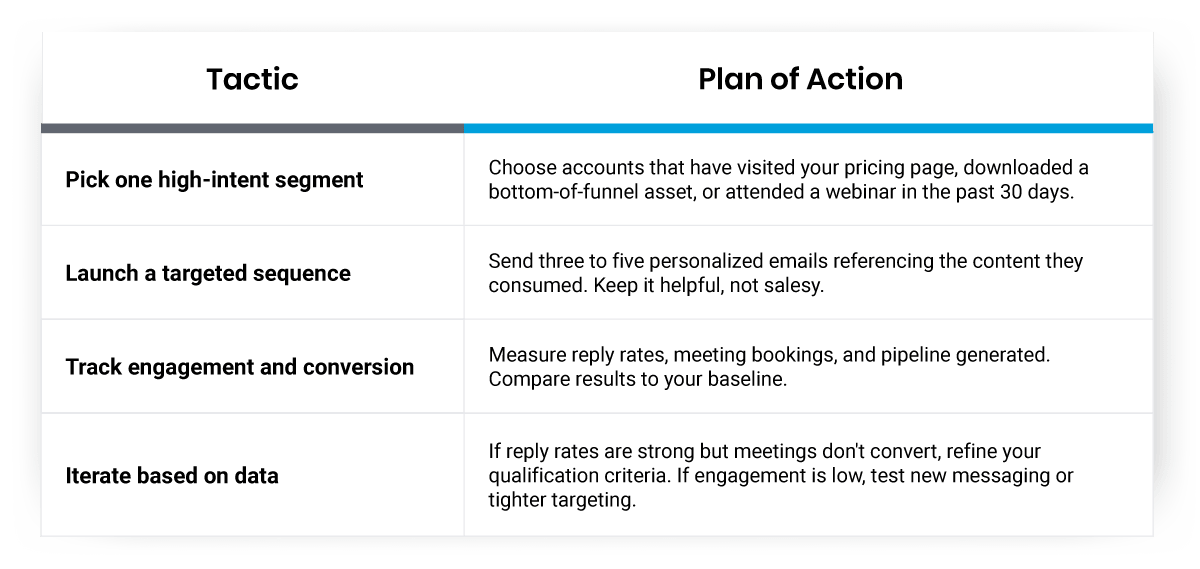
Start small, learn fast, and scale what works. The goal is progress, not perfection.
Pro Tip
Run your first experiment for 30 days, then review results with both sales and marketing. Use what you learn to refine targeting, messaging, and follow-up cadence before scaling.
Conclusion
The real win isn’t choosing inbound or outbound. It’s using each where it’s strongest and validating that choice with clear signals and revenue outcomes. Your ideal inbound–outbound mix will change as your business grows and your audience matures. The key is staying grounded in observable data, responsive to real-world feedback, and focused on the metrics that matter most.
Ready to connect inbound signals to targeted outreach? Try Salesgenie® today for verified contact data, real-time intent signals, and seamless CRM integration, so you can act on buyer interest while it’s fresh.
FAQs
Combine both strategies for maximum impact. Use inbound to generate intent and identify engaged prospects, then deploy targeted outbound to convert that intent into sales conversations at the right time.
Key factors include buyer stage, intent strength, average contract value, data quality, and team capacity. Early-stage buyers need more inbound education, while late-stage prospects with strong intent signals are ideal for targeted outbound.
Prioritize outbound when you have weak signals in a niche category, low domain authority that’s limiting organic growth, or when your target audience doesn’t rely heavily on search. Always tie outbound to observable actions like pricing page visits or content downloads.
Common failures include using unverified contact lists, sending generic messages without personalization, ignoring compliance requirements, and reaching out without event-based triggers. These mistakes damage domain reputation and result in poor response rates.
Track leading indicators like content-to-demo conversion rates, sequence reply rates, and meeting set rates with weekly reviews. Focus on metrics that translate to pipeline and revenue, not vanity metrics like traffic or list size.