
What is an ICP in B2B sales?
An ideal customer profile (ICP) is a data‑driven profile of the companies that are the best fit for your solution. It captures shared traits like industry, company size, tech stack, and common buying triggers to help you qualify and prioritize the right accounts. Buyer personas focus on the individual people inside those companies.
This blog is part of our B2B Sales 101 series. For more guidance on strategy and lead qualification, explore the Strategy and Lead Qualification sections.
Why Ideal Customer Profile is Critical to B2B Sales Growth
B2B buyers have changed. They expect sales teams to understand their business challenges before the first conversation even starts. A clear ICP gives your team that advantage. It’s a detailed picture of the companies that gain the most value from what you offer, built from real data rather than assumptions.
An ICP helps your team see where to focus by combining firmographic, technographic, and behavioral insights to reveal the types of organizations most likely to buy, renew, and grow with you. That focus translates directly into performance. Moreover, McKinsey reports that teams using predictive lead-scoring models see a 15–20% improvement in lead-conversion rates. In short, the better you define your ICP, the more efficiently your team can turn outreach into revenue.
For growing teams, this clarity drives alignment between marketing and sales. Everyone works from the same playbook: who to target, what to say, and how to prioritize. Instead of chasing every possible lead, your reps can zero in on high‑potential accounts and craft messages that resonate with real business needs.
Ideal Customer Profile vs. Buyer Persona
To build a successful B2B sales strategy, you need clarity on two fronts: the right companies to target and the right people within those companies to engage. This is where the difference between an ICP and a buyer persona comes into focus.
What is the Difference?
An ICP outlines the characteristics of the companies that are the best fit for your product or service. Think of it as the blueprint for your outbound efforts, built from attributes like:
- Industry
- Company size
- Revenue
- Region
- Technology stack
- Common buying signals
This is where B2B customer profiling begins: understanding which types of accounts are most likely to convert and stick.
A buyer persona, on the other hand, zooms in on the individuals who influence or make purchasing decisions within those target companies. Personas describe:
- Job titles
- Goals
- Pain points
- Decision criteria
- Objections
- The channels or content formats they trust when evaluating vendors
When these two are aligned, your team can zero in on high-value accounts and craft personalized, relevant outreach that resonates with actual buyers.
How They Work Together
Let’s say your B2B ideal customer profile focuses on mid-sized financial technology companies based in North America, with 200–1,000 employees and a cloud-first tech environment. These companies often face regulatory pressure and complex operational workflows.
Within those accounts, you might develop three buyer personas:
- VP of Risk: owns the budget and prioritizes solutions that improve compliance and reduce liability.
- Head of Operations: looks for tools that streamline internal processes and integrate with existing systems.
- Security Lead: serves as the gatekeeper for vendor approval, evaluating every tool for risk and regulatory fit.
In this example, the ICP tells you which companies are most likely to benefit from your product, while your buyer personas shape how you approach each stakeholder inside those companies.
What are the Key Benefits of a Well-Defined ICP?
When your team knows exactly who they’re targeting, every part of the sales and marketing process becomes sharper and more efficient.
Below are some of the key benefits of clearly defining your ICP:
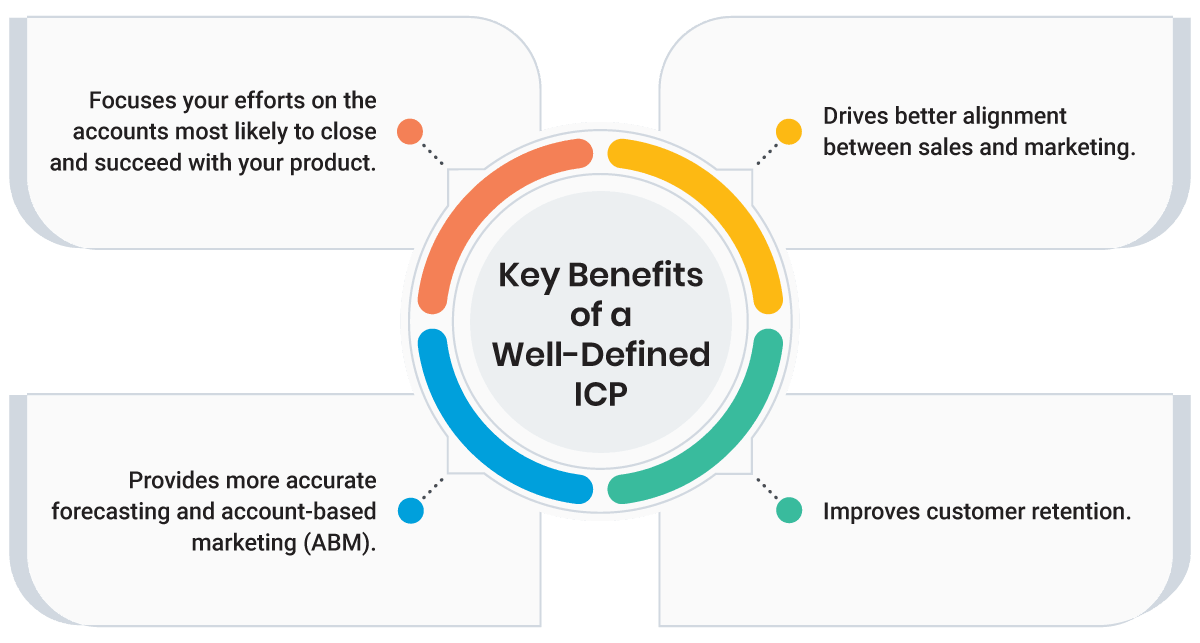
- Focuses your efforts on the accounts most likely to close and succeed with your product. That means your team spends less time chasing poor fits and more time working real opportunities. The result? A stronger pipeline, shorter sales cycles, and better conversion rates across the board.
- Drives better alignment between sales and marketing. Both teams can agree on what a qualified lead looks like, which accounts to prioritize, and how to measure success. That kind of unity helps prevent funnel waste and speeds up handoffs.
- Provides more accurate forecasting and account-based marketing (ABM). With consistent definitions in place, revenue projections become more reliable, and your ABM efforts hit the mark more often because your targets match real buying potential.
- Improves customer retention. When you start with the right fit, you’re more likely to close deals that stick. Expansion becomes easier too, since value is built in from the beginning.
Next up, we’re sharing a step-by-step guide to help you start creating your own ICP.
Step-by-Step Guide to Creating Your ICP
Building a strong ICP transforms your targeting from guesswork into a focused, data-backed strategy. It helps your team identify the right accounts faster, improve conversions, and drive long-term customer growth.
Below is a simple six-step process to help you get there:
Step 1: Audit Existing Customer Base
Start by analyzing your current customers to find patterns in success. Pull CRM and revenue data to isolate high-LTV and high-retention accounts. Note common characteristics such as industry, company size, average deal size, tech stack, onboarding time, and expansion behavior. This lays the foundation for recognizing what “great fit” looks like.
Step 2: Gather Firmographic & Technographic Data
Collect key firmographic information like industry, employee count, revenue range, region, and number of locations. Then dig into technographics and ask: what tools do they use? What cloud platforms are they on? What systems do they integrate with? Understanding their tech environment helps identify accounts that align with your product’s strengths.
Step 3: Analyze Customer Success Factors
Next, look at how and why these customers found success. What pain points did you solve? What triggered their buying decision? Who championed the solution internally? How long did the deal take to close, and how fast did they get to value? These patterns help define clear fit criteria and spotlight red flags early.
Step 4: Identify Key Stakeholders and Decision Makers
B2B deals rarely hinge on one person. Map out the typical buying committee by role: who initiates conversations, who influences the decision, and who signs the contract? Document common goals, objections, and motivators by role so your sales and marketing teams can connect more effectively.
Step 5: Validate with Sales & Customer Success Teams
Your ICP cannot live in a silo. Share your early draft with front-line teams across sales, success, and solutions engineering. Their experience will help refine the attributes that really matter. This is also the time to call out non-ideal accounts to avoid in the future.
Step 6: Build & Document the ICP Template
Once you’ve nailed down the attributes, assemble them into a clear, shareable format. Your ideal customer profile template should include firmographics, technographics, buying triggers, success signals, and red flags. Keep it accessible in your CRM and sales playbooks. Make sure everyone from SDRs to AEs to marketers knows how to use it when building lists or qualifying leads.
Pro Tip
Use AI intent data and predictive scoring to highlight the ICP accounts most likely to convert in the next 30 to 60 days.
See our guide on building a B2B sales strategy that works.
Which Advanced Techniques Can Refine Your ICP?
Once your initial ICP is in place, refining it with advanced techniques helps you stay ahead of shifting markets and evolving buyer behavior. These strategies ensure your targeting stays sharp and aligned with real buying signals.

Use Predictive Scoring and AI-Powered Enrichment
Go beyond basic firmographics by layering in AI models that combine fit and intent data. Predictive scoring tools help surface accounts with a high likelihood to convert based on behavioral patterns, engagement history, and lookalike modeling.

Monitor Market Trends and Competitor Shifts
B2B markets do not stand still. Keep an eye on macroeconomic changes, new entrants in your space, and movements in adjacent categories. These shifts can open new segments or signal when it is time to adjust your ICP boundaries. For example, if a competitor expands into a new region or vertical, it might signal similar opportunities for your team to explore.

Schedule Periodic ICP Reviews
An effective ICP is never static. Build in a quarterly review cadence or re-evaluate after major strategy shifts, like new product launches or go-to-market adjustments. Cross-functional reviews with sales, marketing, and customer success ensure the definition stays relevant and reflects what is working on the ground.
These techniques bring clarity and focus to your sales efforts. They also help you create repeatable success as your business grows and enters new markets. For teams learning how to create an ideal customer profile, these methods offer a way to continuously improve and scale what works.
How to Avoid Common Mistakes
Even experienced teams can overlook critical elements when building or using an ICP. These missteps often lead to wasted effort, missed opportunities, or a misalignment between sales and marketing:
Skipping the Outcome Analysis
Many teams define their ICP based on who they think they should sell to, rather than who is getting value from the product. Without digging into customer outcomes, retention rates, and expansion patterns, your ICP can reflect assumptions rather than facts.
Relying Too Much on Firmographics
Firmographic data is important, but it is only one part of the picture. Focusing exclusively on company size, industry, or revenue ignores the buying triggers and behavioral patterns that signal true fit. Technographics and engagement history often reveal stronger signals of readiness.
Defining the ICP Too Narrowly
Some teams overcorrect and build such a tightly scoped ICP that they miss out on promising adjacent segments. A strong profile gives clarity without becoming overly rigid. Leave room to experiment around the edges and validate potential new patterns with data.
Leaving Out Key Stakeholders
If Sales, Marketing, or Customer Success is not involved in reviewing and refining the ICP, adoption and accuracy suffer. These teams interact with buyers every day and offer valuable input into what is working and what is not. Regular collaboration ensures the ICP reflects real-world experience.
Failing to Update Over Time
Markets shift, products evolve, and buying behavior changes. When your ICP remains static, your campaigns risk becoming misaligned with current opportunities. Build in quarterly or biannual checkpoints to revisit your definitions and adjust based on performance.
Avoiding these mistakes will help you build a more reliable and adaptable targeting strategy.
Which Tools Can Help Build Your ICP?
Choosing the right tools can streamline how your team collects, analyzes, and applies ICP insights across sales and marketing. From CRMs to enrichment platforms, these tools help you define and act on your ideal account profile more efficiently.
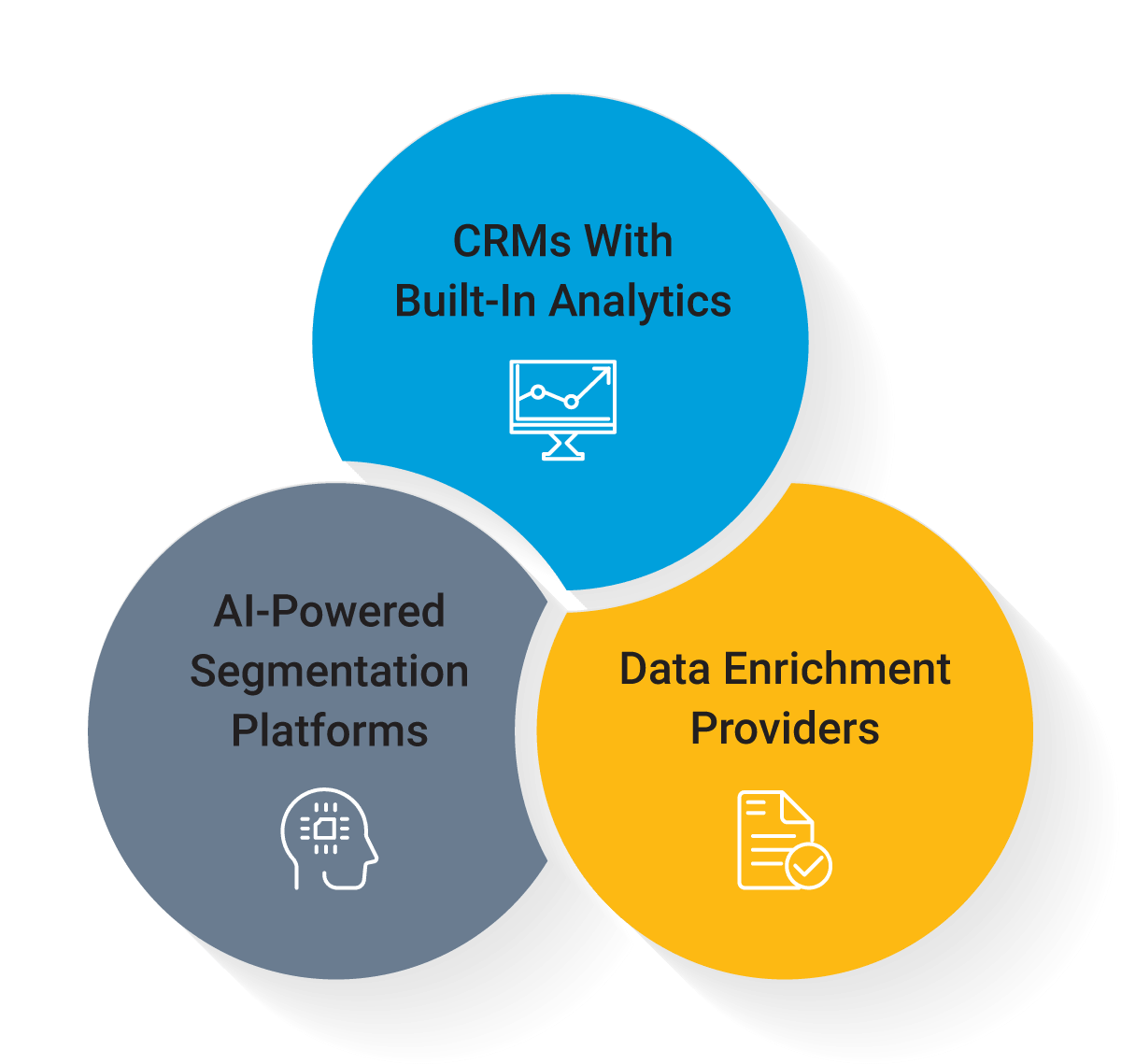
CRMs With Built-In Analytics
Platforms like Salesforce and HubSpot serve as command centers for ICP development. Both centralize firmographic and behavioral data, and their reporting capabilities make it easy to identify patterns among your best-fit customers. Use custom fields to tag high-fit accounts and track ICP alignment across stages of the funnel.
Learn more: Best CRMs for B2B Sales Teams in 2026
Data Enrichment Providers
Tools such as ZoomInfo and Clearbit help fill in the blanks by enriching account records with verified firmographic, technographic, and contact-level insights. Clearbit’s public ICP vs buyer persona workbook is a helpful asset for teams just getting started or looking to upgrade their targeting.
AI-Powered Segmentation Platforms
Newer solutions include AI engines that cluster accounts based on shared characteristics, surface lookalike accounts, and score them based on intent signals and likelihood to convert. These insights guide prioritization and fuel more focused outbound efforts.
With the right tools in place, building and refining your ICP becomes a repeatable, data-backed process. But theory only gets you so far. Let’s look at how real companies are applying these strategies in the field.
How ICPs are Used in SaaS and Manufacturing
Understanding the theory behind ICPs is important, but nothing drives the point home like seeing the results in action. The following examples show how two very different companies, one in SaaS, the other in manufacturing, used a clear ideal customer profile to focus their efforts, improve efficiency, and drive measurable growth.
SaaS: Narrowing the ICP, Growing the Pipeline
A revenue personalization platform teamed up with an ABM provider to sharpen how they define and prioritize their best-fit accounts. By mapping out the common traits of high-value customers and layering in predictive scoring, they gave their SDRs and campaign teams a much clearer picture of where to focus. The result? A 35% increase in pipeline and twice the average deal size. That lift came directly from putting ICP insights to work across both outbound and marketing motions.
Manufacturing: Complex Buys, Smarter Targeting
A manufacturing company tackled a common B2B challenge: long sales cycles and large buying committees. To improve speed and alignment, they leaned on an intent data provider to pinpoint accounts showing early interest.
Then they optimized handoffs from marketing to sales. The shift paid off in a big way: sales acceptance of MQLs jumped from 1% to 90%, cost per qualified lead dropped by 99%, and sales cycles got significantly shorter.
A strong ICP is a living framework that helps your teams focus, align, and win more consistently. Whether you’re refreshing your go-to-market strategy or tightening lead quality, getting your ICP right sets the stage for meaningful results.
Key Takeaways & Action Plan
If you’re building or refreshing your ideal customer profile, here’s a quick-action checklist to stay on track:
- Audit your best customers by pulling CRM data, then identify common traits across high-value, long-term accounts.
- Combine data types: firmographic (industry, size), technographic (stack, tools), behavioral (content views, sales cycle), and environmental (funding, regulations).
- Identify buyers and influencers by role. Validate with feedback from Sales, Marketing, and Customer Success.
- Use predictive signals and intent data to prioritize active accounts that match your ICP and are showing buying behavior.
- Document your ICP in a clear template and share it across teams. Train teams to use it during list building, lead scoring, and messaging.
- Refresh your ICP quarterly to keep pace with shifting markets, product updates, and go-to-market priorities.
Download the Ideal Customer Profile Template to document your ICP and align your team.
FAQs
Combine firmographic, technographic, and behavioral data with insights from your best customers. Look for patterns in company size, industry, and buying behavior to define high-fit accounts.
Review it quarterly or any time your product, market, or sales strategy changes to keep your targeting accurate.
A target market is broad, while an ICP focuses on companies most likely to convert and stay long term. If you’re still asking what is an ideal customer profile, it’s your roadmap for prioritizing the best-fit accounts.
Yes. A clear ICP helps smaller teams use their time wisely by focusing on the customers with the highest return potential.