

Influencer marketing is becoming a more established and performance-driven part of the modern marketing mix. In 2026, brands are thinking more strategically, repurposing creator content across channels, and using influencer campaigns to support larger goals such as engagement, lead generation, and content efficiency.
In this article, we break down the most important influencer marketing statistics for 2026, including budget and growth trends, platform insights, ROI and attribution challenges, AI adoption, and changing consumer expectations. Whether you’re refining an existing influencer strategy or evaluating whether creator partnerships make sense for your business, these statistics can help you make more informed marketing decisions.
Influencer Marketing at a Glance:
- 74% of marketers plan to increase influencer budgets in 2026.
- 80% of marketers say creator content outperforms brand-created assets.
- 74% of marketers use AI to generate ideas and briefs, and to streamline workflows.
How Influencer Marketing Is Evolving in 2026
In 2026, influencer marketing is a core part of the marketing mix. Brands use it to build awareness, create reusable content, support paid media, drive social commerce, and increase engagement.
That shift has changed how businesses measure success. Instead of treating influencer marketing as a test, marketers now use creator partnerships to support clear goals like traffic, leads, conversions, and audience growth.
At the same time, influencer marketing strategies are becoming more structured. Brands are focusing on creator fit, content rights, ROI, brand safety, and performance tracking. AI is also helping teams streamline creator discovery, campaign management, and reporting.
For small and midsize businesses (SMBs), that creates real opportunity. Effective influencer marketing in 2026 is not about celebrity reach or large budgets. It is about working with the right creators, aligning campaigns to business goals, and getting more value from content across multiple channels.
Pro Tip
Before reaching out to creators, define one primary campaign goal and one secondary goal. That makes it easier to choose the right influencer, platform, content format, and success metrics from the start.
Today, the most impactful influencer marketing campaigns are driven by relevance, trust, and measurable performance.
Influencer Marketing Statistics for 2026
When it comes to implementing influencer-focused marketing campaigns, brands are now focusing more on performance, content value, AI support, and long-term trust. The following statistics highlight where marketers are investing and what is shaping results.
Influencer Marketing Growth, Performance, and ROI Statistics
Spending is rising, but so is the pressure to prove results. These statistics show that brands are investing more while paying closer attention to ROI, engagement, and conversion performance.
- Nearly three-quarters of marketers plan to increase influencer budgets in 2026. This signals continued confidence in influencer marketing as a growth channel. As more brands invest, competition for the right creators and better campaign execution will likely increase.
- One-third of marketers expect to spend more than $5 million on influencer marketing. That level of investment shows how seriously many brands now treat creator partnerships. It also suggests influencer marketing is moving further into the mainstream as a strategic budget line, not a test channel.
- 80% of enterprise organizations increased influencer marketing investment year over year. Large organizations are doubling down on creator partnerships, which reinforces the channel’s long-term value. For smaller businesses, it is a reminder that having a focused strategy matters more than having the largest budget.
- 51% of brands say economic pressure has made ROI and program validation a bigger priority. Brands still believe in influencer marketing, but they want clearer proof of performance. This makes measurement, attribution, and goal setting more important than ever.
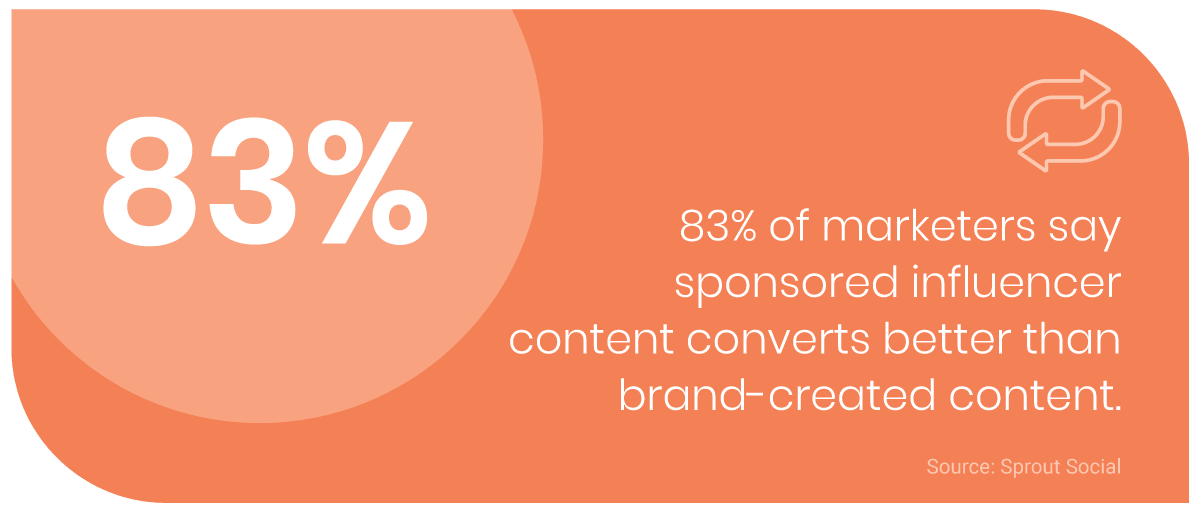
- 83% of marketers say sponsored influencer content converts better than brand-created content. That finding highlights the strength of creator-led messaging in moving buyers to act. It suggests audiences often respond better to content that feels more relatable and less promotional.
- 90% of marketers say sponsored influencer content outperforms brand content on engagement. Higher engagement gives brands more opportunities to build awareness, trust, and action. It also supports the case for using creator content in campaigns beyond the original post.
As these numbers show, influencer marketing is becoming more mainstream and more performance-focused. For brands, that means success depends less on simply being present and more on choosing the right creators, setting measurable goals, and building campaigns with long-term value in mind.
Influencer Marketing Platform Statistics
Platform performance remains a key factor in campaign planning. The 2026 data shows that the best channel often depends on your goals, your audience, and how you plan to reuse creator content.
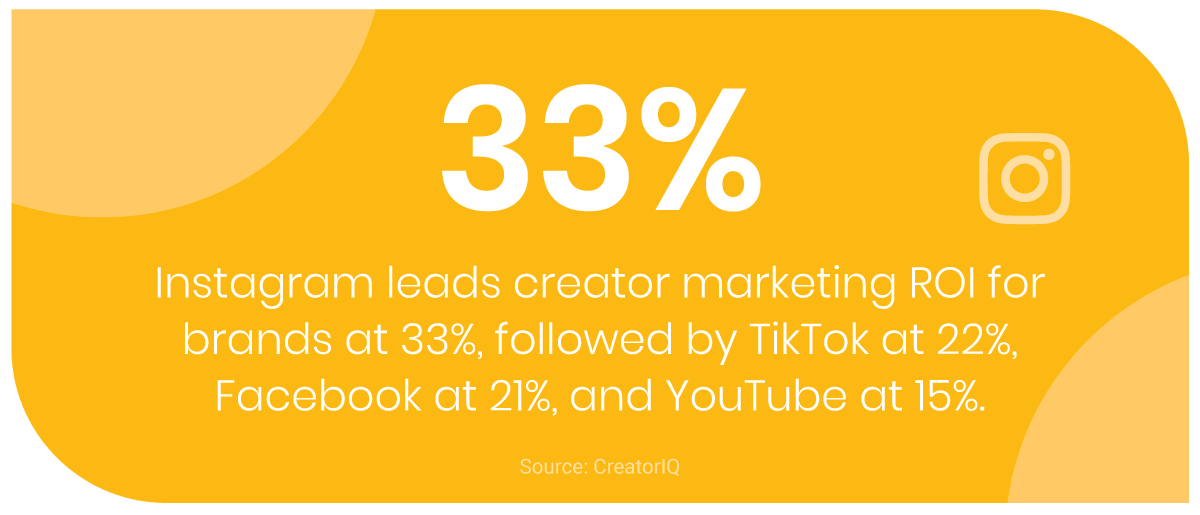
- Instagram leads creator marketing ROI for brands at 33%, followed by TikTok at 22%, Facebook at 21%, and YouTube at 15%. This shows Instagram still holds a strong position for many brand campaigns. At the same time, the spread across platforms suggests brands should choose channels based on audience behavior and campaign objectives, not trend alone.
- Agencies rank TikTok as the top platform for ROI, while creators say it performs best for content. TikTok continues to stand out as a performance-driven channel with strong creative impact. That makes it especially valuable for brands focused on reach, visibility, and fast-moving engagement.
- YouTube is the top platform brands plan to test or expand on next. This points to growing interest in longer-form, searchable creator content. For brands, YouTube may offer more lasting value through discoverability, education, and content reuse.
- 80% of marketers say creator content outperforms brand-created assets. Creator content is proving useful far beyond a single post. That matters because strong influencer partnerships can help support social, paid media, email, landing pages, and other channels.
Pro Tip
When evaluating creators, ask them how their content could be reused across paid social, email, landing pages, and other marketing channels if the partnership performs well.
Taken together, these platform statistics show that creator content is becoming more flexible and more valuable across the marketing mix. The strongest programs are built with reuse in mind from the start, not merely as an afterthought.
Influencer Marketing AI and Automation Statistics
AI is becoming a larger part of influencer marketing workflows in 2026. While it is not replacing strategy, it is helping teams work faster, scale campaigns, and improve decision-making.
- 77% of brands report stronger performance with AI-assisted influencer marketing, and 37% say results are much better. AI is already helping many brands improve campaign outcomes. Used well, it can strengthen execution without replacing the human side of strategy and creator fit.
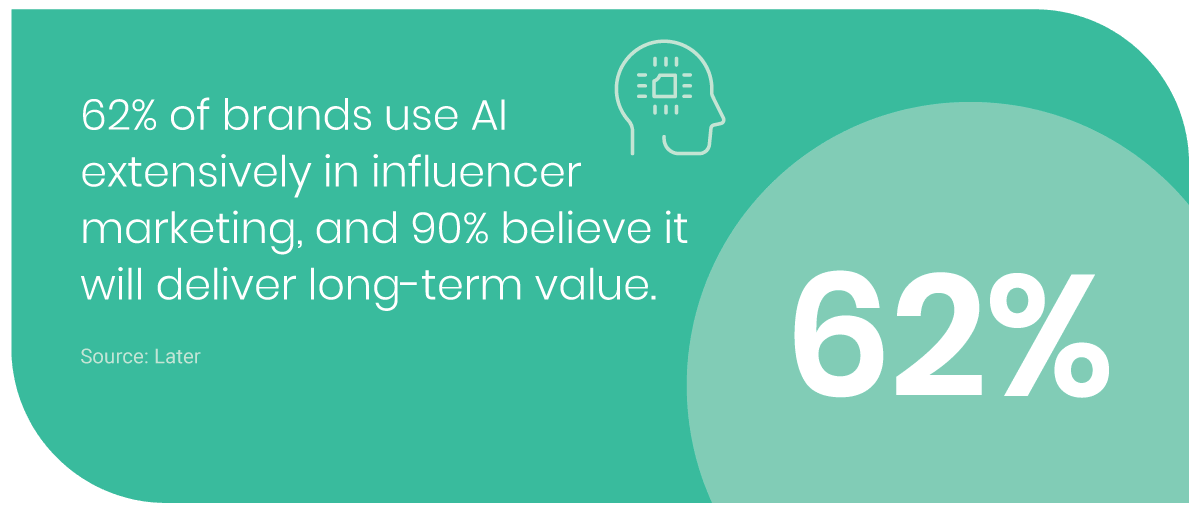
- 62% of brands use AI extensively in influencer marketing, and 90% believe it will deliver long-term value. This shows AI is no longer a future trend in this space. It is becoming a standard support tool for brands that want to move faster and make better-informed decisions.
- 59% of marketers use AI to scale creator discovery, workflows, and analytics. That matters because these are often the most time-consuming parts of campaign management. AI can reduce manual work and help teams focus more on strategy and performance.
- 74% of marketers use AI to generate ideas, briefs, and streamline workflows. Many teams are using AI to improve efficiency at the planning stage, not just in reporting. This can help brands move from concept to execution faster while keeping campaigns more organized.
Pro Tip
Use AI to speed up creator research, campaign briefs, and reporting, but keep final decisions human-led. Audience fit, brand safety, and campaign messaging still require strategic judgment.
This is one of the more encouraging shifts in the data. AI can reduce the workload tied to research, planning, and analysis, but strong influencer marketing still depends on human judgment, clear goals, and the right audience match.
Influencer Marketing Trust and Consumer Behavior Statistics
Although performance is an important aspect of any campaign, trust is an even bigger driver of influence. These consumer behavior statistics show that authenticity, familiarity, and stronger creator relationships continue to shape purchase decisions in 2026.
- 64% of consumers are more likely to buy when a brand partners with an influencer they already follow and trust. This reinforces the value of choosing creators with real audience credibility. The right partnership can shorten the gap between awareness and action.
- 80% of consumers are more likely to buy from brands that work with influencers beyond a single social post. Multichannel creator campaigns can feel more immersive and more credible to buyers. That makes integrated partnerships especially useful for brands trying to build momentum across several touchpoints.
- Nearly half of consumers are uncomfortable with AI influencers. This is a strong reminder that authenticity still matters. Even as AI grows in marketing, human connection remains central to trust and purchase behavior.
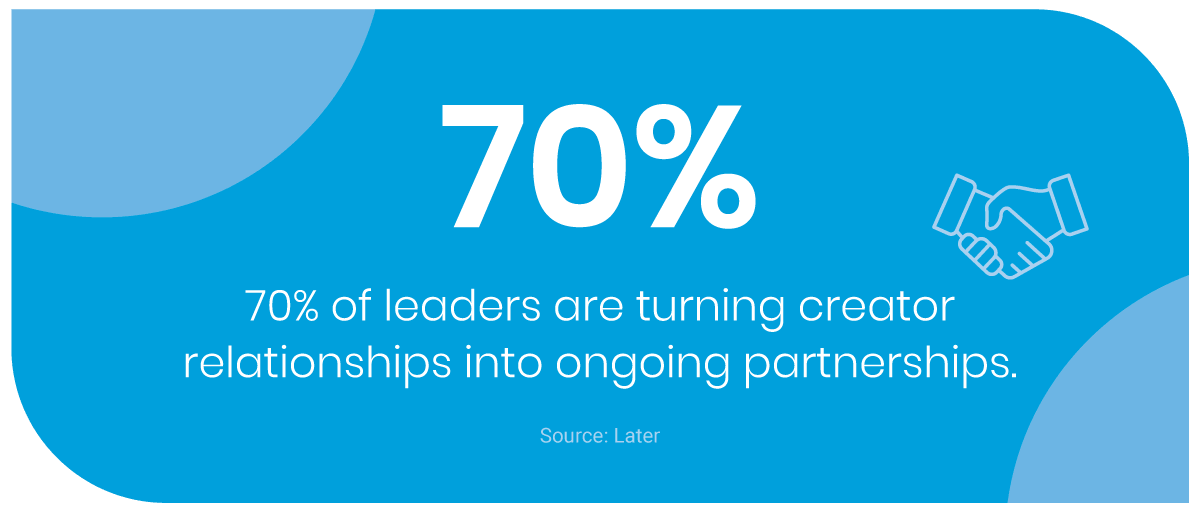
- 70% of leaders are turning creator relationships into ongoing partnerships. Longer-term relationships often create more consistency, stronger audience trust, and better brand alignment. They can also improve efficiency by building on what already works.
These trust and behavior trends make one thing clear: the most effective influencer marketing campaigns are not built on reach alone. They are built on relevance, authenticity, and relationships that feel credible to the audience.
How to Turn Influencer Marketing Statistics Into Action
Above all, using the influencer marketing statistics we’ve shared is most useful when they help you shape better strategic decisions for your business. That means turning trend data into a clear strategy built around goals, audience fit, content value, and measurable results.
- Start with one clear goal: Before choosing creators or platforms, define what success looks like. A campaign built for awareness should not be measured the same way as one focused on leads, conversions, or reusable content.
- Choose creators based on audience fit: The strongest partnerships are not always the biggest. In many cases, a creator’s audience relevance, content style, and ability to support your main objective matter more than follower count alone.
- Build content reuse into the plan: Creator content should be part of a larger marketing strategy, not a one-time asset. When usage rights and distribution plans are built in early, one partnership can support social media, paid campaigns, email marketing, and more.
- Use AI to improve efficiency, not replace strategy: AI can help speed up research, ideation, workflow management, and reporting. But it still works best when paired with strong brand judgment, audience understanding, and clear campaign direction.
- Measure the outcomes that matter most: If the goal is business growth, focus on metrics tied to business impact. Targeted leads, conversions, engagement quality, and content efficiency often tell you more than vanity metrics alone.
Common Influencer Marketing Mistakes to Avoid in 2026
As influencer marketing becomes more strategic, common mistakes become more costly. Avoiding a few key missteps can improve your campaign performance, content value, and overall ROI.
- Choosing creators based on follower count alone: A bigger audience does not always mean better results. In many cases, a smaller creator with stronger audience alignment and engagement can deliver more value.
- Starting without a clear campaign goal: Campaigns perform better when the objective is defined from the start. Awareness, leads, conversions, and content creation each require a different approach.
- Waiting too long to think about measurement: Attribution should not be an afterthought. Tracking traffic, leads, conversions, or content performance early makes it easier to evaluate success.
- Treating creator content as one-time use: A single sponsored post should not be the only outcome. When planned well, creator content can support paid media, email marketing, landing pages, and other channels.
- Using AI to replace judgment: AI can help with research, workflows, and efficiency, but it cannot replace brand fit, audience understanding, or strategic thinking.
- Overlooking trust and authenticity: The best partnerships feel credible to the audience. If the creator-brand fit feels forced, campaign performance is likely to suffer.
The brands that get the most from influencer marketing in 2026 will be the ones that pair efficiency with relevance, strategy, and trust.
Conclusion and Final Thoughts
The latest influencer marketing statistics show a channel that is becoming more strategic, more budget-backed, and more integrated into the broader marketing mix. Marketers are increasing spend, reusing creator content across channels, and turning to AI to improve speed and efficiency. At the same time, ROI and attribution remain real challenges, which makes campaign design and audience targeting more important than ever.
This combination creates both pressure and opportunity. You do not need the biggest creators or the biggest budget. To get the best results, you need a clear goal, a relevant audience, and a strategy for turning creator content into measurable business value.
Try Salesgenie® today to support your influencer marketing strategy with better audience targeting.
FAQs
Yes. Influencer marketing remains effective in 2026, but the focus has shifted from simple reach to measurable performance. Brands are using creator partnerships to support awareness, engagement, conversions, and reusable content across multiple channels.
No. Influencer marketing is not limited to enterprise brands with large budgets. For SMBs, success often comes from working with creators who have the right audience fit, strong engagement, and content that can be reused across the marketing mix.
Instagram, TikTok, YouTube, and Facebook all continue to play important roles, but the best platform depends on your audience and campaign goal. Many brands are also looking beyond the original post and using creator content across paid media, email, landing pages, and other channels.
Most marketers use AI to support creator discovery, campaign planning, ideation, briefs, workflow management, and analytics. AI can improve speed and efficiency, but it works best as a support tool rather than a replacement for strategy or brand judgment.
Influencer marketing ROI should be measured against the goal of the campaign. That can include traffic, leads, conversions, engagement quality, or content efficiency. The most useful metrics are the ones tied to business outcomes, not just vanity metrics like reach or follower count.
Authenticity shapes how audiences respond to creator partnerships. When a collaboration feels natural and credible, it is more likely to build trust and drive action. When it feels forced or overly promotional, performance often suffers.