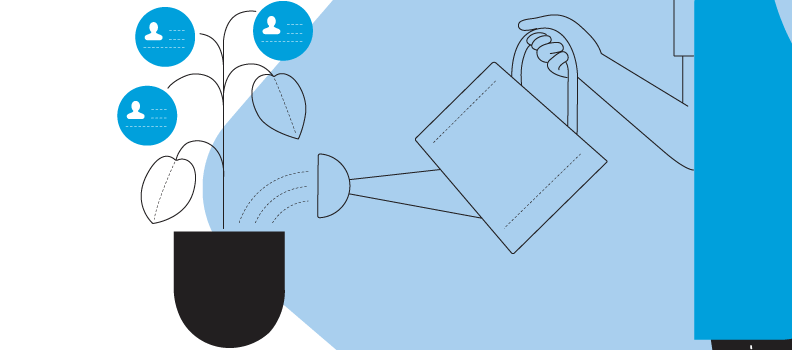
Lead nurturing remains one of the most effective ways to turn interest into revenue, but the playbook has changed. Once leads are generated, nurturing helps move them toward conversion through timely, relevant follow-up. In 2026, buyers expect timely, relevant communication across multiple channels, not just a generic follow-up email sequence. At the same time, marketers are under pressure to improve conversion rates, personalize at scale, and prove ROI more clearly than ever.
That’s why today’s lead nurturing strategies rely on more than persistence alone. Strong programs combine audience segmentation, behavior-based automation, multi-channel engagement, and increasingly, artificial intelligence (AI)-assisted decision-making.
In this guide, we break down the most important lead nurturing statistics for 2026, including benchmark metrics, channel performance trends, personalization data, and the growing impact of AI on modern nurture campaigns.
Key Lead Nurturing Statistics for 2026
Before diving into benchmarks and channel-specific trends, here are a few of the most important lead nurturing statistics shaping marketing performance in 2026.
- The average email open rate is 43.46%. Open rate is still a useful benchmark for lead nurturing, especially when comparing campaign performance over time. However, in 2026 it should be treated as a directional metric rather than a definitive sign of engagement because privacy features can inflate opens.
- The average email click rate in 2025 was 2.09%. Click rate remains one of the clearest indicators that nurture messaging is actually driving action. For many teams, it is a more meaningful benchmark than open rate because it reflects active interest rather than passive visibility.
- 71% of consumers abandon irrelevant experiences. That makes personalization one of the most important performance levers in modern lead nurturing. As inboxes and digital channels become more crowded, relevance has become essential to holding attention and moving prospects forward.
- 83% of marketers recognize the shift toward personalized, two-way messaging, but only one in four are satisfied with how they use data to support it. This gap helps explain why many nurture programs still underperform: marketers understand what buyers expect, but many organizations are still catching up on data quality, orchestration, and execution.
- 66% of marketers globally are using AI in their roles. AI is no longer experimental in marketing. In lead nurturing, that matters because AI is increasingly being used to improve timing, personalize content, accelerate testing, and help teams scale more adaptive campaign flows.
- B2B buyers now use an average of about ten channels during the buying journey. That shift reinforces why lead nurturing can no longer rely on a single-channel follow-up strategy. Stronger programs now coordinate touches across email, paid media, social platforms, websites, and direct outreach to stay visible throughout a longer, more complex decision process.
Lead Nurturing Benchmarks for 2026
Statistics are useful, but benchmarks are what make them actionable. The right benchmarks help teams separate healthy nurture performance from motion that looks busy but does little to improve lead quality, sales readiness, or revenue contribution.
Email Open Rate Benchmarks
Email still plays a central role in lead nurturing, which makes open rate a useful benchmark for visibility and subject-line performance. But open rates need more caution in 2026 than they did a few years ago. Privacy changes can artificially inflate opens, which means this metric works best as a directional signal rather than a standalone measure of engagement. Clicks and downstream conversion actions should carry more weight.
Email Click-Through Rate Benchmarks
Click-through rate (CTR) offers a stronger read on nurture effectiveness because it reflects action, not just exposure. When a lead clicks, it signals that the message, offer, and timing were compelling enough to generate measurable engagement. In a privacy-constrained environment, CTR is one of the most useful benchmarks for evaluating whether nurture content is moving prospects forward.
- Click rate is one of the most accurate indicators of newsletter engagement right now because it does not depend on open tracking.
- The median click-to-open rate in 2025 was 6.81%, which can be useful as a secondary benchmark for judging how well email content performs after an open occurs.
Average Number of Touches to Convert a Lead
Very few leads convert after a single interaction. In most nurture programs, conversion happens after a series of touches across email, phone, social, and other channels. That makes touch volume less about persistence for its own sake and more about maintaining relevance across a longer buying process. In 2026, the benchmark is not one perfect number. It is the expectation that lead conversion is multi-touch and increasingly multi-channel.
- A recent report states that an average of 21 outreach attempts per contact are made.
- 50% of leads are qualified but not yet ready to buy, which is one reason nurture sequences need repeated follow-up instead of immediate handoff or one-and-done outreach.
- 79% of marketing leads never convert into sales, and lack of lead nurturing is cited as a common cause, reinforcing that repeated, structured follow-up is a necessity, not an optional add-on.
Nurture vs. Non-Nurture ROI Benchmarks
The difference between nurtured and non-nurtured leads remains one of the clearest benchmarks for evaluating ROI. Good nurture programs keep leads warm, improve sales readiness, increase purchase value, lower acquisition inefficiency, and help revenue teams prioritize the leads most likely to convert.
- Companies that excel at lead nurturing generate 50% more sales-ready leads at 33% lower cost.
- Nurtured leads make 47% larger purchases than non-nurtured leads.

- Lead nurturing emails can generate 4 to 10 times the response rate of standalone email blasts, showing the value of sequence-based follow-up over isolated sends.
Pro Tip
Prioritize click rate, lead-to-opportunity rate, marketing-qualified lead (MQL) to sales-qualified lead (SQL) conversion, and influenced pipeline over open rate alone.
Improve your lead nurturing results with better audience targeting and cleaner lead data.
2026 Lead Nurturing Statistics
Lead nurturing performance depends on more than one metric. To understand what’s changing in 2026, it helps to look beyond email benchmarks and focus on the broader forces shaping results, including program maturity, multichannel buying behavior, conversion efficiency, and personalization. The strongest statistics in this section show not only what marketers are doing, but also where nurture strategies are still falling short.
Adoption and Strategy Statistics
More organizations now understand that lead nurturing must be coordinated, data-informed, and increasingly multichannel. But adoption is not the same as maturity. Many teams are investing in automation and AI while still struggling to connect data, journeys, and channel execution in a way that feels seamless to buyers.
- 63% of sales leaders say digital buying behaviors will have a significant impact on their organizations, yet only 37% say digitizing the buyer journey is a top priority. That disconnect helps explain why many nurture experiences still feel fragmented.
- 89% of revenue leaders automate nearly the entire customer journey, from initial contact through post-purchase engagement. That highlights how much mature teams now rely on automation to support lead nurturing at scale, not just one-off campaigns.
- B2B customer interactions are now split roughly evenly across in-person, remote human, and digital self-service channels. That shift reinforces why lead nurturing strategies need to be coordinated across channels instead of relying on email alone.
Conversion and Pipeline Impact Statistics
Lead nurturing is most valuable when it improves downstream business outcomes. The most useful benchmarks are the ones that show whether your programs are generating qualified pipeline, improving lead quality, and helping marketing activity translate into revenue.
- The average B2B marketing leader says 25% of their marketing budget is spent on campaigns that look productive in reporting but do not drive revenue. That makes downstream conversion and influenced pipeline far more important than surface-level engagement metrics alone.
- 53% of B2B marketers say they are unable to meet their pipeline goals. This highlights how difficult it still is to turn lead generation activity into consistent, revenue-producing pipeline.
- 68% of sales teams report that lead quality has improved year over year. Better lead quality is one of the clearest indicators that targeting, qualification, and nurture strategy are getting stronger.
- 73% of B2B buyers actively avoid suppliers who send irrelevant outreach. That makes relevance a conversion issue, not just a messaging issue. Poorly targeted nurture can reduce response rates before a sales conversation even begins.
- More than 90% of marketers now rank pipeline, account-based marketing (ABM), or lead quality among their top three goals, and 52% say driving qualified pipeline is their top priority. That shift shows how much marketing performance is now being judged by pipeline impact rather than lead volume alone.
Personalization and Engagement Statistics
Lead nurturing is most valuable when it improves downstream business outcomes. The strongest benchmarks tie nurturing to revenue metrics, not just surface-level engagement.
- 77% of consumers say they are likely to purchase from a brand when they get relevant product recommendations. That makes content relevance and behavioral targeting central to modern nurture performance.
- 71% of consumers want brands to learn from their shopping habits over time. In practice, that supports the case for nurture programs that adapt based on engagement history and prior actions.
- 78% of customers want consistent brand experiences. That reinforces why lead nurturing should feel connected across email, landing pages, ads, and sales follow-up instead of fragmented by channel.
Pro Tip
Segment by funnel stage, industry, and interest whenever possible. Generic nurture sequences usually underperform targeted ones.
Modern Channels in Lead Nurturing
Lead nurturing no longer lives in a single inbox. In 2026, the strongest programs combine owned, paid, and conversational channels to stay relevant throughout a longer, less linear buying journey. Email still plays a central role, but high-performing nurture strategies now extend into SMS, social, and retargeting to reinforce timing, visibility, and intent. B2B buying groups are larger, buyers research more independently, and engagement often happens before a direct sales conversation ever begins.
Email Sequences
Email still anchors most lead nurturing programs because it is scalable, measurable, and well suited to educational content. It remains especially effective for mid-funnel messaging, follow-up offers, and stage-based campaign flows.
- Marketing automation flows generated up to 8x more orders than bulk emails. That gap shows how much more effective email becomes when it responds to behavior instead of relying on broad, one-size-fits-all sends.

- Automated emails drove 37% of all email-generated sales while accounting for just 2% of email volume. In other words, a relatively small share of sends produced a disproportionately large share of revenue.
- Email campaign click-to-conversion rates grew by 27.6% in previous years. That suggests email traffic is becoming more likely to drive revenue when campaigns are relevant enough to earn the click in the first place.
SMS and WhatsApp Nurturing
SMS and messaging channels are most effective when speed and context matter. They work especially well for reminders, follow-up prompts, event confirmations, limited-time offers, and other high-intent moments.
- SMS flows account for 7.6% of sends but generate 45.2% of total SMS revenue. That imbalance highlights how powerful behavior-based messaging can be in channels where immediacy matters.
- Average click rates for SMS flows are close to 10%, and top-performing programs exceed 16%. Those numbers help explain why messaging continues to gain ground as a nurture channel for high-intent follow-up.
- Compared with email, SMS campaign click rates are nearly 2x higher, and SMS flow click rates are 58% higher. For teams trying to improve responsiveness, that makes SMS a strong complement to email rather than a replacement for it.
Social Media and LinkedIn Nurturing
For B2B organizations especially, social platforms such as LinkedIn help reinforce trust between direct outreach moments. They also support nurture by keeping brand visibility high during longer evaluation cycles.
- 25% of LinkedIn users engage with brand content every day. That level of recurring interaction makes LinkedIn a useful channel for staying visible while prospects continue researching.
- Text posts are the format 51% of LinkedIn users are most inclined to engage with. For nurture strategy, that suggests simple, insight-driven content may outperform more polished formats when the goal is ongoing visibility and trust.
- On LinkedIn, direct messages see a 10.3% response rate, compared with 5.1% for cold email. That difference reinforces the platform’s value as a relationship-building channel, especially in B2B outreach.
Retargeting Engagement
Retargeting extends lead nurturing beyond owned channels by re-engaging prospects who visited a site, viewed an offer, or dropped off before converting. It works best when paired with segmented email and relevant landing page experiences.
- Shopping cart abandonment remains high, with 80% or more of carts never making it to purchase. That kind of drop-off is one reason retargeting continues to matter across modern nurture programs.
- A 0.2% CTR can qualify as solid performance in display advertising. That benchmark is a useful reminder that paid re-engagement often works on smaller response rates than email or SMS, but can still be effective when aimed at warm audiences.
- Facebook lead ads posted a 2.59% average click-through rate and a 7.72% average conversion rate in 2025. Those figures give marketers a directional benchmark for paid social re-engagement and lead capture.
Lead Nurturing by Industry
Lead nurturing does not perform the same way across every market. Sales cycle length, channel preference, buying urgency, and the role of trust all shape what effective nurturing looks like.
Not all lead nurturing programs should look the same. B2B, B2C, SaaS, and other high-consideration purchase journeys differ in sales-cycle length, channel mix, decision complexity, and the role personalization plays in conversion.
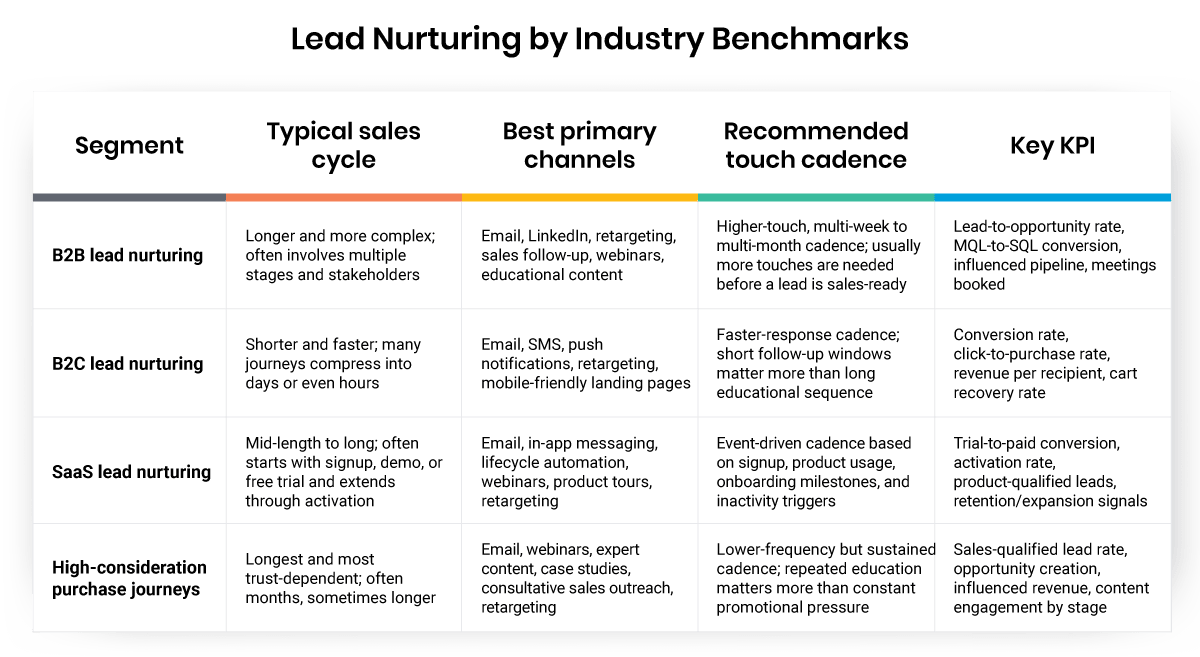
Your takeaway should be that effective nurturing depends on matching cadence, channel mix, and content type to the way buyers in that category make decisions. The more complex the journey, the more important trust, timing, and segmentation become.
Impact of AI on Nurturing (2026)
AI is reshaping lead nurturing in 2026 by making automation more adaptive, personalization more scalable, and campaign sequencing more responsive to buyer behavior. Instead of relying only on static workflows, marketers can now use AI to improve timing, content relevance, lead prioritization, and testing efficiency.
This shift matters because buyers expect more than generic automation. They respond to communication that feels timely, informed, and aligned with where they are in the journey. AI helps marketers move closer to that standard without requiring a fully manual process.
AI Adoption in Lead Nurturing
AI is no longer a future-looking add-on in marketing. It is becoming part of how teams build workflows, draft content, automate messaging, and support day-to-day campaign decisions. That matters in lead nurturing because AI can help teams scale follow-up more efficiently while reducing manual workload.
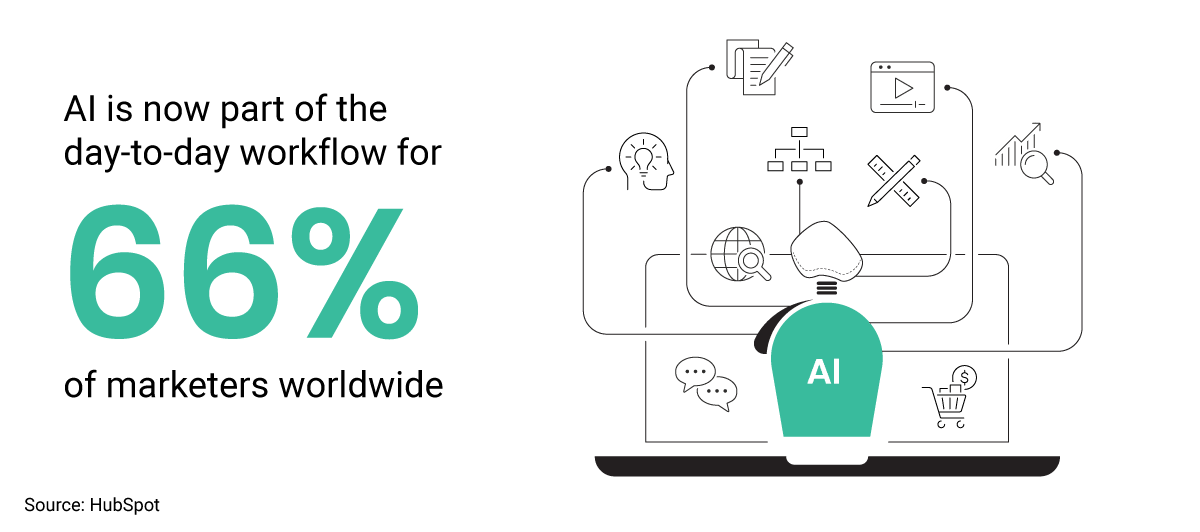
- AI is now part of the day-to-day workflow for 66% of marketers worldwide. At that level of adoption, AI is no longer a niche experiment. It has become a mainstream tool for building, optimizing, and scaling marketing activity, including nurture programs.
- 41% of marketers are already using generative AI to support direct brand messaging and conversational marketing. That suggests AI is moving beyond behind-the-scenes assistance and into customer-facing communication, where it can help teams scale follow-up across channels like email, chat, SMS, and other nurture touchpoints.
- Marketers using AI say it saves them an average of one to two hours during the workday. In practical terms, that time can be redirected toward higher-value work such as segmentation, testing, campaign strategy, and message refinement instead of repetitive production tasks.
Actionable Insight
Use AI to reduce manual workflow effort and improve prioritization, but keep human review in place for messaging quality, compliance, and brand voice.
AI-Powered Personalization at Scale
One of AI’s biggest advantages in lead nurturing is its ability to help marketers personalize content faster and across more audience segments. That can include subject lines, message variations, recommendations, segmentation logic, and behavioral follow-up paths. But AI only performs as well as the customer data feeding it.
- 48.57% of marketers are now using AI to create personalized content. That suggests AI has already moved beyond simple drafting support and into one of the most practical parts of modern nurture strategy: adapting messaging for different audiences, stages, and contexts.
- 93% of marketers say personalization improves lead generation or purchases. That makes personalization one of the clearest performance levers in modern nurture strategy, especially when AI helps teams scale it across more campaigns and segments.
- 90% of consumers want more personalized communication than they currently receive. That gap helps explain why personalization still represents such a large opportunity for marketers trying to improve engagement and conversion.
Actionable Insight
AI can help scale personalization, but clean data, strong segmentation, and clear audience logic still determine whether personalization improves performance.
AI-assisted Timing, Testing, and Journey Optimization
Traditional nurture programs often run on fixed schedules and static paths. AI improves that model by helping marketers test faster, identify stronger patterns sooner, and adjust journeys with less manual effort. In practice, this is where AI becomes most useful as an optimizer. It helps teams improve timing, streamline experimentation, and reduce the lag between what buyers do and how campaigns respond.
- 92% of marketers say AI-driven tools have improved their A/B testing processes, and 46% say the improvement has been significant. That makes AI less of a novelty feature and more of a practical lever for speeding up optimization work that used to be slower and more manual.
- 84% of marketers now use A/B testing at least monthly, including 38% who do it weekly and 22% who do it daily. That cadence matters because AI is most valuable in environments where teams are already making regular optimization decisions and need faster ways to interpret results and refine the next step.
- There is still a guardrail marketers cannot ignore: one in six legitimate marketing emails fail to reach the inbox, and global spam placement rates nearly doubled from Q1 to Q4 of 2024. As AI helps teams create and test more messages, deliverability discipline becomes even more important.
Actionable Insight
AI works best when it improves an already sound nurture strategy. It can sharpen timing and relevance, but it cannot fix weak messaging, poor segmentation, or low-quality lead data.
Why Lead Nurturing Matters More in 2026
Lead nurturing matters more in 2026 because the buying journey is more complex, buyer expectations are higher, and the margin for irrelevant outreach is smaller. What used to be a nice-to-have has become a critical part of how marketers improve lead quality, accelerate qualification, and turn interest into pipeline.
Buyer Expectations Are Higher
Today’s buyers expect more than a generic sequence of follow-up messages. They respond to communication that feels relevant, well timed, and informed by their needs, interests, and stage in the journey. As inboxes become more crowded and digital attention becomes harder to earn, generic outreach is easier to ignore and less likely to convert.
Journeys Are Now Multi-Channel
Buyers no longer move from awareness to decision in a straight line or within a single channel. They shift between email, search, social media, paid ads, websites, messaging, and sales conversations as they evaluate their options. That makes coordinated lead nurturing far more effective than isolated outreach, because consistency across touchpoints is now a major part of what drives momentum.
AI is Changing the Standard
AI is raising the bar for what effective nurturing looks like. As more teams use AI to improve timing, personalize messaging, and adapt campaigns based on behavior, buyers will increasingly expect smarter and more responsive experiences from every brand they engage with. What once felt advanced is quickly becoming the baseline.
Better Data Drives Better Nurturing
None of these trends work without reliable audience data. Better data improves segmentation, personalization, targeting, and timing, making it easier to deliver messages that actually reflect buyer intent. When lead data is incomplete, outdated, or poorly organized, even strong nurture strategies lose effectiveness. The quality of the data behind the campaign now plays a major role in the performance of the campaign itself.
How to Improve Lead Nurturing Results in 2026
The strongest lead nurturing programs do more than increase message volume. They improve targeting, sharpen relevance, and deliver outreach at the right moment so that every touchpoint has a clearer purpose. This year, better results come from building nurture paths that reflect real buyer behavior instead of filling a calendar with follow-up.
Segment Leads More Intelligently
Effective nurturing starts with smarter segmentation. Instead of sending every lead through the same sequence, use firmographic, behavioral, and engagement signals to shape paths around who the buyer is and how they have interacted with your brand. The more closely a nurture track matches actual interest and intent, the more likely it is to move the lead forward.
Match Content to Funnel Stage
Not every lead needs the same message at the same time. Early-stage prospects usually need education, context, and trust-building content, while sales-ready leads need proof, urgency, and a clear next step. Strong nurture programs align content to decision stage so that messaging feels timely instead of premature or repetitive.
Prioritize Click and Conversion Metrics
Open rate can still offer directional insight, but it does not tell the full story. Clicks, replies, meetings booked, conversion rates, and influenced pipeline provide a much clearer view of whether nurture is actually driving progress. In 2026, the most useful metrics are the ones that connect engagement to business outcomes.
Use AI to Improve Timing and Personalization
AI can help marketers make nurture programs more responsive and efficient. It can support better send-time decisions, faster testing, smarter content variation, and more adaptive sequencing based on engagement signals. Used well, AI helps teams scale relevance without turning nurture into a fully manual process.
Start with Clean, Verified Lead Data
Even the best nurture strategy will underperform if it reaches the wrong people or depends on incomplete records. Clean, verified lead data improves segmentation, personalization, targeting, and timing, which strengthens every downstream metric.
Conclusion
Lead nurturing is still one of the most effective ways to improve conversion quality, shorten the path to revenue, and make better use of marketing spend. But in 2026, success depends on more than simply following up. Marketers need stronger segmentation, better timing, more relevant content, multi-channel coordination, and increasingly, AI-assisted optimization.
The brands that perform best are the ones that combine strategy with data. When lead quality, personalization, and sequencing work together, nurture becomes more than a marketing function. It becomes a measurable driver of pipeline growth.
Get started with Salesgenie® to access verified lead data to improve your nurturing results.
FAQs
A good lead nurturing conversion rate depends on industry, offer type, and sales cycle length. In most cases, marketers should evaluate performance using multiple metrics, including lead-to-opportunity conversion, MQL-to-SQL rate, click-through rate, and influenced pipeline.
Most leads require multiple interactions before becoming sales-ready. The right number depends on buyer intent, deal size, and channel mix, but marketers should expect nurture to be a multi-touch process rather than a one-email event.
In many cases, yes. Multi-channel nurturing can improve visibility and engagement because it reflects how buyers move between email, social, ads, and direct outreach before converting.
Nurtured leads consistently outperform non-nurtured leads across metrics such as sales readiness, deal size, and conversion efficiency. Use your strongest verified benchmark here and pair it with a brief explanation.
A good click-through rate varies by industry and campaign type, but CTR remains one of the most useful engagement benchmarks because it reflects actual action, not just passive opens.