
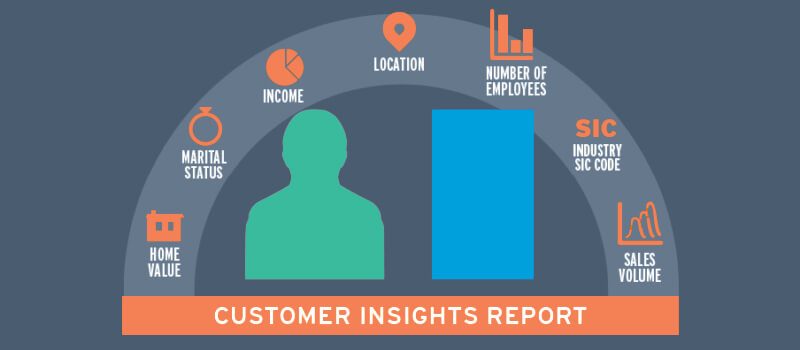
Is your outreach underperforming even though you’re using customer “insights” to guide it? The problem may be that those insights are just basic demographic data points masquerading as meaningful patterns. Your customers will notice, too. Zendesk reports that 76% of customers want and even expect personalization. To truly elevate your prospecting, you need to move beyond surface-level attributes and identify the customer behaviors that actually predict outcomes.
This blog provides you with a practical way to turn raw customer data into decision-enabling insights, without getting bogged down in complexity. You’ll learn how to spot the signals that matter, test what drives real results, and build lists that convert, so you can stop guessing and start acting on patterns that move your business forward.
Are Demographics Enough to Guide Prospecting?
It’s tempting to think that if you just target the right job titles, industries, or locations, qualified leads will start pouring in. But while demographic and firmographic data points like these are important, they’re rarely enough to predict who will actually buy from you.
Think about it this way: two prospects might match your target persona perfectly on paper, but if one of them is actively looking for a solution like yours and the other isn’t, they’re not equally likely to convert. By building lists solely around attributes, you risk wasting time and money going after lookalikes who seem like a good fit but don’t end up engaging.
Use demographics to narrow your universe, but don’t stop there. Instead, ask yourself: “What specific outcome am I hoping this trait will predict?” If you’re targeting a particular job title, is it because that persona has the buying authority and budget, or just because it sounds good on paper?
Pro Tip
Before you launch your next campaign, review your target list and ask: “If I removed all demographic filters, would these prospects still look like strong fits based on their behavior alone?” If the answer is no, you may be over-indexing on attributes.
Why Do Teams Misread Customer Data?
If demographic data alone isn’t enough to predict conversion, why do so many teams still rely on it? There are a few common reasons:
- Many prospecting tools make it easier to filter by job title or industry than to track nuanced behaviors. It takes extra work to layer in engagement data, so busy teams often stick with what’s readily available.
- Vanity metrics like list size or lead volume can be misleading. It feels good to see your database growing, but if those leads don’t turn into revenue, the numbers are just noise.
- Teams often chase patterns that seem interesting but don’t actually drive decisions. Just because you can slice your data by a particular attribute doesn’t mean you should, unless it helps you prioritize outreach or tailor your messaging.
Set a clear bar for what counts as an actionable insight in your organization to avoid these pitfalls. If a finding doesn’t lead you to do something differently, it might be interesting trivia, but it’s not an insight you can act on.
Pro Tip
Create a simple two-question filter for every “insight” your team surfaces: (1) Does this change who we target or how we message them? (2) Can we measure whether acting on it improves our results? If you can’t answer yes to both, it’s not ready to guide decisions.
What Counts as Real Insight?
Not every pattern you find in your customer data deserves to be called an insight. To separate signal from noise, apply two tests before you act on any finding.
Actionability Test
Real insights don’t just describe your customers. They tell you what to do differently.
- Ask: Can this pattern change a specific decision you’re about to make?
- Example: “Our best customers are in healthcare” is a description. “Prospects who visit our pricing page twice in one week convert at 3x our baseline rate” is an insight, because it tells you exactly who to prioritize for immediate outreach.
Outcome Link Test
Interesting behaviors that don’t predict results are distractions. Before you formalize any behavioral filter into your prospecting process, validate that it actually moves the metrics that matter.
- Ask: Does this pattern correlate with a business outcome you care about—like conversion rate, deal size, or sales cycle length?
- Example: You might notice that prospects who download a whitepaper engage more with your brand. But if whitepaper downloads don’t correlate with closed-won deals, that engagement isn’t worth optimizing for. Focus on the behaviors that lead to revenue, not just activity.
How Should You Interpret Customer Data Insights?
Once you’ve identified a pattern that passes both tests, the next step is to interpret it correctly. That means understanding not just *what* the data shows, but *why* it matters and *how* it should shape your decisions.
- Start by asking: what does this behavior signal about the prospect’s readiness to buy? A single website visit might indicate curiosity. Multiple visits to high-value pages like pricing or product comparisons suggest active evaluation. A demo request or quote inquiry is a clear hand-raise. Each behavior tells you something different about where the prospect is in their buying journey and how you should respond.
- Context matters, too. A prospect who matches your ideal customer profile (ICP) and exhibits high-intent behaviors is a very different opportunity than someone who shows interest but doesn’t fit your target market. Prioritize prospects where both the behavioral signals and the firmographic fit are strong.
- Remember that correlation isn’t causation. Just because a behavior predicts conversion doesn’t mean it *causes* conversion. Use your insights to guide targeting and personalization, but don’t assume that forcing a behavior will force a sale. Your job is to meet prospects where they are, not to manipulate them into a journey they’re not ready for.
Which Behavioral Signals Predict Conversion?
So if demographics alone aren’t enough, what customer behaviors do predict conversion? While every business is different, a few signals tend to correlate with purchase intent across industries:
- Engagement depth: Are prospects consuming high-value content like pricing pages, product demos, or technical documentation? The deeper their engagement, the more likely they are to buy.
- Recency and repetition: Multiple touches in a short time window often indicate an active buying cycle. A prospect who visited your site twice last week is more valuable than one who visited once last quarter.
- Trigger events: Has the account recently opened a new location, launched a product, or hired for a relevant role? These inflection points can kick off new purchase processes.
- Product-fit behaviors: Are prospects exploring features or use cases that align with their industry or business model? This suggests they’re evaluating whether your solution solves their specific problem.
- Response momentum: How quickly do prospects respond to your outreach, and do they ask follow-up questions? Fast, engaged replies signal active interest.
- Intent markers: Some behaviors directly express purchase intent, like requesting a quote, starting a free trial, or asking to be contacted by sales. These high-intent signals are often the strongest predictors of conversion.
Common Mistake to Avoid:
Treating all signals equally. In practice, recent engagement often matters more than signal strength. When in doubt, prioritize prospects who are engaging with you right now, even if the individual actions seem less significant.
Tracking these behavioral signals manually gets complicated fast. That’s where intent data from third-party providers like Salesgenie®, Bombora, and TechTarget can give you a head start.
B2B Prospecting Examples
- If multiple contacts from the same account are visiting your site within a short window, that suggests internal discussions are happening. If those contacts are viewing pricing, case studies, and integration documentation, they’re likely building a business case.
- A manufacturing company downloading a guide on supply chain optimization is signaling a need you can address. Combine that with a recent executive hire or funding announcement, and you have a high-priority target.
B2C Prospecting Examples
- Abandoned cart activity, repeated product page views, and searches for discount codes all indicate purchase consideration. Time-sensitive triggers, like browsing during a sale, or returning to your site after receiving an email, suggest the prospect is close to a decision.
- For local service businesses, behaviors like checking store hours, viewing location pages, or clicking on a “get directions” link signal immediate intent. These prospects aren’t just researching—they’re ready to take action. Prioritize them for same-day or next-day outreach.
Pro Tip
Build a simple scorecard that assigns point values to different behaviors based on how strongly they correlate with conversion in your business. Use that score to rank prospects and guide your outreach prioritization.
Where Do Firmographics Still Matter?
Behavioral signals are powerful, but that doesn’t mean firmographic data is irrelevant. Demographics and firmographics still play an important role—they just shouldn’t be the only factors guiding your prospecting decisions.
Here are some useful ways you can use firmographics to your advantage:
- Keep your list focused by defining your addressable market and filtering out prospects who are clearly outside your target.
- Tailor your messaging and let behavioral signals determine which prospects get prioritized.
- Use firmographics to set boundaries, but let behaviors guide your actions.
Build a Better ICP With Data
Your ICP shouldn’t be a static list of attributes. It should be a living hypothesis that you refine based on what your data tells you about who actually buys and why.
- Start by analyzing your closed-won deals from the past year. What firmographic traits do your best customers share? What behaviors did they exhibit before they converted? Look for patterns in company size, industry, geography, technology stack, and growth signals. Then layer in the behavioral data: which content did they engage with, how quickly did they respond to outreach, and what triggered their buying process?
- Now do the same analysis for your closed-lost opportunities. What did those prospects have in common? Where did their behavior diverge from your successful deals? This comparison will help you identify the attributes and signals that truly differentiate good-fit prospects from poor-fit ones.
- Use these insights to build a data-backed ICP that includes both firmographic criteria and behavioral indicators. For example, instead of just targeting “mid-market SaaS companies,” your ICP might specify “mid-market SaaS companies with 50–200 employees, recent funding or executive hires, and at least two contacts engaging with pricing content in the past 30 days.”
Pro Tip
Review and update your ICP quarterly as you gather more data. The goal is to continuously improve based on real-world results.
How to Turn Insights Into Action, Fast
Customer data is only valuable if it helps you make better decisions. But too often, teams get bogged down in analysis without ever putting those insights into action.
To avoid that trap, adopt a test-and-learn approach. When you identify a promising behavioral signal, don’t wait to formalize it into your entire prospecting process. Instead, run a small, fast experiment to validate whether it actually improves your results.
Here’s a simple framework:
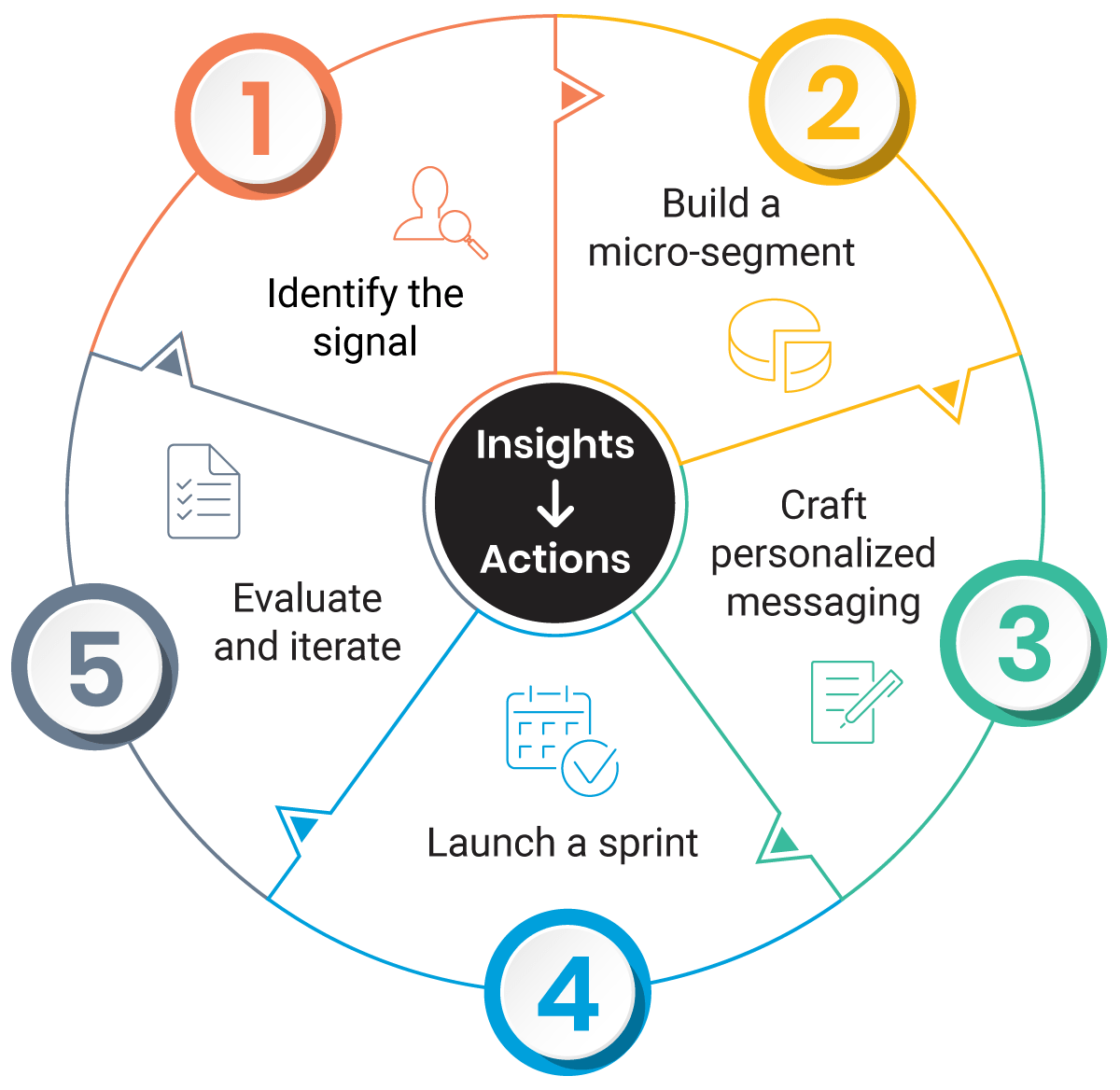
- Identify the signal: Choose one behavioral pattern that seems to predict conversion—for example, prospects who view your pricing page multiple times in one week.
- Build a micro-segment: Create a small, targeted list that combines your usual firmographic criteria with this high-value behavioral signal.
- Craft personalized messaging: Acknowledge the prospect’s recent interest and offer a relevant next step, like a demo or free trial.
- Launch a sprint: Run a two-week outreach campaign to that micro-segment and track response rates and conversion rates compared to your baseline.
- Evaluate and iterate: If the results are promising, formalize that behavioral filter into your ongoing prospecting process. If not, test a different signal.
By taking this kind of agile, outcome-oriented approach to customer data, you can progressively sharpen your targeting, messaging, and sales motions. Over time, that leads to better-fit pipeline, more efficient outreach, and more closed-won deals.
Micro-Scenario: Local Service Business
Let’s say you run a local HVAC company and you’ve noticed that prospects who visit your “emergency repair” page tend to convert faster than those who browse general service information. To test this insight, you could:
- Set up an alert to notify your team whenever someone views that page
- Reach out within an hour with a message like: “Saw you were looking at emergency repair options—we have same-day availability if you need it”
- Track how many of those fast-response contacts turn into booked appointments compared to your usual lead flow
If the conversion rate is significantly higher, you’ve validated that “emergency page view + fast response” is a winning formula. Formalize it into your process and look for the next signal to test.
Measure What Proves Insights Work
Testing insights is only useful if you’re measuring the right outcomes. Vanity metrics like email open rates or list size won’t tell you whether your data-driven approach is working. Focus on metrics that tie directly to revenue and efficiency:
- Conversion rate: Are prospects who match your behavioral criteria converting at a higher rate than your baseline?
- Sales cycle length: Are high-intent prospects moving through your pipeline faster?
- Win rate: Are you closing a higher percentage of opportunities when you prioritize behavioral signals?
- Cost per acquisition: Are you spending less to acquire customers by targeting better-fit prospects?
Over time, this disciplined approach to measurement will help you build a library of validated insights—patterns you know drive results because you’ve tested them in the real world. That’s how you turn customer data into a sustainable competitive advantage.
What Pitfalls Will Derail Your Insight Work?
Even with the best intentions, teams often stumble when trying to turn customer data into actionable insights. Here are the most common pitfalls to watch out for:
- Confusing correlation with causation: Just because two things happen together doesn’t mean one causes the other. Use insights to guide targeting, not to force behaviors.
- Chasing too many signals at once: It’s tempting to track everything, but that leads to noise and confusion. Focus on the two or three signals that matter most for your business.
- Ignoring sample size: A pattern based on five customers isn’t reliable. Make sure your insights are grounded in enough data to be statistically meaningful.
- Failing to retest: What works today might not work next quarter. Revisit your assumptions regularly and be willing to discard insights that stop delivering results.
- Over-engineering your process: Complexity is the enemy of execution. Keep your insight-to-action workflow simple enough that your team will use it.
The teams that succeed with customer data insights are the ones who stay disciplined, stay curious, and stay focused on outcomes. Avoid these pitfalls, and you’ll be well on your way to building a prospecting engine that gets smarter over time.
Conclusion
Customer data insights aren’t about collecting more information—they’re about making better decisions. When you move beyond surface-level demographics and focus on the behaviors that actually predict conversion, you can build lists that convert, run smarter tests, and close more deals. The key is to treat every insight as a hypothesis, validate it with real-world results, and refine your approach based on what the data tells you.
Salesgenie® gives you the tools to layer firmographic, behavioral, and intent data into a single prospecting workflow, so you can stop guessing and start acting on patterns that drive revenue. Ready to turn your customer data into a competitive advantage? Start testing, start measuring, and start winning.
FAQs
While demographics help narrow your target universe, they don’t predict who’s actually ready to buy. Two prospects might match your ideal persona perfectly but have completely different purchase intent levels, making behavioral signals far more predictive of conversion than job titles or company size alone.
Key signals include engagement depth (viewing pricing pages, demos, technical docs), recency and frequency of interactions, trigger events like new hires or product launches, and direct intent markers like requesting quotes or starting trials. Recent engagement typically matters more than the strength of individual actions.
Focus on insights that directly change how you prioritize prospects or personalize outreach—if a finding doesn’t lead to different actions, it’s just interesting trivia. Run small, fast tests to validate patterns before implementing them broadly, and always tie insights back to measurable outcomes like conversion rates.
Interest signals (like a single website visit) indicate general awareness but not readiness to buy, while intent signals (like requesting a demo or quote) suggest active buying behavior. Use interest signals for long-term nurturing and intent signals for immediate, personalized outreach to warm prospects.
Treat demographics as constraints rather than conclusions, prioritize behaviors over attributes, and run quick experiments to validate hypotheses. Build targeted prospect lists combining firmographic criteria with behavioral signals, then test personalized messaging and track results to continuously refine your approach.