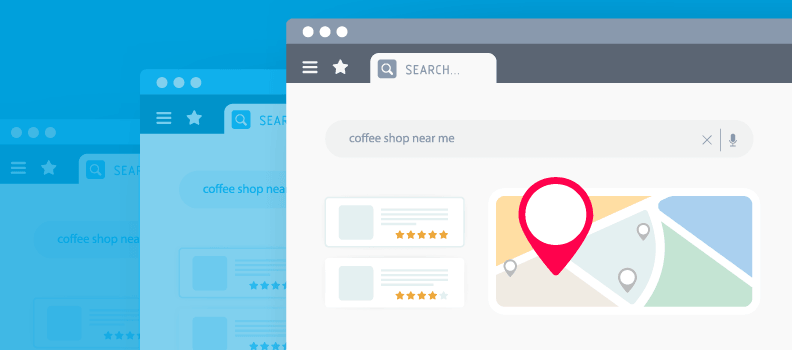
Local SEO helps businesses appear in search results when nearby customers look for products or services. Whether someone is searching for a “coffee shop near me,” “roofing company in Dallas,” or “best dentist open now,” local SEO improves the chances that your business shows up at the right moment.
For SMBs, local visibility can directly influence calls, website visits, foot traffic, and lead generation. It is a core part of modern small business marketing and a practical way to strengthen your customer acquisition strategies without wasting your budget.
This page brings together the latest local SEO statistics from trusted, verifiable sources. Along the way, we’ll break down what the numbers mean, why they matter, and how businesses can use these insights to make more informed local marketing decisions.
Discover all our SEO marketing services to get started.
Local SEO At a Glance:
- 84% of consumers search online for local businesses daily, showing how often local search influences discovery and buying decisions.
- 45% of consumers default to Google for location-specific searches, which keeps Google central to local visibility strategies.
- 89% of consumers expect business owners to respond to reviews, making review management an important part of trust and credibility.
- 91% of U.S. adults own a smartphone, reinforcing why mobile-friendly local experiences are now essential.
- 73% of consumers use social media during their search for local businesses, which shows that local discovery often happens across more than one platform.
Why Local SEO Matters in 2026
Today’s consumers expect fast, relevant results when they search for nearby businesses. Whether they need a restaurant, a service provider, or a retail store, they often move quickly from discovery to decision.
Here’s why local SEO continues to matter in 2026:
- Searching for nearby businesses is part of everyday behavior. Recent studies show that many consumers look for local businesses every day, which makes local visibility an ongoing opportunity rather than a one-time tactic.
- Google continues to dominate the discovery process. Google Search and Maps still play a central role in how people find nearby companies, even as social platforms become a bigger part of the research journey.
- Strong visibility can drive action quickly. Calls, website visits, bookings, direction requests, and foot traffic often begin with a local search, but converting that visibility into growth also depends on reaching the right prospects.
- Accurate business details can improve performance. Up-to-date hours, phone numbers, addresses, and categories help businesses appear more reliable to both search engines and potential customers.
- Mobile behavior keeps nearby search especially important. Many of these searches happen when people need an answer fast or are ready to act in the moment.
Local SEO Insight
SEO is not just about rankings. It also helps improve calls, direction requests, bookings, and in-store visits from high-intent searchers.
Local Search Behavior Statistics
Consumer behavior continues to show why local SEO deserves a central role in any modern visibility strategy. People are searching for nearby businesses often, and they are not relying on just one platform to do it. If you’re trying to improve local reach, these statistics point to a clear takeaway: visibility needs to extend across search, maps, reviews, and other discovery channels.
- 84% of consumers search online for local businesses daily. This shows that local search is now an everyday habit, giving SMBs repeated opportunities to get discovered by nearby buyers.
- 39% of consumers estimate that at least 41% of their searches are focused on local businesses. That level of local intent suggests consumers regularly use search engines to evaluate nearby options, not just for occasional urgent needs.
- Local intent is now a routine part of consumer search behavior, not a niche activity. In practical terms, that means businesses need to treat local visibility as an ongoing marketing priority rather than a one-time optimization project.
- 45% of consumers default to Google for local-specific searches. This keeps Google at the center of local discovery and makes strong Google Search visibility especially important for SMBs.
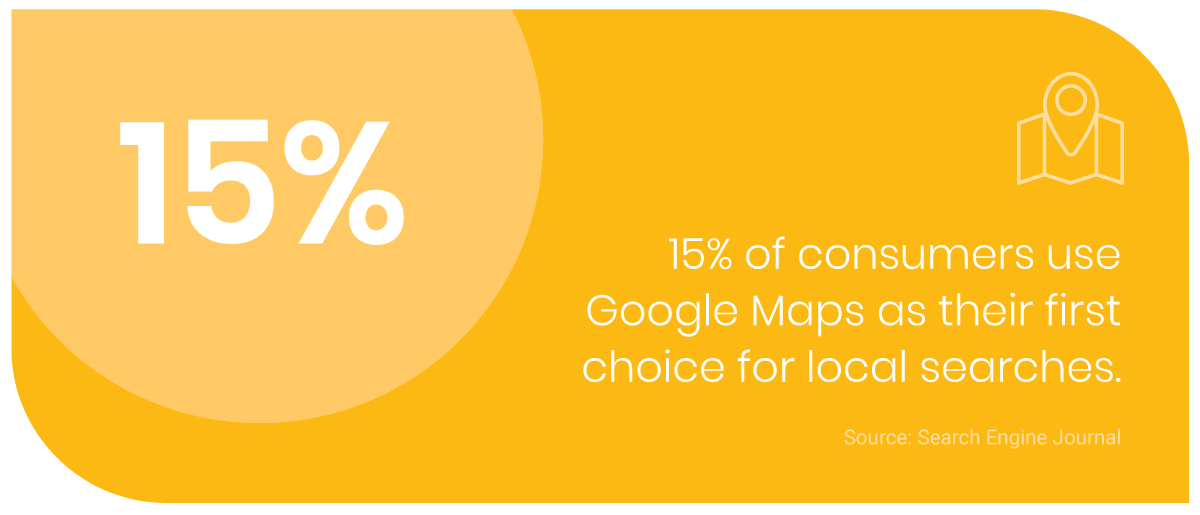
- 15% of consumers use Google Maps as their first choice for local searches. That reinforces the idea that map-based discovery deserves its own strategy, including accurate location data, categories, and photos.
- 20% of default local search behavior happens on mapping platforms when Google Maps, Apple Maps, and Bing Maps are combined. For businesses, that means local optimization should extend beyond Google Search results and include the broader maps
- 14% of consumers turn to social media first for local search. This reflects how platforms like Instagram, Facebook, and TikTok are becoming part of the local discovery process, especially for visually driven or recommendation-based decisions.
- 26% of Gen Z consumers use social media as their primary local search method, compared with 1 in 20 Baby Boomers. That gap highlights a major generational shift and suggests businesses targeting younger audiences need a stronger presence outside traditional search.
Pro Tip
Do not optimize only for Google Search. A stronger local presence usually comes from treating search, maps, reviews, and social profiles as part of the same discovery ecosystem.
These trends show that local SEO must provide complete, accurate, and compelling information wherever customers might discover them.
Google Business Profile Statistics
A Google Business Profile does more than help a business appear in search. It can also influence what happens next, whether that is a website visit, phone call, direction request, or booking.
Here’s what the latest data says about the use of a Google Business Profile.
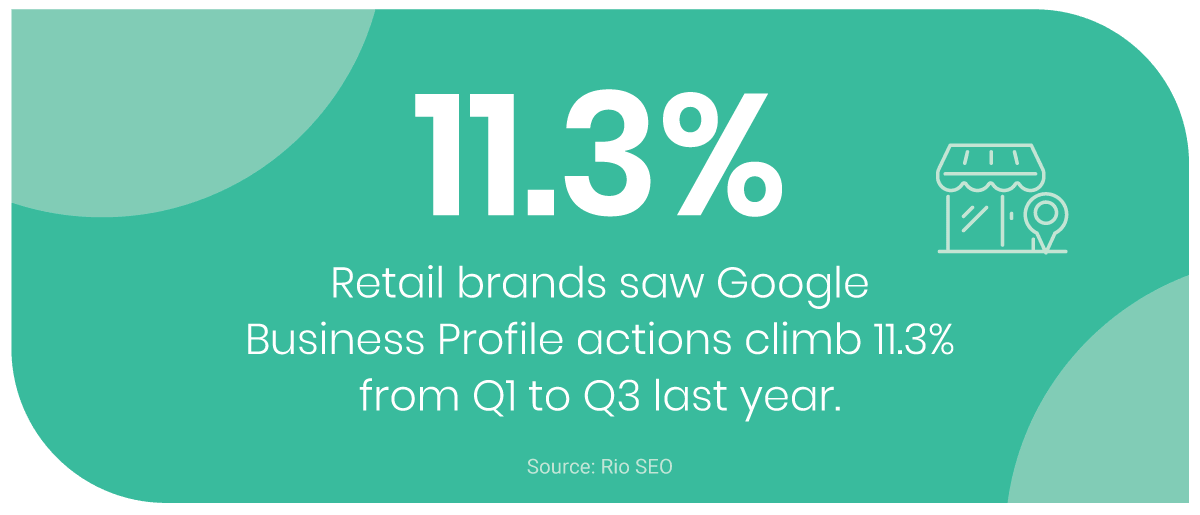
- Retail brands saw Google Business Profile actions climb 11.3% from Q1 to Q3 last year. An increase like this suggests local profile engagement becomes more valuable over time as consumers rely on listings to take quick action.
- Healthcare brands saw clicks rise 0.8% quarter over quarter and 6.6% year over year in Q3 of last year, while direction requests increased 7.7% quarter over quarter. These gains show that an optimized Google Business Profile can support both digital engagement and real-world visits.
- Last year, financial services brands reported a 2.2% quarter-over-quarter increase in clicks in Q3, along with a 4.5% increase in direction requests and a 2.0% increase in website clicks. For service-based businesses, this points to Google Business Profile as a meaningful driver of research, contact, and in-person intent.
- Verified Google Business Profiles with 15 or more photos per location saw stronger engagement across customer actions. Visual completeness can make listings feel more credible, informative, and worth interacting with.
- Google says verified business profiles are more likely to appear in search results. Verification is one of the simplest and most important steps businesses can take to strengthen local visibility.
The takeaway? A well-managed profile supports both discoverability and trust. Businesses that want to go further can combine local visibility with business and consumer data to sharpen outreach and follow-up.
Online Review Statistics for Local SEO
Reviews play a bigger role in local SEO than many businesses realize. They can influence how trustworthy a business appears to potential customers, and they can also support local visibility by strengthening prominence signals in Google’s local ranking system.
The following stats, pulled from BrightLocal, give you a glimpse into the importance of online reviews from a local SEO perspective.
- 89% of consumers expect business owners to respond to reviews. Consumer expectations now make review management part of customer service, not just online reputation monitoring.
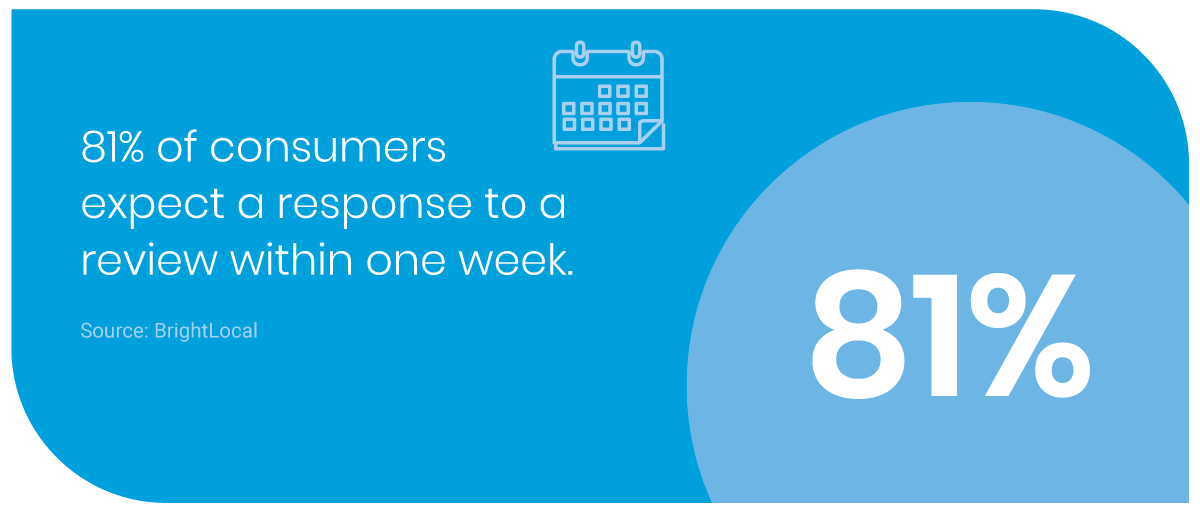
- 81% of consumers expect a response to a review within one week. Speed matters because a delayed response can make a business appear less attentive or engaged.
- 19% of consumers expect businesses to respond to reviews the same day. This raises the bar for responsiveness and reflects how quickly customers now expect businesses to engage online.
- 80% of consumers are more likely to use a business that responds to every review. Consistent replies can strengthen trust by showing that the business is active, accountable, and customer-focused.
- 42% are unlikely to use a business that does not respond to reviews at all. Silence can send the wrong message and may make potential customers question the business’s credibility or reliability.
Instead of being a courtesy, review responses are now part of how customers judge whether a business is credible, engaged, and trustworthy.
Mobile Local SEO Statistics
Smartphones are now central to how people research nearby businesses, compare options, and decide what to do next, which affects where local discovery happens. This shift also changes what customers expect once they land on a business profile or website, shaping both visibility and conversion for local SEO.
- 91% of U.S. adults own a smartphone. Because mobile devices are now nearly universal, mobile readiness is a baseline requirement for local visibility and conversion.
- 16% of U.S. adults are smartphone-only internet users. For these consumers, a mobile device is not a backup option but their main way to search, browse, and make decisions.
- 27% of U.S. adults ages 18 to 29 are smartphone dependent. Younger consumers now rely heavily on mobile-first experiences when discovering and evaluating local businesses.
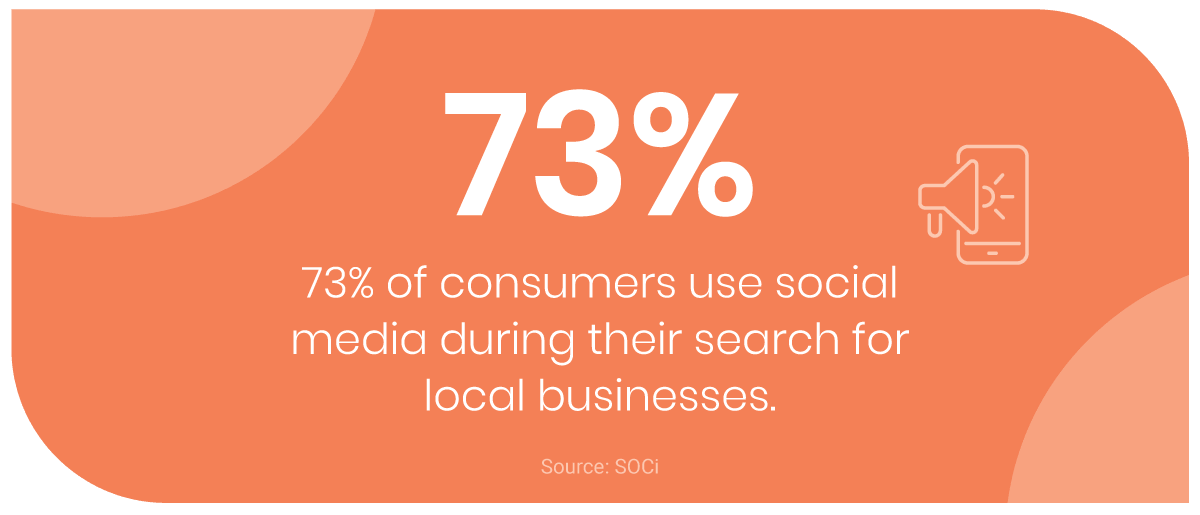
- 73% of consumers use social media during their search for local businesses. Consumer search habits now show that local decision-making happens across multiple digital touchpoints, not only in search engines and maps.
- Gen Z consumers use an average of 3.6 platforms before making a purchase decision. A fragmented customer journey makes consistency across search, maps, reviews, and social channels much more important for local brands.
Pro Tip
On mobile, convenience is part of trust. Make it easy for people to call, get directions, confirm hours, and view up-to-date photos without extra friction.
In 2026, mobile local SEO requires you to have a responsive website, as well as provide consistent, trustworthy information.
Key Local SEO Trends to Watch in 2026
Local SEO is becoming more dynamic, more fragmented, and more influenced by trust signals than ever before. Search visibility still matters, but the path from discovery to decision now stretches across AI-driven search experiences, business profiles, maps, reviews, and social platforms.
Here are some of the biggest trends shaping local SEO right now:
- AI-powered search is expanding, which is changing how local discovery begins. Google says AI Overviews are now used by more than 1 billion people, and as of May 2025 they were available in more than 200 countries and territories and 40+ languages. That matters because more local search journeys are starting with AI-assisted answers, not just a traditional list of links.
- AI Overviews are influencing search visibility, even if they do not replace local search entirely. Semrush found that AI Overviews appeared for nearly 25% of keywords in July 2025, before settling at 15.69% in November 2025. The same study noted that these results appeared most often for informational searches, which suggests businesses need content that supports earlier-stage discovery as well as bottom-funnel local intent.
- Accurate business data is still one of the most practical local SEO advantages. Google states that businesses with complete and accurate information are more likely to appear in local search results. Google also notes that business profile information can appear not only in Search and Maps, but also across third-party websites and applications via APIs, which raises the stakes for data consistency across platforms.
- Reviews are becoming an even stronger trust signal. BrightLocal’s 2026 Local Consumer Review Survey found that 97% of consumers read reviews for local businesses. In other words, reputation is now part of how consumers assess credibility in real time.
- Zero-click behavior is pushing businesses to think beyond website visits alone. Semrush reported that 27.2% of U.S. search traffic is now zero-click, up from 24.4% in March 2024. For local SEO, that means success increasingly depends on how well a business presents itself directly in search results, business profiles, and map listings, where a customer may decide to call, visit, or move on without ever reaching the website.
- Google’s core local ranking logic still favors relevance, trust, and prominence. Local results are shaped by relevance, distance, and prominence, and that more reviews and positive ratings can improve local ranking. Even as AI changes the search experience, those foundational signals still matter because they help validate whether a business looks established, credible, and useful.
Based on the above information, businesses that keep their listings, reviews, and location data accurate across platforms will likely be better positioned to adapt as search continues to evolve.
What These Local SEO Statistics Mean for Businesses
Taken together, these trends point to a simple conclusion: local SEO works best when businesses focus on being visible, credible, and easy to choose.
- Trust drives local performance. It is not enough to show up in search. Businesses also need to look legitimate, current, and reliable.
- Strong local SEO starts with the basics. Accurate business details, complete profiles, and consistent listings still make a meaningful difference.
- Reviews shape both perception and performance. They help potential customers feel confident, and they reinforce the credibility signals that matter in local search.
- Mobile readiness is essential. Many local searches happen in quick decision-making moments, so businesses need to make the next step as easy as possible.
- Customers discover businesses in more places now. Search, maps, reviews, and social platforms all play a role in how local decisions get made.
- Consistency creates momentum. When business information, reputation, and local presence stay aligned across channels, it becomes easier to earn clicks, calls, and visits.
- Steady optimization often beats big one-time efforts. Small updates made consistently can strengthen local visibility over time and help businesses stay competitive.
Conclusion and Final Thoughts
While local SEO continues to evolve, the core message stays the same: businesses that are easy to find, easy to trust, and easy to choose are in the strongest position to win local demand. From accurate business information and strong reviews to mobile readiness and cross-platform consistency, the most effective local SEO strategies are built on credibility as much as visibility.
Ready to connect with the right local prospects? Try Salesgenie® today to access business and consumer data that can help you identify leads, refine your outreach, and support more effective local marketing.
FAQs
Local SEO is the process of improving a business’s visibility in search results for nearby customers. It helps companies appear in places like Google Search and Google Maps when people look for relevant local products or services.
Local SEO helps small businesses reach nearby, high-intent customers who are often ready to call, visit, or make a purchase. It can drive leads and foot traffic without requiring the broad spend of less targeted advertising.
Local intent shows up in a significant share of consumer search behavior, with many people regularly searching for businesses, services, and products near them. For SMBs, that means local visibility is not occasional exposure but an ongoing opportunity.
Yes, reviews can influence both customer trust and local search performance. A strong review profile helps businesses look more credible and can support visibility through stronger prominence signals.
Yes, a complete and verified Google Business Profile can improve visibility in local search and Maps. It also gives customers key details like hours, location, photos, and reviews that can influence whether they take action.
Businesses should review local listings regularly and update them anytime key details change, such as hours, phone numbers, services, or locations. Even small inaccuracies can create friction for customers and hurt trust.
Business name, address, phone number, website URL, hours, and business category should stay accurate and consistent everywhere. Consistency helps search engines validate the business and makes it easier for customers to trust what they find.