Small businesses waste thousands of dollars every year on scattered marketing efforts that never connect. You post on social media, send occasional emails, maybe try some Google Ads—but your prospects slip through the cracks because you’re not meeting them where they actually engage.
Multi-channel marketing for SMBs solves this problem by coordinating your outreach across email, direct mail, phone, and digital channels to create a seamless customer experience. This complete playbook will show you how to build a data foundation, select the right channel mix optimization for your budget, execute an integrated marketing campaign, and measure return on investment (ROI) effectively. You’ll discover proven strategies that help SMBs achieve higher returns and customer retention rates through strategic multi-channel approaches.
Why Multi-Channel Marketing Drives SMB Growth in 2025
The competitive reality hits hard: , making single-channel approaches insufficient for modern business growth. Companies still relying on email-only or social-media-only strategies find themselves losing prospects to competitors who meet customers across multiple touchpoints.
The financial impact for SMBs is substantial. Multi-channel customers spend 3-4 times more than single-channel customers, with companies implementing strong multi-channel strategies seeing 89% customer retention compared to just 33% for weak strategies. These aren’t just vanity metrics—they translate directly to revenue growth and customer lifetime value.
Resource efficiency becomes a competitive advantage when you coordinate campaigns properly. Instead of running isolated efforts across different channels, an integrated multi-channel approach creates compound effects that maximize limited marketing budgets. A prospect who sees your LinkedIn ad, receives your email, and gets your direct mail piece is far more likely to convert than someone who encounters just one touchpoint.
Modern buyer behavior demands this multi-channel approach, especially in business-to-business (B2B) environments. Decision-makers now research across six or more touchpoints before making purchasing decisions, gathering information from websites, social media, peer reviews, and direct communications before they’re ready to buy.
Building Your Customer Data Foundation
Creating Accurate Buyer Personas for Multi-Channel Success
- Your multi-channel strategy succeeds or fails based on how well you understand your ideal customers. Start by analyzing your current customer base using firmographic data like company size, industry, and revenue, combined with behavioral data showing how they actually engage with your brand.
- Map each persona’s channel preferences carefully. Use intent data to identify when prospects are actively researching solutions like yours, allowing you to time your multi-channel outreach for maximum impact.
- Document these insights in detailed buyer personas that your entire team can reference. Include specific pain points, communication preferences, and decision-making processes that inform your channel selection and messaging strategy.
First-Party Data Collection Strategies
- Build your contact database through website tracking, strategic form placements, and customer relationship management (CRM) integration. Set up lead magnets like industry reports or free tools that capture contact information in exchange for valuable content. This creates a permission-based foundation for your multi-channel campaigns.
- Implement proper tracking across all touchpoints. Use Urchin Tracking Module (UTM) parameters for digital channels, unique phone numbers for offline campaigns, and QR codes to bridge the gap between print and digital engagement.
- Maintain compliance with email, phone, and direct mail regulations by implementing clear opt-in processes and honoring unsubscribe requests promptly.
The SMB Multi-Channel Marketing Strategy Framework
To establish a solid multi-channel marketing framework, focus on core channels that deliver consistent results for B2B audiences: email, direct mail, phone, and LinkedIn. You may also consider emerging opportunities like SMS, programmatic retargeting, and video outreach further down the line.
Create a decision matrix that evaluates channels based on your specific goals, target audience preferences, and budget constraints. Sequence your touches strategically—perhaps starting with LinkedIn ads to build awareness, following up with email nurture sequences, then reinforcing with direct mail and phone outreach for high-value prospects.
Message Consistency Across Touchpoints
- Develop brand voice and visual identity standards that translate across every channel. Your prospects should immediately recognize your company whether they encounter your message in their inbox, mailbox, or LinkedIn feed. This consistency builds trust and reinforces your positioning.
- Next, adapt your core messaging for channel-specific formats while maintaining consistent themes. An email might include detailed product information, while a direct mail piece focuses on a single compelling benefit, but both should reinforce the same value proposition and call-to-action.
- Finally, build content libraries to establish cross-channel marketing. Create modular messaging components, visual assets, and templates that your team can quickly customize for email campaigns, social media posts, and direct mail pieces without starting from scratch each time.
Pro Tip
Start with the channels you can execute consistently. A simple, reliable cadence across two or three channels will outperform a complex strategy you can’t maintain, and it creates a strong foundation to scale later.
B2B Multi-Channel Campaign Examples That Drive Results
Manufacturing Lead Generation Campaign
- Launch with LinkedIn ads targeting manufacturing decision-makers based on job title, company size, and industry keywords.
- Follow up with automated email nurture sequences that provide additional value while building trust and credibility. After 2-3 email touches, send targeted direct mail pieces featuring case studies and success stories relevant to their specific manufacturing challenges.
- Complete the sequence with personalized phone outreach from your sales team, armed with insights about each prospect’s digital engagement history.
Real Estate Prospecting Strategy
- Begin with geographic targeting through direct mail campaigns focused on specific neighborhoods or property types. Use eye-catching postcards featuring recent sales data and market insights that establish your local expertise and credibility.
- Follow up with email campaigns to prospects who respond to your direct mail, providing additional market analysis and property valuations.
- Time your outreach around seasonal market patterns and local events that influence buying decisions. Measure success through cost per qualified lead across all channels.
Technology Stack Essentials for Integrated Campaigns
CRM Integration and Data Flow
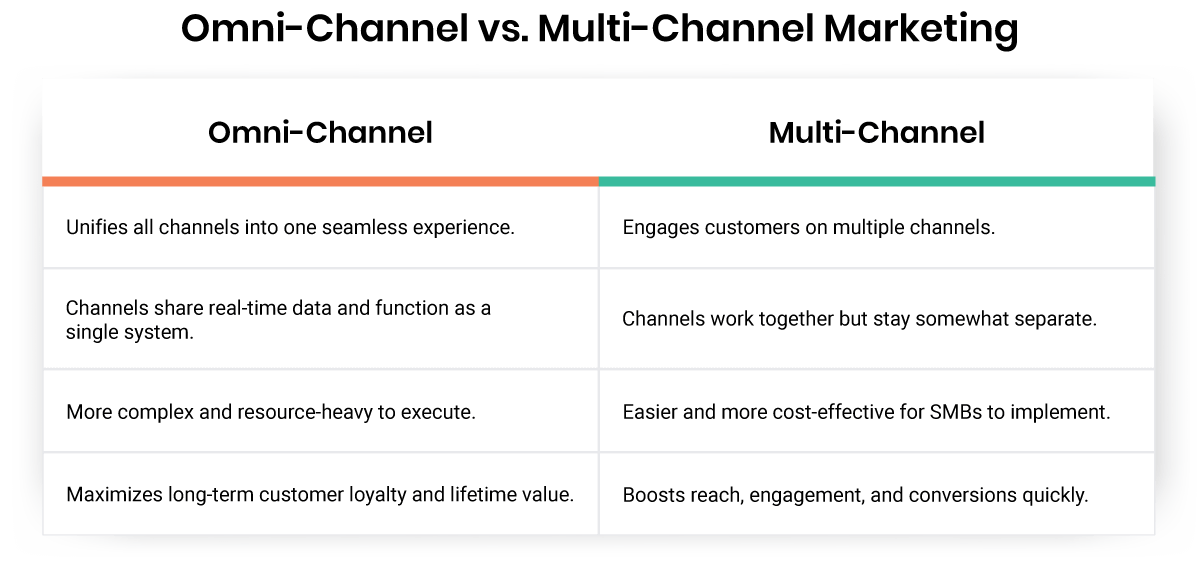
Seamless integration between your marketing technology and CRM is the backbone of an effective, data-driven campaign strategy. When systems share information in real time, teams gain a unified view of every prospect interaction, allowing marketing and sales to coordinate outreach, personalize engagement, and convert leads more efficiently.
- Connect your marketing channels to sales processes through a centralized CRM that tracks every prospect interaction.
- Implement lead scoring systems that assign points based on engagement across multiple channels.
- Set up automation workflows that trigger appropriate follow-up actions based on prospect behavior.
Campaign Execution Tools
Executing integrated campaigns requires tools that work together, not in isolation. By uniting email, direct mail, and digital channels within a single ecosystem, you create a consistent customer experience, strengthen targeting precision, and eliminate the data silos that slow campaign performance.
- Choose email marketing platforms that integrate with your other channels rather than operating in isolation.
- Implement direct mail automation that personalizes messaging based on digital engagement history.
- Choose email platforms to eliminate data silos that prevent effective cross-channel coordination.
Pro Tip
Prioritize tools that integrate natively with your CRM. Every disconnected system creates a blind spot, while a unified tech stack gives you cleaner data, stronger multi-channel personalization, and more efficient campaign execution.
How to Measure Multi-Channel Marketing ROI Effectively
Setting Up Tracking and Attribution
Accurate ROI measurement starts with precise tracking and attribution. By connecting every touchpoint across digital and offline channels, you can see not just where conversions happen, but how each interaction contributes to the customer journey.
- Implement UTM parameters consistently across all digital channels to track which sources generate the most valuable traffic and conversions.
- Use unique phone numbers for different campaigns and QR codes on print materials to bridge offline and online attribution gaps.
- Choose between first-touch and last-touch attribution models based on your sales cycle length and business goals. First-touch attribution credits the initial channel that brought in each lead, while last-touch attribution credits the final touchpoint before conversion.
- Configure Google Analytics 4 to track cross-channel customer journeys, showing how prospects move between email, social media, website visits, and other touchpoints before converting.
Key Performance Indicators by Channel
Each marketing channel plays a distinct role in driving conversions, and measuring the right metrics ensures their combined impact is understood. Evaluating performance holistically reveals how email, direct mail, and phone outreach work together to strengthen engagement, lower acquisition costs, and maximize overall ROI.
- Track email performance through open rates, click-through rates, and conversion rates, but focus primarily on how email engagement influences overall campaign performance.
- Measure direct mail success through response rates, cost per acquisition, and customer lifetime value rather than just immediate conversions.
- Monitor phone outreach through contact rates, qualification rates, and close rates to optimize your calling strategies.
- Calculate blended customer acquisition cost and ROI across your entire funnel to understand true campaign profitability.
Pro Tip
Don’t judge channels in isolation. The real ROI emerges when you evaluate how each touchpoint influences the entire customer journey, not just where the final conversion happens.
Common Multi-Channel Marketing Mistakes to Avoid
Even the most sophisticated multi-channel strategy can falter when execution lacks coordination, consistency, or clarity. Avoiding common pitfalls ensures every channel works in harmony to strengthen brand impact, improve efficiency, and drive measurable growth.
- Treating channels as separate campaigns instead of integrated touchpoints undermines the entire multi-channel approach.
- Inconsistent messaging and timing across channels confuses prospects and weakens your brand positioning.
- Over-investing in channels without proper measurement wastes budget and prevents optimization.
- Neglecting data quality and list hygiene reduces deliverability and response rates across all channels.
- Failing to align sales and marketing on lead handoff processes creates friction that loses qualified prospects.
Integrated Marketing Campaign Checklist for SMBs
Pre-Launch Planning
A successful multi-channel strategy begins with understanding your target audience’s preferences and behaviors.
Start by mapping your audience segments and personas to guide every decision, from channel selection to message development. Use performance data and audience insights to allocate your budget strategically, investing more in the channels that deliver the greatest ROI. Build content and approval workflows that keep messaging consistent across platforms while adapting to each channel’s unique format. Before launch, test every integration and tracking system to ensure data flows seamlessly and attribution accurately reflects the full customer journey.
Campaign Execution and Monitoring
Strong execution turns strategy into momentum.
Start by coordinating launch timing and touchpoint intervals so prospects experience a steady, natural flow of communication. During the first week, monitor performance closely to catch and correct any technical issues or unexpected trends before they impact results. Keep marketing and sales aligned through clear lead qualification criteria and consistent communication to ensure every qualified lead moves smoothly through the funnel. Then, use weekly performance reviews to assess both channel and overall campaign effectiveness, applying insights to refine tactics and keep performance steadily improving.
Scaling Your Multi-Channel Approach
Scaling your multi-channel approach works best when it’s intentional, not rushed. Begin with two or three core channels and reliable workflows to establish a strong foundation before expanding into new territory.
As performance data accumulates, add complementary channels that enhance your existing strategy and build on what’s already working. Introduce automation and personalization gradually, aligning their complexity with the quality and volume of your data to ensure meaningful optimization.
Finally, structure your team and resources for steady, sustainable growth because long-term success in multi-channel marketing comes from consistent execution, not overextension.
Pro Tip
Let your data decide when to scale. Expanding channels too early adds complexity without returns, while scaling based on proven performance ensures every new channel strengthens your strategy.
Transform Your Marketing with Salesgenie’s Integrated Approach
Ready to execute your own multi-channel marketing strategy? Salesgenie® provides the data foundation, campaign tools, and measurement capabilities SMBs need to succeed across email, direct mail, phone, and digital channels.
Our platform combines verified B2B contact data, built-in campaign execution tools, and real-time analytics—eliminating the complexity of managing multiple vendors while ensuring your message reaches the right prospects at the right time.
Explore Salesgenie today to see how Salesgenie can power your multi-channel campaigns and drive measurable growth for your business.
FAQs
Single-channel marketing limits your visibility and forces every prospect into the same engagement path. Multi-channel marketing meets buyers where they naturally spend time, increasing touchpoints, reinforcing your message, and dramatically improving the likelihood they’ll convert.
SMBs gain stronger brand recognition, higher engagement, and more predictable lead flow because prospects interact with them across multiple touchpoints. This coordinated approach also improves customer retention and boosts ROI by maximizing the impact of every marketing dollar.
A strong SMB strategy typically includes email, direct mail, phone outreach, and LinkedIn for B2B engagement. As capabilities grow, channels like SMS, programmatic retargeting, and short-form video can be layered in to deepen reach and strengthen consistency across the buyer journey.
Success is measured through connected tracking across all channels, using UTMs, dedicated phone numbers, QR codes, CRM data, and analytics platforms to capture every interaction. Attribution models then help identify which channels and sequences contribute most to conversions and revenue.
Many SMBs struggle when channels operate in silos, messaging isn’t aligned, or teams lack clean, up-to-date data. These gaps lead to missed opportunities, poor targeting, and inconsistent customer experiences that undermine campaign performance.
Personalization strengthens every touchpoint by aligning content with each prospect’s interests, behaviors, and stage in the sales cycle. When done well, it can significantly increase engagement, improve relevance, and accelerate conversions across all channels.
Start by mapping where your audience spends time and which channels historically drive the best engagement. Prioritize the channels you can execute consistently within your budget, then expand strategically based on performance data and the unique needs of your highest-value segments.