

In an era where business disruptions have become the norm rather than the exception, traditional sales advice often falls short. Generic tips and tactics crumble in the face of economic uncertainty, supply chain issues, and market volatility.
The harsh reality is that recent market headwinds have measurably impacted sales performance: business-to-business (B2B) win rates fell 27%, and sales cycles lengthened 38% in 2023 versus 2021. It’s essential that you have a crisis management plan in place.
Crisis management refers to the structured process of preparing for, responding to, and recovering from unexpected disruptions that threaten business operations. In this context, it focuses on safeguarding revenue by adapting strategies, stabilizing customer relationships, and enabling teams to navigate uncertainty with clarity and speed.
Sales teams need more than generic advice to navigate disruption; they need a flexible, battle-tested sales continuity plan. This guide lays out the key components: mapping your revenue streams, triaging your pipeline, using omnichannel outreach, and leveraging data to drive decisions. Whether you’re leading an enterprise team or running a lean SMB operation, you’ll get practical strategies to protect revenue, adapt fast, and build resilience—so your business isn’t just prepared for the next crisis, but positioned to grow through it.
Why Traditional Sales Tips Fall Short During Business Disruptions
In times of economic uncertainty, supply chain disruptions, and market volatility, generic sales advice often falls flat. The tried-and-true tactics that work during stable periods simply don’t address the unique challenges that arise when the business landscape is in flux.
Consider these eye-opening statistics: across B2B teams, win rates declined 27% and sales cycles were 38% longer in 2023 versus 2021. Meanwhile, 69% of sales professionals say selling is more difficult now, underscoring the need to adapt selling motions for economic uncertainty.
The harsh reality is that disruptions can wreak havoc on your sales performance, and relying on traditional sales tips is outdated. You need strategies that are specifically designed to withstand and adapt to crisis situations.
That’s where a systematic sales continuity plan comes in. Unlike scattered, ad hoc tactics, a continuity plan provides a comprehensive framework for maintaining sales momentum and protecting your revenue streams, no matter what challenges come your way. It’s not about abandoning your core sales principles but rather augmenting them with crisis-ready protocols and contingencies.
Building Your Sales Continuity Plan
A sales continuity plan is your organization’s blueprint for maintaining revenue generation during unexpected disruptions. Unlike traditional sales planning that focuses on growth targets and quarterly goals, continuity planning prepares your team for worst-case scenarios while positioning you to capitalize on opportunities that arise during market instability.
The core components of an effective sales continuity plan include revenue stream mapping, comprehensive risk assessment, and detailed contingency protocols. Revenue stream mapping helps you identify which products, services, or customer segments are most vulnerable to disruption. Risk assessment involves analyzing potential threats to your sales operations, from economic downturns to supply chain interruptions.
Your contingency protocols should include crisis communication templates, alternative sales processes, and resource reallocation strategies. These templates ensure your team can respond quickly and consistently when disruptions occur, maintaining professional communication while addressing customer concerns proactively.
For small- and medium-sized businesses (SMBs), this approach differs significantly from standard sales planning because it prioritizes flexibility and rapid response over long-term forecasting. The goal is creating a framework that allows your team to pivot quickly while maintaining the relationships and processes that drive revenue.
Pipeline Triage Strategies That Protect Your Revenue
When crisis strikes, every minute counts in protecting your revenue pipeline. Pipeline triage is the process of rapidly categorizing your deals based on their risk level and immediate value potential, allowing you to make swift, informed decisions about where to focus your limited resources.
Effective pipeline triage begins with establishing clear prioritization criteria. These criteria should include deal size, current stage in the sales cycle, strategic importance of the account, timeline to close, and level of decision-maker engagement. By defining these parameters in advance, your team can move quickly when triage becomes necessary.
Next, categorize each opportunity using a simple risk assessment framework:
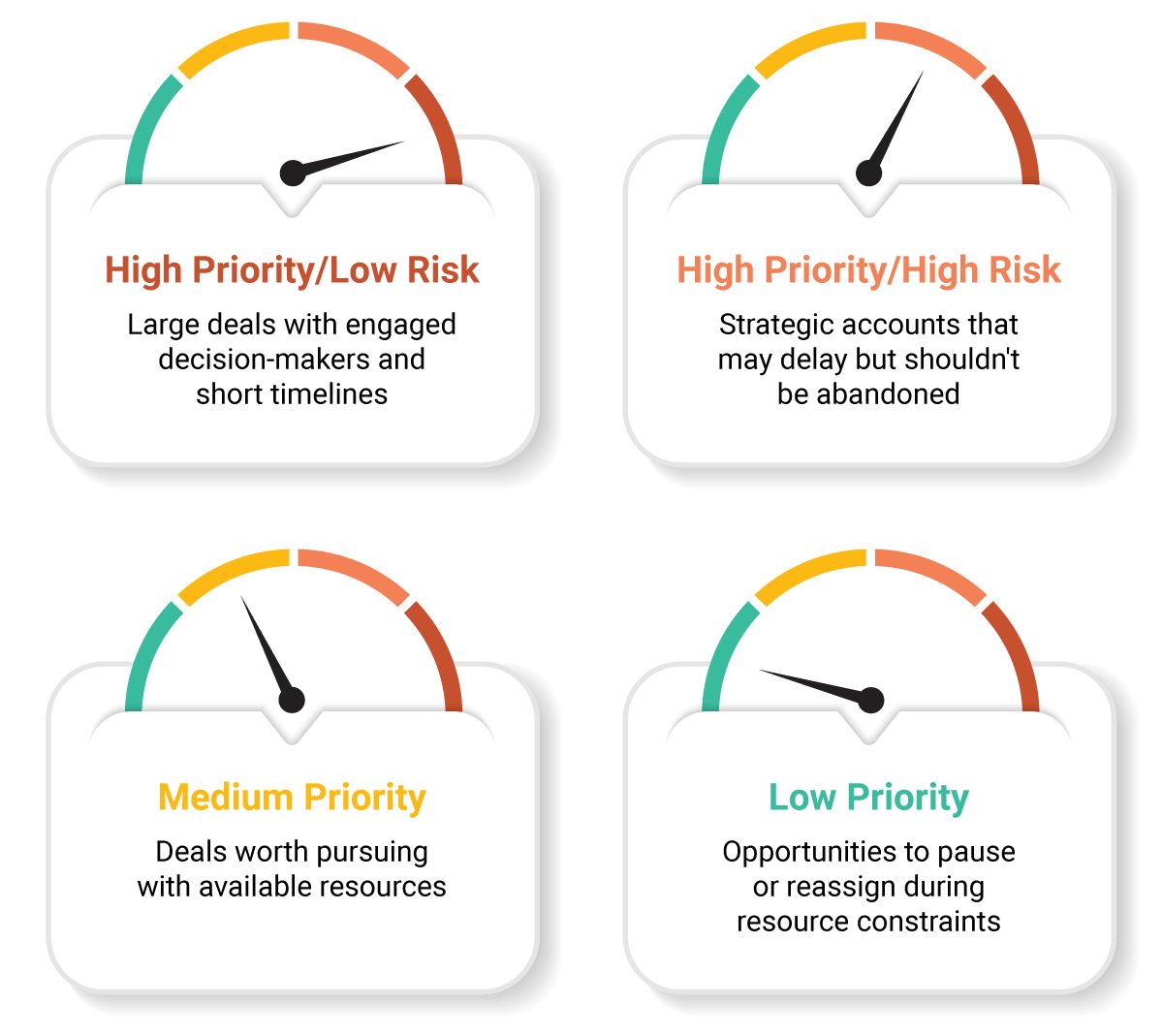
- High Priority/Low Risk: Large deals with engaged decision-makers and short timelines
- High Priority/High Risk: Strategic accounts that may delay but shouldn’t be abandoned
- Medium Priority: Deals worth pursuing with available resources
- Low Priority: Opportunities to pause or reassign during resource constraints
Your customer relationship management (CRM) system becomes invaluable during this process. Leverage analytics to identify patterns in deal progression, buyer engagement levels, and historical close rates during similar market conditions. This data-driven approach removes guesswork from your triage decisions.
Finally, be prepared to reallocate resources rapidly based on your triage results. This might mean reassigning your top performers to high-priority accounts, pausing outreach to low-priority prospects, or shifting focus to shorter sales cycles that can generate immediate revenue.
Omnichannel Prospecting Tips for Disruption-Proof Outreach
Channel diversification is essential in uncertain times. Relying on a single outreach method leaves your pipeline vulnerable if that channel falters. An omnichannel strategy keeps communication flowing, even when preferred channels become less effective.

Email outreach
Craft messages that acknowledge current challenges while positioning your solution as a stabilizing force. Segment lists by industry impact to tailor your messaging more effectively.

Phone prospecting
Equip your team with scripts that address common concerns and train them to listen for underlying pain points. Calling during non-traditional hours can also improve response rates.

Social selling
Share helpful content, respond thoughtfully to prospect posts, and use social listening to spot signals of need.

Video outreach
Record personalized messages, product demos, or follow-ups that prospects can view on their schedule — helping you maintain connection without physical presence.

Direct mail
Send practical, thoughtful items like industry reports, branded notebooks, or care kits that leave a lasting impression and show you understand the moment.
Crisis Sales Strategy: Turning Uncertainty Into Competitive Advantage
The most successful sales professionals view crisis periods not as obstacles but as opportunities to gain competitive advantage. This mindset shift requires moving beyond defensive tactics to embrace a proactive approach that positions uncertainty as a catalyst for buyer action.
The first-mover advantage principle becomes particularly powerful during disruptions because many competitors will pull back on sales efforts, leaving market opportunities open for prepared organizations. Research shows companies that balance selective cost cuts with continued investment are most likely to pull ahead coming out of recessions—only about 9% emerge stronger.
Real-world examples bear this out. When market volatility surged in 2020, Zoom rapidly expanded capacity, offered free access to schools, and directly addressed customer concerns about reliability and security. That proactive posture helped the company deepen trust and accelerate adoption at a moment when competitors were hesitating.
Other organizations succeeded by leaning into value-led conversations rather than avoiding difficult topics. HubSpot, for example, adjusted its sales motion during the same period by reducing costs for small businesses, launching free tools, and equipping its team to reframe the platform as essential for stability and remote operations. By meeting buyer concerns head-on and positioning itself as a partner in navigating uncertainty, HubSpot strengthened its pipeline while similar platforms stalled.
Your conversation framework should address buyer concerns head-on rather than avoiding difficult topics. Develop scripts that acknowledge economic uncertainty while demonstrating how your solution provides stability, reduces risk, or creates competitive advantages. Train your team to ask questions that uncover how prospects are adapting their strategies rather than simply pushing existing value propositions.
Common objections during crisis periods include budget freezes, delayed decision-making, and uncertainty about future needs. Prepare responses that reframe your solution as risk mitigation rather than additional expense. For example, position your offering as insurance against further disruption or as a tool that reduces operational costs during tight periods.
The key is positioning your solution as essential for navigating current challenges rather than nice-to-have for future growth. This shift in positioning often opens budget discussions that seemed closed and accelerates decision-making timelines that appeared stalled.
B2B Sales Tips for Small Business Resilience
Small and medium-sized businesses face unique challenges during disruptions because they typically operate with limited resources, smaller teams, and less financial cushion than larger organizations. However, their size can also provide advantages in terms of agility and decision-making speed.
Lead generation strategies for smaller budgets should focus on high-impact, low-cost tactics. Leverage referral programs by reaching out to satisfied customers who may know others facing similar challenges. Create valuable content that attracts inbound leads, such as sales team crisis management guides or industry-specific resources that demonstrate expertise.
Maximize your existing relationships by conducting account reviews with current customers to identify expansion opportunities or additional needs created by changing circumstances. Often, your best prospects during difficult times are companies already familiar with your capabilities.
Sales and marketing alignment becomes even more critical when resources are constrained. Ensure marketing efforts focus on generating qualified leads rather than broad awareness, and establish clear handoff processes that prevent any potential opportunities from falling through cracks.
Technology adoption can level the playing field for smaller sales teams. Invest in tools that automate routine tasks, provide better customer insights, and enable remote selling capabilities. The goal is maximizing the productivity of each team member rather than simply adding headcount.
Consider partnerships with complementary service providers that allow you to offer more comprehensive solutions without significant additional investment. These relationships can provide access to new markets while sharing the costs of business development efforts.
Prospect Smarter with Data and Intent During Market Volatility
High-quality, verified data becomes exponentially more valuable during disruptions because wasted outreach efforts carry higher opportunity costs when resources are limited. Your prospecting success depends on reaching the right people with the right message at precisely the right time.

Buyer intent signals—like website visits, content downloads, and search behavior—help you identify prospects actively researching solutions, so you can focus outreach on those most likely to convert. Use advanced filtering and segmentation to target industry-specific pain points, not broad messaging.

Data hygiene becomes critical when you cannot afford to waste outreach efforts on outdated contact information. Implement processes for regularly updating your database, removing inactive contacts, and verifying decision-maker roles that may have changed due to organizational restructuring.

Analytics provide the foundation for quick, informed decisions about where to focus your limited time and resources. Track metrics like response rates by industry, message type, and outreach channel to identify what’s working and adjust your approach accordingly. During volatile periods, the ability to pivot quickly based on data insights can make the difference between success and failure.
Building Long-Term Sales Resilience: Your 2025 Action Plan
Utilizing resilient sales tactics requires systematic implementation of the strategies outlined throughout this guide. Your action plan should follow a structured timeline that allows for testing, refinement, and full deployment of crisis-ready processes.
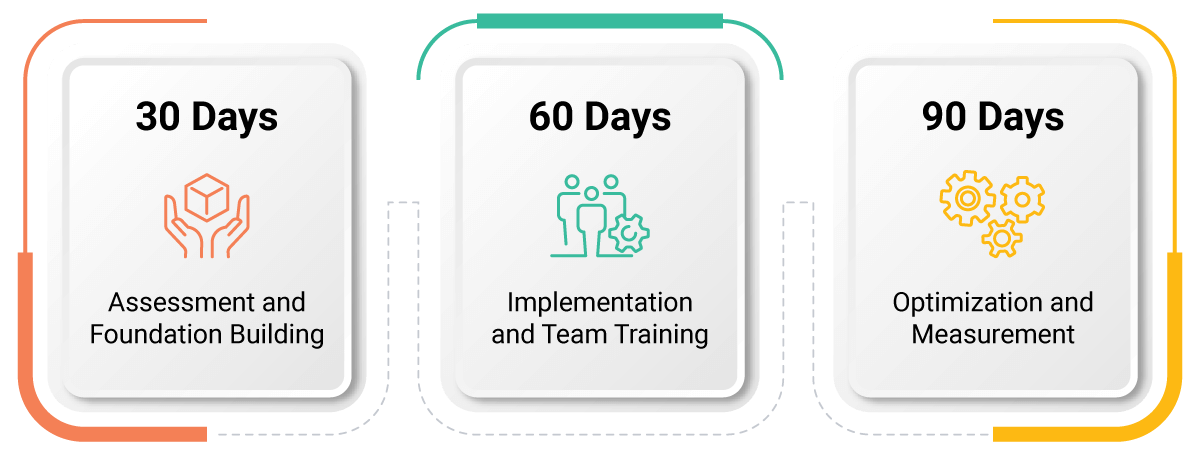
30 Days
During your first 30 days, focus on assessment and foundation building. Conduct a comprehensive review of your current sales processes, identify vulnerabilities in your pipeline management, and begin developing your sales continuity plan framework. Map your revenue streams, assess potential risks, and create initial crisis communication templates.
60 Days
The next 30 days should emphasize implementation and team training. Deploy your pipeline triage strategies, launch omnichannel prospecting campaigns, and train your team on crisis-specific conversation frameworks. Begin collecting data on the effectiveness of your new approaches and make initial adjustments based on early results.
90 Days
Your final 30 days of initial implementation should focus on optimization and measurement. Refine your processes based on real-world testing, establish key performance indicators (KPIs) for measuring sales resilience, and create regular review schedules for updating your continuity plan based on changing market conditions. Key metrics for measuring sales resilience include pipeline velocity during disruptions, win rate consistency across different market conditions, and customer retention rates during challenging periods. These indicators help you understand whether your crisis-ready strategies are actually protecting revenue and maintaining growth momentum.
Regular scenario planning exercises ensure your team remains prepared for various types of disruptions. Conduct quarterly reviews that consider different potential challenges and test your team’s ability to implement contingency protocols quickly and effectively.
From Reactive to Proactive Sales Leadership
Shifting from traditional sales tips to continuity planning marks a fundamental evolution in sales leadership. Instead of reacting to disruptions, proactive leaders design systems that anticipate them — turning risk into opportunity. This strategic shift not only brings peace of mind to leadership teams but also positions companies to gain market share from slower-moving competitors. Beyond crisis response, it drives more efficient operations, stronger customer relationships, and sustainable growth in a wide variety of market conditions.
Ready to build your crisis-proof sales foundation? Salesgenie® provides the data quality, advanced filtering capabilities, and multichannel outreach tools you need to implement these continuity strategies effectively. With access to 25 million U.S. businesses and 30 million executives, plus precise segmentation tools for pipeline triage and comprehensive lead management capabilities, you can create the disruption-proof sales operation your business deserves.
Try Salesgenie to discover how the right data foundation can transform your sales resilience and drive consistent results, no matter what challenges lie ahead.
FAQs
Concentrate on the highest-value, lowest-risk opportunities by triaging your pipeline and focusing resources where they can create immediate impact. Speed comes from clear prioritization, shorter sales cycles, and rapid reallocation of your top performers to the deals most likely to close.
Be direct about the challenges buyers are facing and maintain consistent, proactive communication. Acknowledging uncertainty while offering stability and support strengthens relationships and keeps conversations moving even when conditions are unsettled.
Flexible pricing, extended terms, or value-focused bundles help reduce perceived risk for buyers. Pair these adjustments with omnichannel outreach so you can stay visible and responsive across email, phone, social, video, and direct mail.
Shift your positioning from “growth enabler” to “risk reducer” by emphasizing stability, continuity, and cost efficiency. Address concerns head-on and show how your solution helps buyers navigate uncertainty rather than simply preparing for future opportunities.
Teams often stumble by relying on generic sales scripts, avoiding tough conversations, or pulling back on outreach when buyers need more guidance. Failing to adjust messaging, processes, or priorities to the new environment can quickly stall momentum.
SMBs can stay resilient by prioritizing existing customers, focusing on high-impact lead sources, and keeping outreach highly targeted. Agility becomes a strength when teams use data, clear prioritization, and flexible processes to pivot quickly without sacrificing relationship quality.