

Your sales team is burning through leads faster than ever, yet pipeline performance keeps declining. Sound familiar? According to recent industry analysis, outdated sales prospecting myths cost businesses billions in lost revenue in recent years, with small and midsize businesses (SMBs) bearing the brunt of this impact.
The culprit isn’t your team’s effort—it’s the strategies you’re using. Pre-2020 sales advice that once drove results now actively sabotages modern pipeline performance. Many teams are stuck using enterprise-level tactics that don’t fit the realities of SMBs. Combined with limited resources, this leads to plummeting conversion rates and soaring customer acquisition costs.
Today’s buyers are more informed than ever— according to a recent HubSpot Sales Trends Report, 96% of prospects conduct their own research before speaking with a sales rep. That means traditional outreach methods built on volume and scripts rarely resonate with modern decision-makers.
This comprehensive guide separates prospecting myths from reality and provides actionable playbooks that actually work in today’s market. Whether you’re struggling with cold calling effectiveness, email deliverability, or multi-channel coordination, you’ll discover proven frameworks that transform pipeline performance.
Are You Doing Prospecting the Wrong Way?
Most teams are. Here’s why your pipeline might be underperforming—and what to do about it:
- You’re chasing volume, not value
- You’re ignoring compliance and intent signals
You’re treating automation as a shortcut, not an enhancer
The Evolution of Sales Prospecting: What Changed After 2020
The sales prospecting landscape underwent a seismic shift after 2020. Buyer behavior evolved dramatically, creating new challenges that traditional approaches simply can’t address.
Consider the touchpoint requirement alone. Previously, prospects needed just 3–5 interactions before engaging with sales teams. Today’s buyers require 7–13 touchpoints across multiple channels before they’re ready to move forward. This isn’t just about quantity—it’s about meeting sophisticated buyers where they are, when they’re ready.
Privacy regulations fundamentally altered data-collection practices. The General Data Protection Regulation (GDPR), the California Consumer Privacy Act (CCPA), and emerging global privacy laws have transformed how sales teams can legally gather and use prospect information. The era of purchasing massive contact lists and executing spray-and-pray campaigns is over.
Artificial intelligence adoption changed buyer expectations entirely. Modern prospects expect hyper-personalized, contextually relevant outreach at every interaction. Generic templates and one-size-fits-all messaging now signal unprofessionalism rather than efficiency.
The New Buyer Journey Reality

Today’s buyer journey involves complex decision-making committees rather than single stakeholders. Each committee member brings unique preferences, communication styles, and evaluation criteria. Successfully navigating this landscape requires understanding that modern buyers expect personalized experiences across their preferred channels.
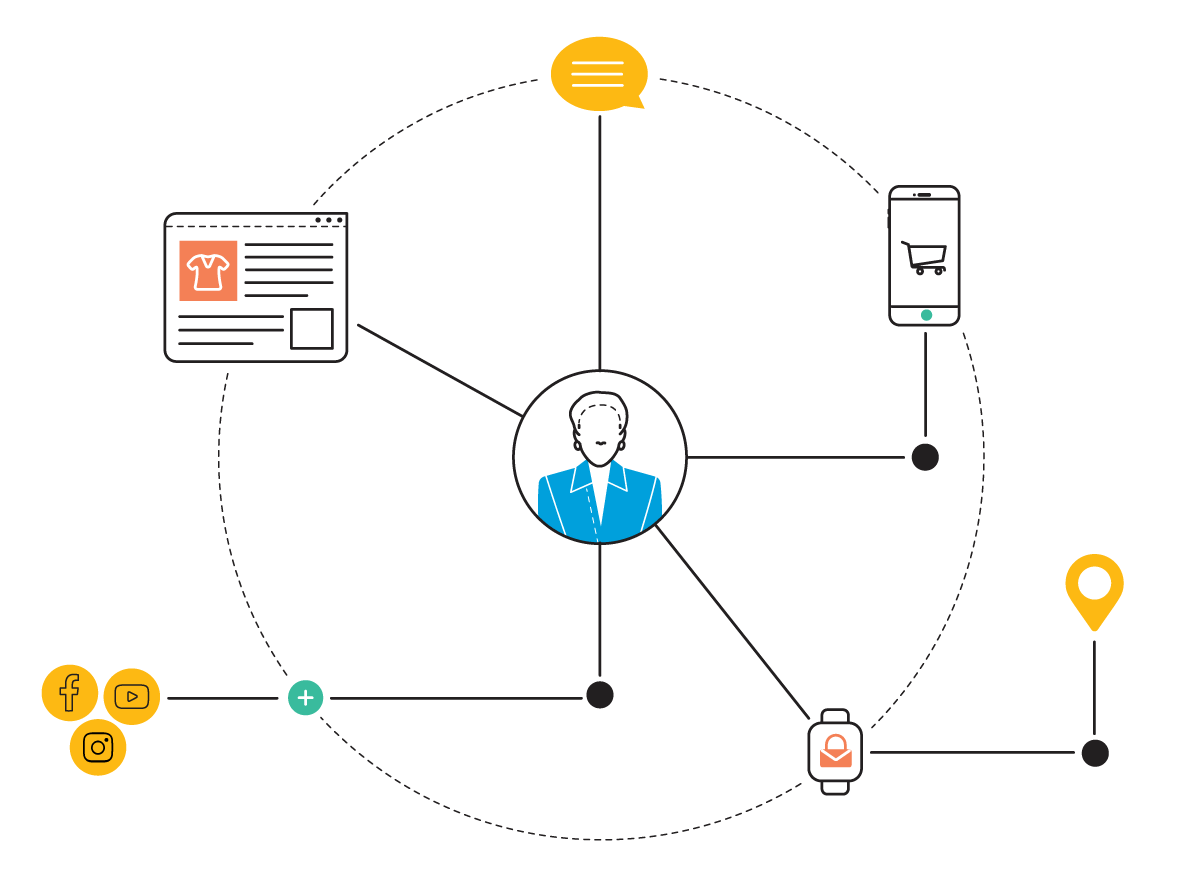
The multi-channel requirement isn’t optional anymore. Prospects engage through email, phone, social media, direct mail, and digital advertising before making purchasing decisions. Single-channel approaches fail to capture attention in this fragmented attention economy.
Why Traditional Prospecting Advice Fails SMBs
Enterprise-level prospecting strategies assume unlimited budgets and dedicated SDR teams—resources most SMBs simply don’t have. When small businesses try to implement these approaches, they often spread resources too thin and achieve mediocre results across all channels.
Legacy prospecting methods also contain significant compliance gaps. Many traditional tactics violate current privacy regulations, exposing SMBs to financial penalties and reputational damage. Without dedicated legal teams, smaller businesses are particularly vulnerable to these risks.
Technology accessibility has changed dramatically. Tools that were once enterprise-only are now available to SMBs, but many teams haven’t updated their approaches to leverage these capabilities effectively.
Myth #1
“Cold Calling Is Dead” vs. Reality: Research-Driven Calling Thrives
The “cold calling is dead” narrative emerged from the decline of interruption-based, script-reading approaches that dominated the early 2000s. While those tactics deserved to die, strategic phone outreach remains highly effective when executed properly.
The Myth Breakdown
This myth gained traction as caller ID and voicemail systems made it easier to screen unwanted calls. However, the real issue wasn’t the medium—it was the method. Generic scripts, poor timing, and lack of research created negative associations with phone-based prospecting.
Current data tells a different story. Recent studies show that 69% of buyers have accepted cold calls from new providers within the past year. Additionally, 82% of buyers report booking meetings with proactive sellers, while 57% of C-level executives actually prefer phone contact over other channels.
Modern Cold Calling Playbook
Successful phone prospecting today requires a research-driven approach that includes buyer-intent data analysis before making contact. This means identifying prospects who are actively searching for solutions in your category, not randomly dialing contact lists.
Persona-based scripting replaces generic approaches with tailored messaging that addresses specific stakeholder needs. For instance, a CFO conversation differs significantly from a CTO discussion, requiring distinct value propositions and communication styles.
Optimizing the timing of outreach is just as important as the message itself. By analyzing industry trends and individual behavior patterns, sales teams can identify the windows when prospects are most likely to answer and engage—dramatically improving connection rates.
Multi-threading strategies build relationships with multiple stakeholders within target accounts rather than relying on single points of contact. This approach increases deal velocity and reduces risk from personnel changes.
Compliance protocols ensure explicit consent for outreach and immediate honoring of do-not-call requests. Modern calling success depends on building trust through respectful, permission-based engagement.
Myth #2
“More Emails Equal More Meetings” vs. Reality: Quality and Timing Drive Results
The temptation to scale email outreach through volume is understandable—email costs are low, and automation tools make mass sending simple. This volume-first mindset results in ineffective prospect outreach that damages sender reputation and burns through contact lists.
The Volume Trap That Kills Deliverability
Email providers use sophisticated algorithms to identify spam behavior, and high-volume sending triggers multiple red flags. Current deliverability statistics reveal that only 66% of B2B emails reach their intended inboxes, with 20% of commercial emails never arriving at all.
Spam-complaint thresholds are surprisingly low. Even a complaint rate of 0.1% (1 complaint per 1,000 emails) can trigger filtering systems and damage your sender reputation. Staying well below that threshold is crucial for inbox placement. Once flagged, recovering sender reputation requires significant time and effort.
Compliance with the Controlling the Assault of Non-Solicited Pornography and Marketing (CAN-SPAM) Act adds yet another layer of complexity. Violating its rules can lead to fines of up to roughly $50,000 per email, depending on the severity of the violation and enforcement action. For SMBs operating on tight margins, these penalties can be business-threatening.
Strategic Email Prospecting Framework
Effective email prospecting prioritizes strategic cadence design over volume metrics. Optimal sequences space touchpoints across timeframes that align with buyer decision-making processes rather than sender convenience.
Personalization extends far beyond first-name insertion. Contextual references to recent trigger events, shared connections, or industry-specific challenges demonstrate genuine research and relevance. This approach requires more effort per email but generates significantly higher response rates.
A/B testing provides data-driven optimization for subject lines, messaging angles, and calls to action. Systematic testing reveals what resonates with specific audience segments, enabling continuous improvement in performance metrics.
Finally, multi-channel integration ensures email works in harmony with other outreach methods. Coordinated sequences that blend email with phone calls, social media, and even direct mail create a cohesive prospect experience—one that stands out far more than a single-channel approach.
Myth #3
“Automation Replaces Human Connection” vs. Reality: AI Enhances Personalization
Sales technology advancement creates false dichotomies between automation and human interaction. The reality is that artificial intelligence works best when it amplifies human capabilities rather than replacing them entirely.
The False Automation vs. Human Dichotomy
Over-automation creates sterile prospect experiences that feel impersonal and generic. Common mistakes include sending robotic email sequences without human intervention points, relying exclusively on chatbots for complex objection handling, and eliminating personal touchpoints from sales processes.
B2B buyers consistently express preferences for human interaction during complex purchase decisions. While they appreciate efficient, automated research and initial qualification, they expect human expertise when evaluating solutions and making final decisions.
Smart Automation Playbook
AI cuts research time and sharpens lead scoring—so reps spend less time guessing and more time closing. Tools that enrich prospect data, identify buying signals, and prioritize outreach timing free up human capacity for relationship building and strategic thinking.
Automated sequences work best when they include predetermined human intervention points. For example, triggering personal phone calls after specific email interactions or escalating high-intent prospects to immediate human follow-up.
Buyer intent data enables personalization at a scale by automatically customizing messaging based on prospect behavior and interests. This approach maintains relevance while allowing efficient outreach to larger prospect pools.
Technology stack selection should prioritize integration capabilities and user adoption rather than feature complexity. SMB teams benefit most from platforms that seamlessly connect with existing CRM systems and require minimal training overhead.
Myth #4
“One Channel Is Enough” vs. Reality: Multi-Channel Strategies Win
Single-channel outreach assumes all prospects have identical communication preferences and buying behaviors. This approach ignores the reality that different stakeholders within the same organization often prefer entirely different engagement methods.
Single-Channel Limitations in Modern Buying
Channel preference diversity reflects generational differences, role requirements, and individual communication styles. C-suite executives might respond best to high-touch approaches like personalized direct mail, while technical evaluators prefer detailed digital content and webinar presentations.
Response rate comparisons consistently show multi-channel approaches outperforming single-channel efforts. Prospects who receive coordinated touchpoints across multiple channels demonstrate higher engagement rates and faster progression through sales cycles.
Integrated Multi-Channel Prospecting Strategy

Channel selection frameworks should align with buyer persona characteristics, including industry context, role responsibilities, and organizational culture. Manufacturing executives might prefer phone conversations, while technology buyers often engage more readily through social platforms.
Sequencing coordination ensures consistent messaging and appropriate timing across all channels. A typical integrated approach might include personalized email introduction, followed by LinkedIn connection request, then phone outreach, and finally direct mail reinforcement.
Consistent messaging helps maintain brand alignment, even as formats shift to fit each channel. The core value proposition should stay the same, while the presentation adapts—whether it’s the brevity of email, the conversational tone of a phone call, or the informal style of social media.
Attribution tracking across touchpoints provides insights into channel effectiveness and prospect journey patterns. Understanding which combinations drive results enables optimization of future campaign design and resource allocation.
Myth #5
“Compliance Isn’t a Sales Problem” vs. Reality: Privacy Laws Shape Prospecting
Many poor prospecting practices stem from treating privacy compliance as a legal department responsibility rather than a core sales process requirement. This disconnect creates serious risks and undermines prospecting effectiveness—especially in highly regulated environments.
The Compliance Crisis in Sales
Global privacy regulations now affect virtually all B2B prospecting activities. GDPR governs outreach to European contacts, CCPA applies to those in California, and emerging laws in countries like Brazil, Australia, and Japan add further compliance requirements for international sales teams.
Financial penalties for violations can be substantial. GDPR fines reach up to 4% of global annual revenue, while CCPA penalties start at $2,500 per violation. For SMBs, even single enforcement actions can create serious financial stress.
Reputational damage often exceeds direct financial costs. Consumer research indicates that 74% of prospects will avoid companies that mishandle personal data, creating long-term business impact beyond immediate penalties.
Compliance-First Prospecting Framework
Data collection practices must include clear consent mechanisms and transparent privacy notices. Prospects should understand exactly how their information will be used and have simple methods for opting out of communications.
Opt-out mechanisms require immediate implementation and comprehensive system updates. When prospects request removal from communications, all related systems—email platforms, CRM databases, and calling lists—must be updated promptly.
Documentation requirements support audit readiness and demonstrate good-faith compliance efforts. Maintaining records of consent, opt-out requests, and data processing activities provides protection during regulatory investigations.
International considerations have become critical for businesses operating across borders. Data transfer agreements, local registration requirements, and jurisdiction-specific rules add complexity that requires careful planning and ongoing management.
Myth #6
“Generic Templates Scale Better” vs. Reality: Hyper-Personalization Converts
Template-based prospecting emerged when email marketing was novel and prospects received fewer commercial messages. Today’s buyers receive over 120 emails daily and can immediately identify mass-produced outreach attempts.
The Template Trap
Generic messaging signals laziness and disinterest in prospect-specific challenges. Even well-written templates fail to address individual circumstances, industry nuances, or current business priorities that influence purchasing decisions.
Response rate decline for templated emails has accelerated as buyer sophistication increases. Recipients now expect contextual relevance and personalized insights that demonstrate sender knowledge of their specific situation. Most personalization errors in prospecting happen when teams rely on automation without authentic context or research.
Personalization at Scale Playbook
Automated research tools streamline prospect intelligence gathering, eliminating the need for manual effort on each contact. When integrated with CRM systems, these platforms can automatically populate relevant company details, recent news, and social media activity.
Dynamic content insertion allows template frameworks while maintaining personalization. Variable fields can include company-specific challenges, industry terminology, and role-appropriate value propositions—making each message feel tailored, even at scale.
Industry-specific messaging frameworks offer a balance between efficiency and relevance. By developing templates for key verticals, teams can personalize outreach without starting from scratch for every lead.
Social proof integration builds credibility through relevant case studies and customer testimonials. Highlighting success stories from similar companies or industries creates immediate relevance and trust-building opportunities.
Myth #7
“Prospecting Is Just Lead Generation” vs. Reality: It’s Relationship Architecture
Transactional prospecting focuses on immediate conversion metrics rather than long-term relationship value. This approach generates short-term activity but fails to build the trust-based connections that create sustainable revenue growth.
The Transactional Mindset Problem
Lead generation metrics like email open rates and phone connection percentages don’t correlate directly with revenue outcomes. Teams that optimize for activity volume often sacrifice relationship quality and long-term account potential.
Customer lifetime value suffers when prioritizing quick wins over relationship development. Research shows that relationship-first approaches generate 23% higher customer retention rates and significantly greater expansion revenue opportunities.
Relationship-Centric Prospecting Strategy
Stakeholder mapping identifies all potential influencers and decision-makers within target accounts rather than focusing solely on primary contacts. Multi-threaded outreach builds relationships across departments and hierarchy levels, reducing risk and increasing deal velocity.
Value-first engagement delivers insights, relevant content, and genuine assistance before making sales requests. This approach positions sellers as trusted advisors rather than transaction-focused vendors, creating a stronger foundation for long-term partnerships.
Nurturing frameworks maintain structured communication over extended sales cycles that may span months or years. With systematic touchpoint planning, teams can consistently develop relationships—even when a purchase isn’t immediately on the horizon.
Customer success integration begins during initial prospecting phases rather than after deal closure. Involving success teams early signals long-term commitment and ensures a smoother transition from prospect to customer.
Building Your Modern Sales Prospecting System: Implementation Guide
Transforming prospecting approaches requires addressing key prospecting fail points—from poor data quality to inconsistent follow-up. Successful implementation balances immediate improvements with sustainable long-term development.
Technology Stack Essentials for SMBs
CRM integration serves as the foundation for all prospecting activities, requiring platforms that support multi-channel tracking, automated workflows, and comprehensive reporting capabilities. Modern CRM systems should integrate seamlessly with email platforms, phone systems, and social selling tools.
Data quality and enrichment tools ensure accurate prospect information and enable effective personalization. Platforms that automatically update contact information, company details, and buying signals reduce manual research time while improving outreach relevance.
Automation platforms and email deliverability solutions enable scaling without sacrificing personalization or compliance. Look for tools that provide detailed analytics, A/B testing capabilities, and reputation monitoring to maintain optimal performance.
Team Training and Process Development
Modern prospecting requires updated skill sets that combine traditional relationship-building with digital proficiency. Training priorities should include advanced research techniques, social selling strategies, and consultative conversation skills.
Performance metrics must evolve beyond activity-based measurements to include relationship quality indicators and long-term value creation. Pipeline quality, customer lifetime value, and retention rates provide better success indicators than email volume or call quantity.
Continuous improvement methodologies ensure ongoing optimization as market conditions and buyer behaviors evolve. Regular testing, feedback collection, and strategy refinement maintain competitive advantages in dynamic environments. Structured workflows also prevent follow-up problems in prospecting, ensuring every opportunity receives timely, consistent attention.
Measuring Success Today
Modern prospecting success requires metrics that reflect relationship quality and long-term value creation rather than just immediate activity levels. Pipeline quality indicators such as average deal size, win rates, and sales cycle length provide better insight into prospecting effectiveness.
Relationship health metrics including net promoter scores, referral rates, and expansion revenue opportunities demonstrate the long-term impact of relationship-focused prospecting approaches.
Regular testing and performance reviews help identify prospecting process flaws before they scale into systemic issues. Long-term value tracking through customer lifetime value calculations and retention rate analysis shows the true business impact of prospecting investments beyond initial conversion metrics.
Conclusion: The Future of Sales Prospecting Is Data-Driven and Human-Centered
The evolution of sales prospecting reflects how modern buyer behavior, technology, and regulations have reshaped the path to growth. Success today requires abandoning outdated myths and embracing strategies that balance data-driven insights with genuine human connection.
Compliance, personalization, and relationship-focused selling now define the foundation of sustainable prospecting success. Teams that prioritize value over volume—and build authentic relationships rather than transactions—create pipelines that last and revenue that compounds over time.
FAQs
Prospecting often fails because many teams rely on outdated, volume-driven tactics instead of targeting based on buyer intent and data. Legacy approaches—like cold lists, generic outreach, and single-channel campaigns—waste time on unqualified contacts. Modern success depends on data quality, compliance, and multi-channel personalization that reach buyers ready to engage.
The biggest misconception is that sending more outreach equals generating more meetings. In reality, over-prioritizing quantity damages email deliverability, overwhelms sales teams, and floods pipelines with low-value prospects. Quality, research-driven prospecting—built on verified data and buyer intent signals—creates far higher conversion rates with less waste.
Failing to personalize outreach makes messages feel generic and irrelevant, which modern buyers immediately recognize. Generic templates and mass automation create low response rates and erode trust. Effective prospecting in today’s market requires personalization at scale—using role-specific messaging, dynamic content, and contextual references to show real understanding.
The persistent myth that “cold calling is dead” still holds many teams back. The truth is that phone outreach remains highly effective when it’s research-driven, personalized, and well-timed. Modern data shows most buyers still accept and even prefer relevant calls—especially from sellers who understand their needs and reach out with purpose.
SMBs can avoid prospecting pitfalls by focusing on precision, not volume. That means using enriched prospect data, AI-assisted targeting, and compliance-first outreach rather than generic campaigns. Implementing multi-channel sequences, tracking performance across touchpoints, and prioritizing relationship-building over short-term metrics helps SMBs create sustainable, qualified pipelines.