

What a B2B Lead Generation Framework Is (And Isn’t)
A B2B lead generation framework is a structured system that defines how a business identifies, attracts, captures, and qualifies potential customers. It organizes the B2B lead generation process into repeatable steps so marketing and sales can consistently generate qualified opportunities instead of relying on one-off campaigns.
It serves as the blueprint behind your demand generation efforts. A strong lead generation framework B2B teams use connects strategy, channels, tools, and performance metrics into one coordinated process.
What a B2B Lead Generation Framework Includes
A well-designed B2B lead generation model typically includes:
- Ideal customer profile (ICP) and targeting: defining the types of businesses most likely to become customers
- Lead acquisition channels: the marketing and outreach channels used to attract prospects (SEO, email, LinkedIn, paid ads, etc.)
- Lead capture systems: landing pages, forms, gated content, or tools used to collect prospect information
- Lead qualification criteria: processes for identifying marketing-qualified leads (MQLs) and sales-qualified leads (SQLs)
- Measurement and optimization: tracking performance metrics like conversion rates, cost per lead, and pipeline contribution
Pro Tip
If your framework doesn’t clearly define your ideal customer profile, qualification criteria, and success metrics, you’re not building a framework. You’re just collecting tactics.
Together, these elements form the foundation of a scalable lead generation process for B2B organizations.
What a B2B Lead Generation Framework Doesn’t Include
A B2B lead generation framework is often confused with individual tactics or tools, but it’s broader than that. It does not include:
- One-off campaigns (e.g., a single webinar or ad campaign)
- Individual marketing channels used without a coordinated strategy
- Standalone tools or software like CRMs or email platforms without a defined process
- Short-term lead boosts that don’t connect to long-term pipeline generation
Learn more: Explore B2B lead generation strategies, channels, and tools used to attract and convert qualified leads.
Step-by-Step B2B Lead Generation Framework
Building an effective B2B lead generation framework means creating a repeatable process that guides prospects from initial awareness to qualified sales opportunities. The steps below outline a practical framework your team can follow to build a predictable pipeline.
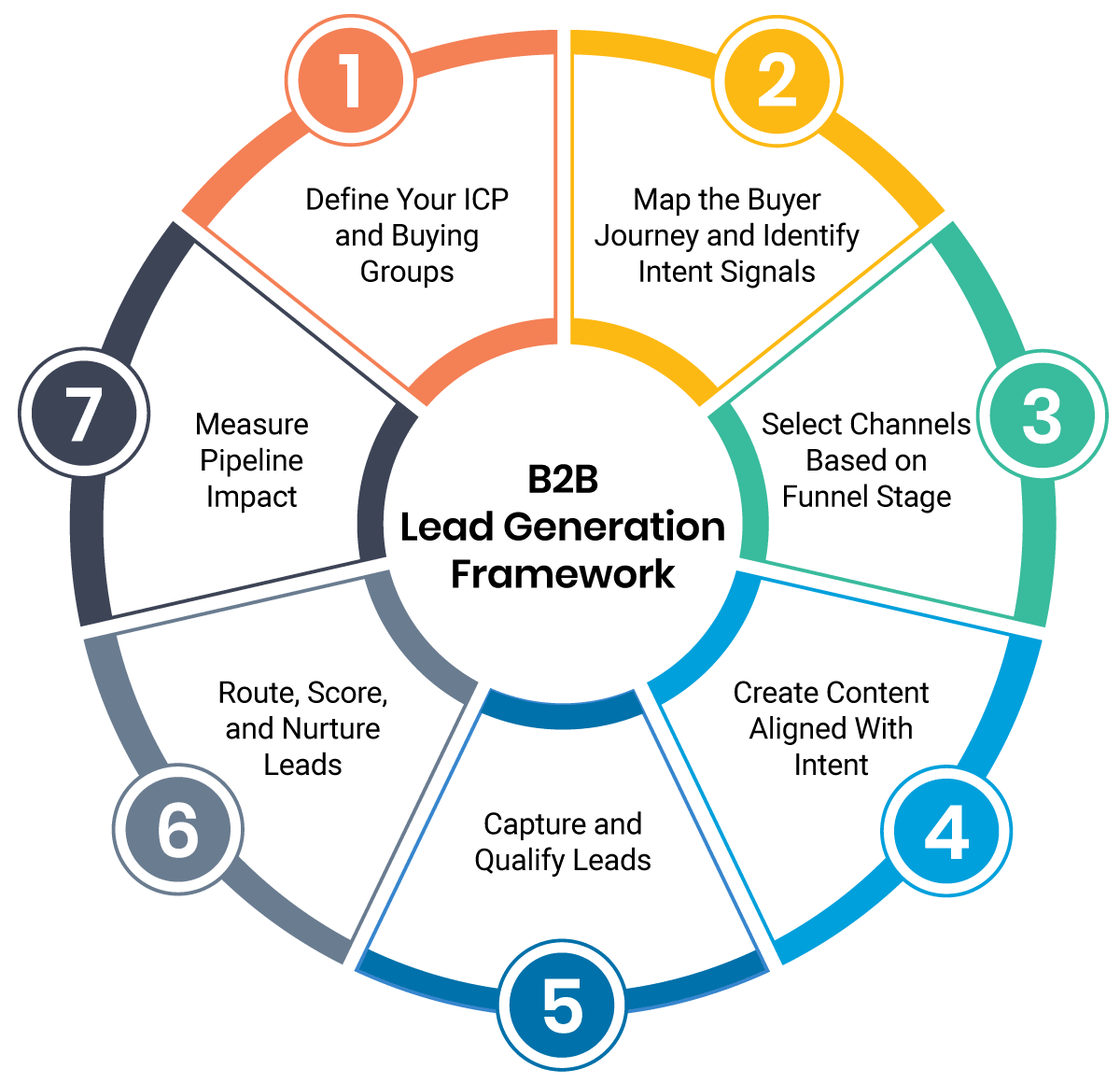
1Define Your ICP and Buying Groups
The first step in any B2B lead generation process is identifying the businesses most likely to benefit from your product or service.
This involves defining:
- Firmographic criteria such as industry, company size, revenue, and location
- Key decision-makers (e.g., executives, department heads, procurement leaders)
- Buying committees, which often include multiple stakeholders in B2B purchases
According to Gartner, the typical B2B buying group now includes 6 to 10 decision-makers, making it critical to understand the full group involved in purchasing decisions.
Pro Tip
Don’t build your ICP around your best current customers alone. Include traits like buying cycle length, average deal size, and likelihood to convert so your targeting reflects revenue potential, not just familiarity.
Need help creating your ICP? Download our Ideal Customer Profile Worksheet to help you get started.
2Map the Buyer Journey and Identify Intent Signals
Next, outline the stages prospects move through before making a purchase. A clear lead generation process aligns marketing and sales activities with this journey.
Typical stages include:
- Awareness: prospects recognize a problem or opportunity
- Consideration: they research possible solutions
- Decision: they evaluate vendors and make a purchase choice
Intent signals, such as search behavior, content downloads, or website visits, can help identify where prospects are within this journey.
Want to identify buyers already researching solutions like yours?
Use buyer intent data to detect in-market prospects and engage them earlier in the buying process.
3Select Channels Based on Funnel Stage
Different marketing channels work better at different stages of the funnel. A strong lead generation model connects channels to specific buyer journey stages.
For example:
- Top-of-funnel: SEO, blog content, industry reports, social media
- Mid-funnel: webinars, email campaigns, case studies
- Bottom-of-funnel: demos, consultations, targeted outreach
Using multiple channels increases the likelihood that prospects will encounter your brand throughout the buying process.
Pro Tip
Avoid spreading your budget across too many channels at once. Start with two or three channels that match buyer intent at each funnel stage, then expand once you know what’s driving qualified leads.
4Create Content Aligned With Intent
Content should match the prospect’s level of intent and stage in the funnel.
Examples include:
- Educational content (guides, blog posts, research reports) for early-stage prospects
- Evaluation content (case studies, product comparisons, webinars) for mid-stage prospects
- Decision content (product demos, pricing pages, consultations) for high-intent buyers
This content structure supports the overall B2B lead generation framework by guiding prospects toward conversion.
Turn content engagement into qualified leads.
Salesgenie® helps you identify decision-makers, build targeted prospect lists, and connect with buyers already showing purchase intent.
Explore Salesgenie’s lead generation tool
5Capture and Qualify Leads
Once prospects engage with your content, the next step is capturing their information and determining whether they fit your ICP.
Common lead capture methods include:
- Landing page forms
- Webinar registrations
- Gated resources
- Newsletter signups
Qualification criteria, such as company size, industry fit, or engagement level, help identify leads most likely to convert. Many companies use targeted B2B sales leads to identify organizations that match their ICP.
Pro Tip
Keep early-stage forms short. Asking for too much information too soon can hurt conversion rates and reduce the number of qualified leads entering your pipeline.
6Route, Score, and Nurture Leads
After capture, leads should enter an organized system for scoring and follow-up.
Key processes include:
- Lead scoring based on engagement and firmographic fit
- Automated lead routing to the appropriate sales representative
- Lead nurturing campaigns through email, retargeting, or personalized outreach
This stage ensures that sales teams focus on the most promising opportunities.
7Measure Pipeline Impact
The final step in the lead generation framework B2B organizations use is measuring performance and optimizing the process.
Important metrics include:
- Lead-to-opportunity conversion rate
- Cost per lead (CPL)
- Pipeline contribution from marketing
- Revenue generated from leads
Tracking these metrics helps you refine your lead generation model and improve results over time.
Want better visibility into lead quality and pipeline performance? Explore how Salesgenie’s data platform helps sales teams identify high-value prospects and track engagement across the funnel.
Common B2B Lead Generation Framework Mistakes
Even well-designed strategies can fail if the lead generation framework is built around the wrong priorities. Many organizations struggle not because they lack tools or channels, but because their lead generation process for B2B is misaligned with how modern buyers evaluate solutions.
Below are three of the most common mistakes that weaken otherwise solid frameworks.
Tool-First Thinking
A frequent mistake is starting with software instead of strategy. Many teams adopt marketing automation platforms, CRM tools, or prospecting databases before defining the actual B2B lead generation process they want those tools to support.
A strong lead generation framework your team can rely on should begin with:
- Clear ICPs
- Defined buyer journeys
- Channel strategy and messaging
Only after those elements are established should teams select tools that support execution.
Lack of Sales Alignment
Lead generation frameworks break down when marketing and sales teams operate with different definitions of what qualifies as a good lead. Without alignment, marketing may optimize for lead volume, while sales focuses on pipeline quality.
Successful B2B lead generation models address this by establishing:
- Shared definitions of marketing-qualified leads (MQLs) and sales-qualified leads (SQLs)
- Agreed-upon lead scoring criteria
- Clear handoff processes between marketing and sales
Quick Stat
Research indicates that businesses where sales and marketing operate in sync tend to grow significantly faster. Organizations with strong alignment often see around 20% year-over-year revenue growth, while companies where the two teams remain disconnected can experience declining revenue, sometimes by about 4% annually.
Over-Gating Content
Gated content can be valuable for capturing leads, but overusing it can slow the early stages of the B2B lead generation process.
Today’s B2B buyers prefer to conduct extensive research before sharing their contact information. If every piece of content requires a form submission, prospects may simply leave and look elsewhere.
A balanced lead generation framework organizations implement typically follows a simple rule:
- Top-of-funnel content: mostly ungated (blog posts, guides, educational resources)
- Mid-funnel content: selectively gated (webinars, detailed reports, templates)
- Bottom-of-funnel content: high-intent conversions (demos, consultations, trials)
Grow your pipeline with lead generation tools designed to help you find and reach new customers.
How to Operationalize the Framework
A B2B lead generation framework only becomes effective when it is embedded into daily marketing and sales operations. Operationalizing the framework ensures that every stage of the lead generation process is clearly owned, supported by the right tools, and continuously optimized.
Assign Clear Team Ownership
Successful execution starts with defined responsibilities across teams. Because modern B2B buying journeys involve multiple touchpoints, both marketing and sales must play coordinated roles within the lead generation framework B2B organizations implement.
Typical ownership structure includes:
- Marketing teams: audience targeting, demand generation campaigns, and lead capture
- Sales development representatives (SDRs): outreach, qualification, and early conversations
- Sales teams: opportunity management and deal conversion
Clear ownership helps ensure leads move smoothly through the lead generation process, preventing gaps between marketing-generated leads and sales follow-up.
Build the Right Tool Stack
Technology supports the execution of your B2B lead generation model, but it should serve the process rather than define it. A typical stack includes tools that support each stage of the framework.
Common components include:
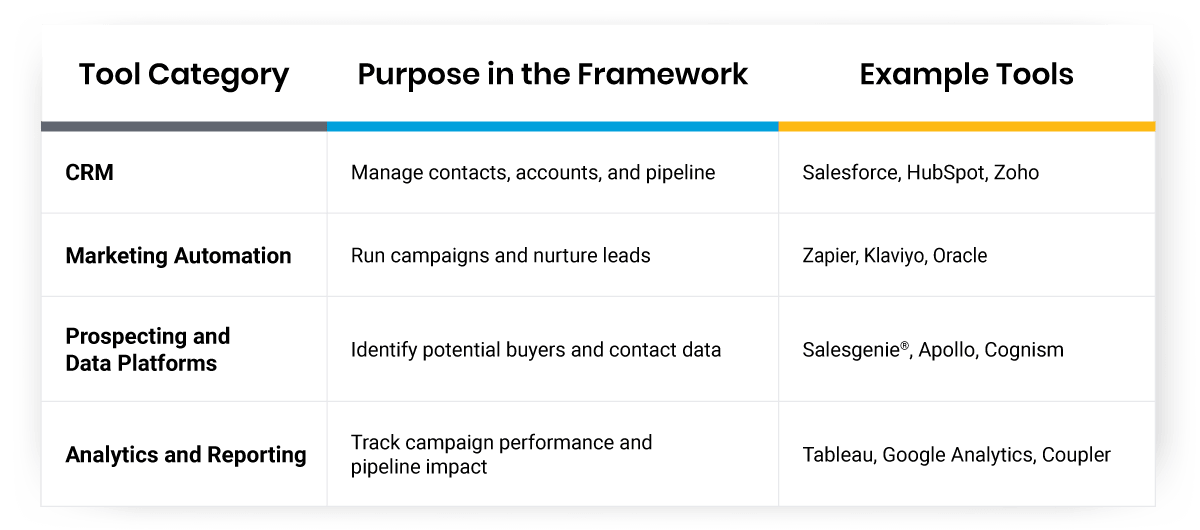
The goal is to create a connected system where data flows seamlessly across the B2B lead generation framework, allowing teams to track engagement and prioritize high-quality opportunities.
Establish a Regular Review Cadence
Even the best frameworks require ongoing refinement. Establishing a consistent review cycle helps teams evaluate performance and improve results.
Most organizations review their B2B lead generation process on a regular schedule, such as:
- Weekly: campaign performance and lead flow
- Monthly: lead quality and sales feedback
- Quarterly: pipeline contribution, channel effectiveness, and strategic adjustments
Pro Tip
Review lead quality, not just lead volume. A framework that generates fewer but better-fit leads will usually outperform one that looks strong on paper but fails to create pipeline.
These reviews ensure your team remains aligned with changing buyer behavior, market conditions, and business goals.
Conclusion and Next Steps
A successful B2B lead generation framework is not a one-time campaign or a collection of disconnected tactics. It’s a repeatable system that helps organizations consistently attract the right prospects, guide them through the buying journey, and convert them into qualified opportunities.
If you’re ready to build a more scalable pipeline, explore Salesgenie’s full guide on B2B lead generation to see how the right channels, tactics, and tools work together to drive qualified leads.
For more actionable ideas, dive into our B2B lead generation strategies and learn how to attract high-value prospects, sharpen targeting, and create more opportunities for your sales team.
Ready to put your framework into action? Explore our business leads to connect with the right prospects, strengthen targeting, and build a more predictable pipeline.
FAQs
A B2B lead generation framework is a structured system that guides how a business identifies, attracts, captures, and qualifies potential customers. It organizes the B2B lead generation process into repeatable steps that help marketing and sales consistently generate qualified opportunities.
A typical lead generation framework B2B teams use includes defining the ideal customer profile (ICP), mapping the buyer journey, selecting channels by funnel stage, creating intent-based content, capturing and qualifying leads, nurturing prospects, and measuring pipeline impact. Together, these steps create a scalable B2B lead generation model that supports predictable growth.
Many frameworks fail because organizations focus on tools or tactics before defining strategy, audience targeting, and the full lead generation process. Lack of alignment between marketing and sales can also lead to poor lead quality and missed opportunities.
Alignment begins with shared definitions for MQLs and SQLs, along with clear lead scoring criteria. Regular feedback between teams helps refine the B2B lead generation framework and improve lead quality over time.
Most organizations can implement the core structure of a B2B lead generation framework within a few weeks, but optimization typically takes several months as teams refine targeting, messaging, and channel performance. The timeline often depends on existing data, technology, and internal alignment.
A typical B2B lead generation model relies on a CRM system, marketing automation platform, prospecting or data tools, and analytics software to track performance. These tools support the lead generation process for B2B by helping teams manage leads, automate outreach, and measure pipeline impact.